What is Artificial Intelligence (AI)?
YouTube
... Quora
...Google search
...Google News
...Bing News
- Artificial Intelligence (AI) ... Generative AI ... Machine Learning (ML) ... Deep Learning ... Neural Network ... Reinforcement ... Learning Techniques
- How can I leverage Artificial Intelligence (AI)? ... Current State ... Reading Material ... Lexicon ... Help Wanted ... Human Resources ... Social Science ... Education
- Conversational AI ... ChatGPT | OpenAI ... Gemini | Google ... Claude | Anthropic ... Bing | Microsoft ... Siri | Apple ... Meta AI/Manus | Meta ... Perplexity ... Grok | SpaceXSI ... Ernie | Baidu ... DeepSeek ... Qwen | Alibaba
- Artificial General Intelligence (AGI) to Singularity ... Curiosity ... Emergence ... Moonshots ... Explainable AI ... Automated Learning
- Prescriptive Analytics ... Predictive Analytics ... Predictive Maintenance ... Forecasting ... Market Trading ... Sports Prediction ... Marketing ... Politics ... Excel
- Artificial Intelligence | Wikipedia
- Data Science ... Governance ... Preprocessing ... Exploration ... Interoperability ... Master Data Management (MDM) ... Bias and Variances ... Datasets
- Artificial Intelligence Law
Artificial Intelligence (AI) is a broad field of computer science and engineering concerned with developing systems capable of performing tasks associated with intelligent behavior. These tasks include perception, language understanding, learning, reasoning, planning, prediction, problem-solving, decision-making and interaction with the physical or digital world. AI systems can range from narrowly specialized programs that recognize patterns in data to general-purpose models that perform many different tasks using natural language, images, audio, software tools and other information.
A defining characteristic of modern AI is its ability to infer useful relationships from information rather than requiring a programmer to specify every decision as a fixed rule. Many systems learn statistical patterns from large datasets, allowing them to classify new information, generate content, recommend actions or predict outcomes. Other AI systems use symbolic reasoning, search, optimization, knowledge representations or combinations of these approaches. AI is therefore not a single algorithm, product or technology, but a collection of computational methods and system architectures.
Recent developments in Generative AI, large language models, multimodal processing and AI agents have expanded the range of activities that AI systems can support. Instead of producing only classifications or predictions, modern systems can create documents, write software, analyze images, converse with users and interact with external tools. These capabilities are significant, but they do not establish that an AI system possesses human understanding, consciousness, unrestricted autonomy or reliable judgment in every situation.
Artificial intelligence transforms computing from following explicitly programmed instructions toward systems that can learn patterns, generate information, reason over evidence and assist with increasingly complex tasks. Its practical value depends on how reliably those capabilities work in real situations, how effectively humans can supervise them and whether their outputs produce useful, measurable results.
The Basic AI Hierarchy
The relationships among artificial intelligence, machine learning, deep learning and generative AI are often presented as a hierarchy. This is useful for learning the terminology, although it simplifies a field containing approaches that do not fit into a single nested structure.
- Artificial Intelligence (AI): The broad discipline of building systems that exhibit capabilities associated with intelligent behavior, including reasoning, learning, perception, planning and decision-making.
- Machine Learning (ML): A major area of AI in which models learn relationships from examples, observations or interactions rather than relying exclusively on explicitly written rules.
- Deep Learning: An area of machine learning that uses neural networks with multiple layers of learned representations. Deep learning has become important in language, vision, speech, scientific modeling and generative systems.
- Generative AI: A family of systems that produce content or other outputs by learning and modeling patterns in data. Many current generative systems use deep learning, although generative statistical modeling also existed before modern deep neural networks.
- Deep Learning: An area of machine learning that uses neural networks with multiple layers of learned representations. Deep learning has become important in language, vision, speech, scientific modeling and generative systems.
- Machine Learning (ML): A major area of AI in which models learn relationships from examples, observations or interactions rather than relying exclusively on explicitly written rules.
This hierarchy should not imply that every AI application uses deep learning or that all generative methods require neural networks. Symbolic AI, search algorithms, probabilistic modeling and other approaches remain important. Modern systems increasingly combine different computational techniques.
AI changes how information can be processed and how work can be performed. Conventional software is particularly effective when rules and operations can be fully specified in advance. AI extends computing into areas where patterns are complicated, inputs are uncertain and outputs require interpretation or generation. Examples include understanding speech, identifying objects in photographs, predicting equipment failures, summarizing scientific literature and creating software.
The significance of AI also extends beyond automation. AI systems can serve as research assistants, analytical tools, interfaces to complex software and components of scientific discovery. At the same time, their ability to produce convincing but incorrect information creates challenges for accuracy, privacy, cybersecurity, fairness, accountability and trust. A capable AI system is not automatically reliable, and successful implementation requires suitable evaluation, oversight and integration into actual work.
About
Artificial intelligence emerged as an identifiable research discipline during the twentieth century, although many of its foundations developed earlier through mathematics, logic, statistics, neuroscience and computing. Foundational researchers investigated whether symbolic manipulation, computational learning and automated reasoning could reproduce selected aspects of intelligent behavior. Over time, the field expanded to include probabilistic inference, statistical learning, neural networks, reinforcement learning and today's large-scale foundation models.
Historical Background
Alan Turing and Machine Intelligence
In 1950, Alan Turing published Computing Machinery and Intelligence, which examined whether machines could exhibit behavior that people would regard as intelligent. Turing proposed an imitation-game approach in which an evaluator attempts to distinguish a human from a machine through conversation. The proposal became an influential contribution to discussions of artificial intelligence, although success at conversational imitation does not establish consciousness or general competence.
- Computing Machinery and Intelligence | Alan Turing, Mind, 1950
The Dartmouth Workshop
The 1956 Dartmouth Summer Research Project on Artificial Intelligence is widely recognized as a foundational event in establishing AI as a field of research. John McCarthy, Marvin Minsky, Nathaniel Rochester and Claude Shannon proposed a research program exploring whether aspects of learning and intelligence could be described precisely enough for machines to simulate them. The original agenda included language, abstraction, problem-solving, neural networks and machine improvement, topics that remain relevant today.
Symbolic AI
Early AI research emphasized explicit representations of knowledge and reasoning. Symbolic systems used logical rules, symbolic expressions, search procedures and expert knowledge to solve defined problems. Applications included theorem proving, planning and expert systems that encoded human expertise in structured rules.
Symbolic methods were effective where the problem could be represented clearly, but they faced difficulties when knowledge was incomplete, environments were unpredictable or the number of possible situations became too large. Modern AI continues to use symbolic techniques, often in combination with statistical learning and optimization.
Machine Learning and Statistical Methods
As computing resources and datasets expanded, machine learning became increasingly influential. Instead of requiring developers to encode every decision rule, researchers trained algorithms to identify patterns using data. Methods such as decision trees, support vector machines, Bayesian models, ensemble learning and neural networks became useful for classification, regression and prediction.
The resulting systems still depend on human decisions concerning data collection, evaluation, objectives and deployment. Machine learning reduces the need to explicitly program every relationship, but it does not eliminate human responsibility for how a system is designed or used.
Deep Learning
Deep learning gained prominence through advances in neural-network architectures, training algorithms, specialized computing hardware and large datasets. A major milestone occurred in 2012, when the AlexNet image-classification system demonstrated substantial improvements on the ImageNet competition. Neural-network methods subsequently became influential in computer vision, speech recognition, translation and language modeling.
Deep learning models learn multiple levels of representation, allowing relatively simple features to be combined into increasingly abstract patterns. Their effectiveness depends on architecture, data, optimization, computing resources and the suitability of the model for the intended problem.
Transformers and Foundation Models
The 2017 paper Attention Is All You Need introduced the Transformer architecture, which uses attention mechanisms to model relationships among elements of a sequence. Transformers became foundational to many modern language models because they support powerful representation learning and efficient training over large datasets. Subsequent research adapted related ideas to images, audio, video, multimodal systems and other domains.
Large-scale pretraining made it possible to develop models that could later be adapted to many tasks through transfer learning and fine-tuning. These systems are commonly called foundation models because they provide a reusable basis for multiple applications rather than being trained exclusively for one narrowly defined problem.
- Attention Is All You Need | Vaswani et al., 2017 - On the Opportunities and Risks of Foundation Models | Bommasani et al., Stanford, 2021
Definitions of Artificial Intelligence
Because AI includes many different technical approaches, organizations use definitions suited to research, policy, legislation or regulation. No single definition settles every conceptual question about intelligence, autonomy or consciousness.
U.S. Legislative Definition, 2018
Per section 238(g) of the John S. McCain National Defense Authorization Act, 2019 (Pub. L. 115-232) August 30, 2018, AI was defined broadly to include the following categories:
- Any artificial system that performs tasks under varying and unpredictable circumstances without significant human oversight, or that can learn from experience and improve performance when exposed to data sets;
- An artificial system developed in computer software, physical hardware, or other context that solves tasks requiring human-like perception, cognition, planning, learning, communication, or physical action;
- An artificial system designed to think or act like a human, including cognitive architectures and neural networks;
- A set of techniques, including machine learning, that is designed to approximate a cognitive task; and
- An artificial system designed to act rationally, including an intelligent software Agents or embodied robot that achieves goals using perception, planning, reasoning, learning, communicating, decision making, and acting.
This historical statutory definition is useful for understanding how policymakers categorized AI technologies in 2018. Later policy frameworks have adopted updated terminology reflecting systems that generate content, recommendations and other outputs with varying degrees of autonomy.
OECD Definition
The Organisation for Economic Co-operation and Development updated its definition of an AI system in 2023 and published a supporting explanatory memorandum in 2024. The definition describes a machine-based system that uses its inputs to infer how to produce outputs such as predictions, content, recommendations or decisions. These outputs may influence physical or virtual environments, while different systems possess different levels of autonomy and adaptiveness.
The OECD formulation is valuable because it does not restrict AI to systems that imitate human thought or use neural networks. It also distinguishes the general characteristics of an AI system from the particular method used to implement it.
- OECD Recommendation on Artificial Intelligence | OECD - Explanatory Memorandum on the Updated OECD Definition | OECD, 2024
Visual Explanations
The following visual resources are retained from the original page. They provide historical illustrations of AI concepts, although terminology, product examples and technical relationships may have changed since publication.
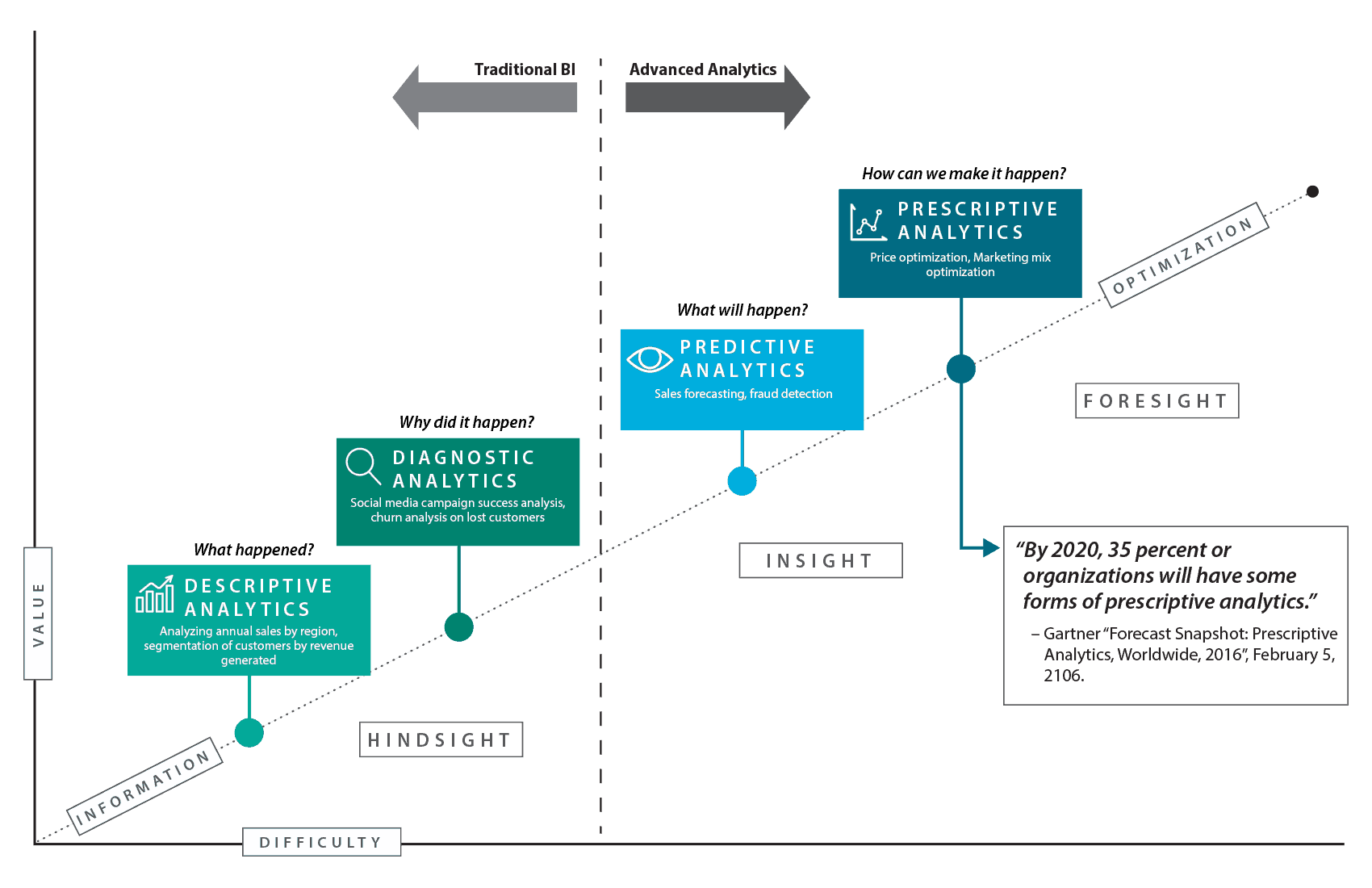
Demystifying Artificial Intelligence | Swami Chandrasekaran, December 27, 2017

Original Video Introductions
The following video embeds are preserved from the original page.
Generative AI Introductions
These historical introductory videos can be used alongside the technical explanations and current research presented below. Because AI terminology and capabilities have evolved rapidly, product-specific claims in older presentations should be checked against current technical documentation.
Types of Artificial Intelligence
AI technologies can be classified according to their learning method, model architecture, intended application or degree of autonomy. These classifications overlap, and a modern application may combine several approaches within one system.
Major AI Approaches
| Approach | Basic mechanism | Typical applications | Important limitation |
|---|---|---|---|
| Symbolic AI | Uses explicit representations, rules and logical operations | Planning, knowledge representation, expert systems | Difficult to maintain when rules become numerous or incomplete |
| Supervised Learning | Learns relationships using labeled examples | Classification, regression, diagnosis support | Depends on accurate labels and representative data |
| Unsupervised Learning | Identifies patterns without task-specific output labels | Clustering, anomaly detection, dimensionality reduction | Discovered patterns may not be meaningful or causal |
| Self-Supervised Learning | Creates learning signals from the structure of available data | Foundation models, language and image representation learning | Learned patterns do not guarantee factual accuracy |
| Reinforcement Learning | Optimizes behavior through rewards and interactions | Robotics, control, games and decision optimization | Reward design and safe exploration can be difficult |
| Deep Learning | Learns layered representations using neural networks | Vision, language, audio, scientific analysis | May require extensive data and computation |
| Generative AI | Models data distributions to produce new outputs | Text, images, video, audio and code generation | Outputs may be inaccurate or unsupported |
| Probabilistic AI | Represents uncertainty using probability models | Forecasting, diagnosis support and inference | Results depend on modeling assumptions |
| Evolutionary Computation | Searches through candidate solutions using selection and variation | Optimization, engineering design and algorithm discovery | May require many evaluations |
| Hybrid or Neuro-Symbolic AI | Combines learned representations with structured rules or reasoning | Constraint-aware systems and knowledge-intensive tasks | Integration and validation can be complex |
| Agentic AI | Combines models with tools, memory and action workflows | Software development, research and task execution | Multi-step reliability and external-action safety remain challenging |
Supervised Learning
Supervised learning uses examples containing inputs and expected outputs. A model learns a relationship that allows it to make predictions about new inputs. For example, a system may learn to identify fraudulent transactions using historical examples labeled as fraudulent or legitimate. During evaluation, its performance is tested on information that was not used to fit the model.
Supervised learning commonly supports two task categories. Classification predicts categories, such as whether an image contains a particular object, while regression predicts numerical values, such as expected electricity consumption. A central challenge is ensuring that training examples represent the situations the system will encounter after deployment.
Unsupervised Learning
Unsupervised learning examines data without a predetermined target label. Algorithms may group similar observations, reduce the dimensionality of complex information or identify unusual patterns. Applications include discovering customer segments, exploring scientific measurements and organizing large document collections.
The method can reveal useful structure, but similarity does not necessarily indicate causation or practical importance. Human interpretation and external validation remain necessary to determine whether the discovered patterns are meaningful.
Self-Supervised Learning
Self-supervised learning constructs training tasks from the available data itself. For example, a language model may learn to predict the next token in a sequence, while an image model may learn representations by predicting or reconstructing selected information. This enables training on large datasets that do not require every example to be manually labeled.
Self-supervised learning is a major foundation of modern language and multimodal AI. However, learning statistical relationships from large amounts of data does not inherently establish the truth of those relationships or the reliability of every generated answer.
Reinforcement Learning
Reinforcement Learning (RL) concerns learning actions or policies through interactions and feedback. An agent observes a state, takes an action and receives a reward or another evaluation signal. The learning process aims to improve future decisions according to the defined objective, often modeled as a Markov Decision Process (MDP).
Reinforcement learning has been used in games, robotics, resource allocation and model post-training such as reinforcement learning from human feedback. Its success depends heavily on the design of the reward function and the environment. A system can optimize the specified reward while behaving in ways that developers did not intend, making independent evaluation and constraints important.
Evolutionary and Search-Based Methods
Evolutionary computation explores solutions through processes inspired by variation, selection and optimization. Genetic algorithms and related methods can search complex design spaces where gradients are unavailable or conventional optimization is difficult.
These approaches can complement machine learning. For example, an evolutionary method such as NeuroEvolution of Augmenting Topologies (NEAT) may optimize a neural-network architecture or engineering design, while a learned model estimates the performance of candidate solutions.
How Machine Learning Works
Machine learning converts data into a model that estimates relationships useful for a defined task. The process includes both mathematical optimization and practical decisions about data, measurement, evaluation and deployment.
The Machine Learning Lifecycle
- Problem Definition: Define the task, intended users, acceptable errors and measures of success.
- Data Collection: Gather suitable information from authorized and relevant sources.
- Data Preparation: Clean records, handle missing values, standardize formats and investigate possible biases.
- Feature Representation: Convert observations into numerical or structured forms suitable for the algorithm.
- Model Selection: Choose an appropriate algorithm and establish a simple baseline.
- Training: Adjust model parameters to improve performance according to a defined objective.
- Validation: Tune settings and compare approaches without contaminating the final evaluation.
- Testing: Evaluate performance using information held apart from development.
- Deployment: Integrate the model into an application or operational workflow.
- Monitoring: Observe errors, data changes, security issues and performance over time.
- Maintenance: Retrain, update, replace or retire the model when necessary.
A common mistake is to treat training as the entire AI project. In real applications, data quality, system integration, monitoring and human oversight may determine success as much as the choice of algorithm. Models can perform well during development but deteriorate under distribution shift when the population, environment or inputs change.
Training, Validation and Test Data
Training data is used to adjust model parameters. Validation data supports model selection, hyperparameter tuning and development decisions, often using techniques such as cross-validation. Test data provides a more independent estimate of how the chosen system performs on previously unseen examples. The evaluation is less credible if test information influences development decisions repeatedly.
Data leakage occurs when information unavailable in real-world use enters the training or evaluation process. For example, a medical model might appear unusually accurate if information recorded after a diagnosis is mistakenly used to predict the diagnosis. Appropriate partitioning, chronological evaluation and independent datasets can reduce such errors.
Parameters and Hyperparameters
Parameters are learned quantities within a model, such as neural-network weights initialized through parameter initialization. Hyperparameters describe choices made about the learning process or architecture, such as learning rate, network depth, regularization strength or batch size. Training algorithms typically adjust parameters, while developers or automated procedures select hyperparameters.
A model with more parameters is not automatically more reliable or appropriate. Dataset quality, architecture, post-training, reasoning methods, available tools and evaluation practices also influence performance.
Optimization and Loss Functions
Training commonly uses a loss function to measure how well predictions match the desired objective. An optimization algorithm adjusts model parameters to reduce the loss. In neural networks, gradient-based methods and backpropagation are frequently used to estimate which parameter changes should improve performance.
A lower training loss does not guarantee better results on new data. Excessive optimization for the training examples may cause overfitting, in which the model memorizes or exploits patterns that do not generalize. Regularization techniques such as L1 and L2 regularization, dropout, early stopping, suitable validation and careful dataset design help address this problem.
Training Versus Inference
| Dimension | Training | Inference |
|---|---|---|
| Primary purpose | Learn or adapt model parameters | Use the model to generate outputs |
| Typical input | Training examples and objectives | New user or application input |
| Main computation | Optimization and parameter updates | Forward computation and output generation |
| Data requirements | Often large datasets | Depends on the task and context |
| Computing demand | May require substantial sustained computation | Varies with model size, output length and reasoning workload |
| Main evaluation concern | Generalization and learning quality | Accuracy, reliability, latency and operational safety |
| Typical output | Updated model parameters | Prediction, content, recommendation or action |
The separation between training and inference is especially important for conversational AI. A model does not automatically add every conversation to its permanent training data, and temporary conversational context or in-context learning should not be confused with a change to the underlying neural-network parameters.
Deep Learning and Neural Networks
Deep Learning uses neural networks to learn representations from data. A neural network consists of computational units connected through learned numerical parameters, historically building upon the perceptron. These units transform inputs into intermediate representations and ultimately produce an output.
The term neural reflects historical inspiration from biological neurons in neuroscience, but artificial neural networks are mathematical and computational systems rather than direct simulations of the human brain. Their structures, learning rules and operating characteristics differ substantially from biological nervous systems.
Layers and Representations
Neural networks usually contain an input stage, one or more intermediate processing layers and an output stage. Each layer transforms information using numerical operations and activation functions such as softmax. The arrangement of layers, connections and training procedures determines the kinds of patterns a model can represent.
Deep networks use multiple learned representation stages. The number of layers alone does not fully characterize a system's complexity or capability, and architectures differ substantially among convolutional networks, Transformers, recurrent networks, graph networks and diffusion models.
Major Neural Network Architectures
| Architecture | Main characteristic | Common application |
|---|---|---|
| Feedforward Neural Network | Information moves through a sequence of transformations | Classification and regression |
| Convolutional Neural Network | Learns local spatial patterns using convolution and pooling | Computer vision and image analysis |
| Recurrent Neural Network (RNN) | Processes sequence information with recurrent state, including LSTM and GRU | Historical language and time-series modeling |
| Transformer | Uses attention to model relationships among tokens or features | Language, multimodal learning and foundation models |
| Graph Neural Network | Learns from entities and their connections in a graph | Molecules, networks and relational data |
| Autoencoder | Learns representations through encoding and reconstruction | Compression, anomaly detection and representation learning |
| Variational Autoencoder | Learns probabilistic latent representations | Generative modeling and scientific applications |
| Diffusion Model | Learns to reverse a noise or corruption process | Image, video, audio and molecular generation |
Transformers and Attention
The Transformer architecture introduced in 2017 relies on attention mechanisms that estimate relationships among elements of an input sequence. In a language model, these elements are often tokens representing words, word fragments or other symbols. Attention allows the model to combine information from different positions while generating contextual embeddings and representations.
Transformers are not limited to language. Related architectures process images, video, audio, biological sequences and other structured information. Their widespread adoption reflects both their modeling capabilities and their suitability for large-scale computational training, although practical implementation involves substantial engineering tradeoffs and alternative architectures such as state space models like Mamba continue to be explored.
Self-Attention
Self-attention allows a representation to incorporate information from other positions in the same input. Each position is transformed into query, key and value representations. Attention weights are computed from relationships between queries and keys using operations such as the dot product, then normalized to combine value information.
This mechanism helps models use context when interpreting ambiguous words, resolving coreference, connecting parts of a document or representing relationships among information elements. Attention weights alone should not be interpreted as a complete explanation of a model's reasoning or behavior.
- Attention Is All You Need | Vaswani et al., 2017
Generative Artificial Intelligence
Generative AI refers to systems that produce new content or other outputs using learned statistical representations. Common outputs include text, computer code, images, video, audio, music and structured data. Generative models can also produce scientific representations such as molecular structures or candidate protein configurations.
Generative AI differs from discriminative systems designed primarily to classify or predict a numerical outcome. A spam classifier might label an email as spam or legitimate, while a generative model can draft an email, explain its contents or transform it into another language. Some systems combine these functions in a single application stack.
Major Generative Techniques
Autoregressive Generation
Autoregressive models generate outputs by predicting successive elements conditioned on preceding information. Many large language models and GPT architectures use this approach to generate text one token at a time. The process can produce fluent, context-sensitive language because the model has learned relationships among patterns in its training data.
Predicting successive tokens is a training and generation mechanism, not a complete account of everything a model can do. Architecture, pretraining, post-training, reasoning procedures, tools and external information can substantially change the system's practical capabilities.
Diffusion Models
Diffusion models learn to reverse a process in which noise or another form of corruption is introduced into data. During generation, the system starts from noise or a partially corrupted representation and iteratively produces an output consistent with its learned patterns and conditions.
Diffusion has become important in generating images, video, audio and scientific structures. Modern systems may combine diffusion with Transformers, latent representations and other methods. The resulting output can be visually convincing without representing an actual event or a verified scientific result.
Generative Adversarial Networks
Generative Adversarial Networks, or GANs, use a generative model and a discriminative model in a competitive training arrangement. The generator produces candidate outputs, while the discriminator attempts to distinguish generated examples from samples of real data. This process can improve the realism of generated material, including image-to-image translation and style transfer.
GANs played an important role in image synthesis before diffusion-based approaches became widely adopted. They remain relevant to understanding generative modeling and selected specialized applications such as conditional generation and image restoration.
Variational Autoencoders
Variational Autoencoders, or VAEs, learn probabilistic representations that can be sampled to produce new outputs. They are useful for representation learning, data generation and scientific applications where a continuous latent space helps organize possibilities.
A generated output may be statistically similar to training examples without being an exact reproduction. However, generative systems can sometimes memorize or reproduce elements of their training data, making privacy and intellectual-property considerations important.
Large Language Models (LLMs)
A Large Language Model (LLM) is a machine-learning model trained to process and generate language or other tokenized information. Modern LLMs commonly use Transformer or Mixture-of-Experts (MoE) architectures and large-scale pretraining, followed by additional training or alignment procedures intended to improve usefulness, instruction following and other behaviors.
LLMs can summarize documents, answer questions, translate languages, generate software, analyze information and participate in conversation. Prominent examples include ChatGPT from OpenAI, Claude from Anthropic, Gemini from Google, LLaMA from Meta, DeepSeek and Qwen. Their capabilities depend on the particular model, its training, the context supplied to it and whether it can use external tools. Not all LLMs were trained on the same data, and the claim that every model has ingested the entire web or most published literature is inaccurate.
Tokens and Context Windows
Tokens are units into which text or other information is represented for model processing. A token may correspond to a word, part of a word, punctuation or another symbol, depending on the tokenizer. Models process sequences of tokens—converted into numerical embeddings—rather than directly operating on written language as humans do.
The context window limits how much information a model can consider within a particular interaction. A larger window may allow longer documents or conversations, but it does not guarantee that every relevant detail will be retrieved, remembered or interpreted correctly. Context capacity and effective in-context learning are distinct performance characteristics.
Pretraining and Post-Training
Pretraining establishes broad statistical representations using large datasets and self-supervised learning objectives. Post-training can adapt a model to follow instructions, provide more useful responses, reduce certain undesirable behaviors or perform specialized tasks. Common techniques include supervised fine-tuning, preference optimization, Constitutional AI and reinforcement learning from human feedback (RLHF).
Different training stages influence different aspects of behavior. A model may gain stronger conversational abilities without becoming a more reliable factual database, and training aimed at one safety objective may affect other capabilities. Evaluation must examine the actual performance changes rather than assuming that more training always improves every dimension.
Why LLMs Can Be Convincing but Incorrect
Language models learn relationships that help them generate plausible sequences of information. This capability allows fluent explanations but does not inherently verify every statement against independent evidence. A model may combine unrelated information, misremember a source, fabricate a reference or answer confidently when the available evidence is insufficient.
These errors are often called hallucinations. Hallucinations can occur for multiple reasons, including incomplete context, uncertainty, unsupported inference and pressure to produce a complete answer. The appropriate response is not to assume that fluent text is correct, but to use source retrieval, validation, suitable evaluation and human judgment.
Reasoning Models
Reasoning-oriented AI systems allocate additional computation or use specialized procedures such as chain-of-thought, tree search or process supervision to work through difficult tasks. These methods can improve performance on mathematical problems, programming challenges, scientific questions and multi-step analysis. Their visible outputs may include explanations, calculations or structured plans, depending on how the system is configured.
The term reasoning describes observed capabilities and computational methods, not a scientific demonstration that the model experiences human thought or consciousness. A system may solve difficult mathematics while making mistakes on ordinary perceptual or procedural tasks, such as those on The Abstraction and Reasoning Corpus. Its reliability should be assessed separately for each relevant task.
Multimodal Artificial Intelligence
Multimodal AI processes more than one type of information. Inputs may include text, images, video, audio, structured data or sensor measurements, and outputs may also use multiple formats. Multimodal systems—such as Gemini, BLIP-2, ImageBind, Kosmos-1 and Gato—can connect visual information with language, interpret spoken questions about images or generate content conditioned on both text and other media.
Some architectures process multiple modalities in one model, while others coordinate specialized components. The practical distinction matters because a system capable of receiving images and video is not necessarily capable of accurate visual measurement, and a model that describes a video may not have access to the full recording or its original metadata.
Multimodal Applications
| Modality | Typical AI capabilities | Important limitations |
|---|---|---|
| Text | Reading, summarization, translation and generation | Hallucinations, missing context and attribution errors |
| Image | Recognition, description, generation and visual question answering | Misidentification, occlusions and sensitivity to image quality |
| Audio | Speech recognition, transcription, generation and analysis | Accent, noise and speaker-identification errors |
| Video | Event description, summarization and generation | Temporal reasoning errors and incomplete observation |
| Structured Data | Classification, forecasting and analytical support | Data quality and modeling assumptions |
| Sensor Data | Monitoring, perception and anomaly detection | Calibration and environmental changes |
| Robotics | Perception, planning and controlled physical action | Safety, reliability and real-world uncertainty |
AI Vision
Computer vision systems identify or describe patterns in visual information. Applications include medical imaging support, manufacturing inspection, satellite imagery, navigation, facial recognition, character recognition and document understanding. Generative models can also produce or modify images, creating separate questions about authenticity and provenance.
Visual recognition does not guarantee comprehensive scene understanding. An AI system may describe the main objects in an image while missing a small but important detail or struggling with occlusions. When visual conclusions affect safety, health, legal decisions or other consequential matters, they should be corroborated appropriately.
Speech and Audio AI
Speech systems can convert spoken language into text via speech recognition, generate synthetic voices, translate spoken content and identify certain audio characteristics. These applications support accessibility, transcription, communication and media production.
However, transcription systems may misinterpret technical terminology, names, accents or noisy recordings. Synthetic voices can also create deepfake audio that impersonates real people, making consent, disclosure and source authentication important.
Video Generation and Understanding
Video AI can summarize recordings, search for events and generate new visual sequences using video transfer learning, diffusion and world models. Generative video systems produce increasingly realistic motion and scenes, but visual realism should not be confused with documentary authenticity.
Verification may require provenance records, independent footage, geolocation or original publication records. A video model's description of what appears on screen is not a substitute for confirming that the event actually occurred.
Retrieval-Augmented Generation (RAG)
Retrieval-Augmented Generation (RAG) combines information retrieval with generative modeling. Instead of relying solely on relationships learned during training, a RAG system searches relevant documents or databases and supplies selected information to the model as context. The model then generates an answer using that additional material, a pattern also explored in architectures such as RETRO.
RAG is useful when information changes frequently, when organizations have private document collections or when responses require traceable references to answer questions from data. Applications include technical support, research assistants, enterprise knowledge search and document analysis, often implemented with frameworks such as LangChain and LlamaIndex.
Typical RAG Workflow
- Collect relevant and authorized documents.
- Extract content and metadata using tools such as document understanding or Textract.
- Divide content into searchable units.
- Create an index using lexical search (such as TF-IDF or inverted indexes), vector embeddings or both.
- Interpret the user's question.
- Retrieve candidate passages using semantic search.
- Rank passages according to relevance.
- Supply selected evidence to the language model.
- Generate a response grounded in the retrieved information.
- Display citations or source references.
- Verify important claims and evaluate the results.
RAG does not guarantee factual accuracy. Retrieval may miss relevant sources, rank misleading passages highly or supply incomplete context. The model can also misinterpret retrieved material. Reliable implementations evaluate both retrieval quality and the accuracy of generated answers, and teams often compare prompting, fine-tuning and embeddings when designing their architecture.
Embeddings and Vector Search
An embedding is a numerical representation intended to capture useful properties of information. Historical methods such as Word2Vec, GloVe, Doc2Vec and ELMo paved the way for modern Transformer-based embeddings that convert text, images and other inputs into vectors supporting similarity comparison and retrieval.
Vector search—often accelerated by algorithms such as Approximate Nearest Neighbor (ANN) and Hierarchical Navigable Small World (HNSW)—can identify passages that are conceptually related through semantic search even when they do not contain the same keywords. However, similarity is not equivalent to truth or relevance to every part of a question. Hybrid retrieval, metadata filters and reranking often improve practical results.
AI Agents and Agentic Systems
An AI agent is a system that uses computational intelligence to pursue objectives through a sequence of observations, decisions and actions. Modern language-model agents often combine a foundation model with tools, memory, planning mechanisms and a workflow that can execute multiple steps.
The distinction between a chatbot and an agent is primarily operational. A chatbot may generate an answer without changing external systems, while an agent—such as Anthropic Claude Cowork, Microsoft Copilot Autopilot, Perplexity Computer or web automation systems—may search databases, edit files, run code, interact with software or coordinate tasks. These external actions create additional reliability and security requirements.
Typical Agent Architecture
An agentic workflow may contain:
- Objective: The task or result to achieve. - Context: Relevant instructions, information and constraints. - Model: The AI system interpreting information and selecting next steps. - Tools: Authorized operations such as search, software execution, web automation or document editing. - Memory: Persistent or temporary information used during the workflow, drawing on memory architectures. - Planning: Identification of tasks, dependencies and possible actions. - Execution: Performance of selected actions. - Observation: Examination of results from tools or the environment, accounting for partial observability. - Verification: Checking whether the actions produced the intended result. - Supervision: Human approval when necessary. - Termination: Completion, escalation or safe cancellation.
An agent does not need every component to operate. Some systems use fixed workflows or robotic process automation, others allow more dynamic planning in environments like ALFRED or AlfWorld, and many combine conventional software orchestration with model-generated decisions.
Agentic Workflow
- Receive a defined objective.
- Identify available information and constraints within the context.
- Develop or select a plan.
- Choose an authorized tool or action.
- Execute the action.
- Examine the result.
- Update the plan if necessary in an iterative loop.
- Verify progress and detect errors.
- Request human approval for consequential operations.
- Repeat until completion or an appropriate stopping condition is reached.
The reliability of the overall system depends on more than the underlying model's answer quality. Tool permissions, error handling, state management and validation determine whether the correct operations occur.
Multi-Agent Systems
Multi-agent architectures coordinate multiple computational agents, often with specialized responsibilities. One agent might retrieve evidence, another analyze it and a third check the resulting claims. A coordinating system may assign tasks, combine outputs and determine whether additional work is necessary.
Specialization can improve organization, but it may also increase cost, latency and failure modes. Multiple agents may repeat the same mistake, accept incorrect information from one another or generate conflicting outputs. Multi-agent systems should be evaluated against simpler approaches to establish whether the added complexity produces measurable benefits.
Agent Reliability
Agent reliability becomes more difficult as tasks require longer sequences of actions. A system that performs individual steps accurately may still fail when it must coordinate many dependent operations, manage changing information or recover from unexpected errors.
Researchers at METR introduced a task-completion time-horizon metric that compares AI success rates with the time required by human experts to complete tasks. The 2025 work reported rapid historical growth in this metric across its selected software tasks, with an estimated doubling period around seven months. That trend provides evidence of progress, but extrapolation to future real-world autonomy depends on the representativeness of the tasks and the stability of the measured relationships.
- Measuring AI Ability to Complete Long Software Tasks | Kwa et al., NeurIPS 2025 - Task-Completion Time Horizons | METR
AI System Architecture
A modern AI application usually includes more than a trained model. Within a complete AI stack or enterprise architecture, it may contain user interfaces, data pipelines, retrieval services, external software tools, monitoring systems, authentication mechanisms and human approval processes. These components determine whether the model can function reliably in an actual environment.
Common Architectural Layers
| Layer | Responsibility | Example |
|---|---|---|
| User Interface | Receives requests and displays results | Chat interface, web application, voice interface |
| Application Logic | Manages tasks, rules and workflow state | Backend services, microservices and orchestration |
| AI Model | Generates predictions, classifications or content | Language model or specialized classifier |
| Context Management | Selects information available to the model | Conversation history, memory and task instructions |
| Retrieval | Finds relevant external information | Search engine, document database, vector index |
| Tool Integration | Executes permitted external operations | Code execution, database queries, workflow connectors |
| Data Infrastructure | Stores and processes operational information | Databases, object storage and data pipelines |
| Evaluation | Tests performance and detects failures | Benchmarks, validation datasets and audits |
| Security and Governance | Controls access, permissions and risk | Authentication, authorization and logging |
| Human Oversight | Reviews consequential outputs or actions | Approval workflows and escalation |
Models Versus Products
A model is a computational component that converts inputs into outputs. A product or AI platform combines one or more models with interfaces, retrieval systems, tools, data management and operational controls. Consequently, two applications using the same model may perform very differently because their workflows and available information differ.
A model's benchmark score should not be interpreted as a complete measurement of the application built around it. Reliability also depends on prompt design, tool behavior, data quality, retrieval performance, permissions and human review.
Local, Cloud and Hybrid AI
AI systems may run on local devices (such as a laptop, mobile phone using TensorFlow Lite or edge hardware like NVIDIA Jetson Nano and Google Coral), private infrastructure, remote cloud services (such as Google Cloud Vertex AI, Amazon SageMaker and Bedrock, or Microsoft Azure Machine Learning Studio) or combinations of these environments. Local operation can provide control over selected data flows and latency, while cloud services can provide access to more substantial computing resources. Hybrid systems may separate sensitive processing from large-scale model inference.
Deployment decisions should consider confidentiality, cost, network availability, data residency, security, model capability and maintenance. A locally hosted model is not automatically secure, and cloud deployment does not inherently eliminate privacy safeguards.
Evaluating Artificial Intelligence
AI evaluation asks whether a system performs its intended task accurately, reliably, efficiently and safely under relevant conditions. Evaluation and trust must be linked to a specified context of use because a system may excel at one activity and perform poorly at another.
A model's performance on a standardized benchmark is informative but incomplete. Real-world use can involve ambiguous instructions, unfamiliar data, long-running tasks, external tools and consequences that are not represented by the benchmark.
Important Evaluation Dimensions
| Dimension | What it measures | Example |
|---|---|---|
| Accuracy | Agreement with verified outcomes | Correct classification or factual answer |
| Precision | Correctness among predicted positive results | False alarm control |
| Recall | Coverage of actual positive cases | Detection of relevant events |
| Calibration | Agreement between confidence and observed frequency | Reliability of probability estimates |
| Robustness | Performance under reasonable changes | Handling noise or unfamiliar inputs |
| Generalization | Performance outside training examples | New tasks, populations or environments |
| Consistency | Stability across repeated evaluations | Repeated task success |
| Latency | Time required to produce a result | Response time |
| Cost | Resources consumed per successful result | Computing or service expenditure |
| Security | Resistance to unauthorized manipulation | Prompt injection and adversarial defenses |
| Fairness | Differences in outcomes among relevant groups | Population-specific performance and bias |
| Explainability | Ability to provide useful information about model behavior | Evidence and interpretable features |
| Task Completion | Whether the intended operation was actually completed | Verified changes in software or records |
Accuracy and Calibration
A model can produce accurate classifications without providing reliable numerical confidence estimates. Calibration evaluates whether events assigned a probability occur at the expected frequency over repeated observations. For example, predictions assigned 70% probability should occur approximately 70% of the time among suitably comparable cases if the probabilities are well calibrated.
Calibration depends on the population, evaluation method and conditions. It may deteriorate under distribution shift when deployed data differs from the training distribution. In consequential applications, probability estimates should be evaluated rather than accepted because they appear precise.
Benchmark Contamination
Benchmark contamination occurs when test examples, answers or highly similar material influence model development or training. A model may then achieve an inflated score that does not reflect its ability to solve genuinely unfamiliar tasks.
Approaches to reduce contamination include private test sets, dynamically generated tasks, prospective evaluation and transparent benchmark governance. Nevertheless, no single benchmark can measure all aspects of intelligence or guarantee reliable performance in every real-world environment.
Human Evaluation
Human assessment is useful when outputs involve creativity, usefulness, clarity or other qualities that are difficult to capture through automated metrics. However, human judgments can vary according to instructions, expertise, presentation style and prior expectations.
An answer that sounds professional may receive a favorable subjective evaluation even when it contains factual errors. Combining human review with objective tests, structured testing rubrics and independent source checks provides a more reliable assessment.
Measuring Productivity
AI-generated output should not be confused with improved productivity. A system may produce more text or code while increasing the effort required for review, correction or integration.
A randomized study conducted in early 2025 found that experienced open-source developers working on selected mature repositories took approximately 19% longer to complete assigned tasks when using the AI tools available during that study. The finding applies to the tested participants, tasks and technologies, not to every form of programming or every later AI model. A February 2026 METR update also described methodological difficulties in measuring how newer AI tools affect developer productivity.
- Measuring the Impact of Early-2025 AI on Experienced Open-Source Developer Productivity | Becker et al., 2025 - We Are Changing Our Developer Productivity Experiment Design | METR, February 2026
Recent Developments
The period from 2024 through 2026 has brought substantial progress in general-purpose AI capabilities, multimodal systems, reasoning-oriented models, software agents and scientific applications. Research has also become more focused on evaluating actual task completion, safety and the relationship between benchmark performance and practical benefits.
2024: AlphaFold 3 and Scientific AI
Research published in Nature in May 2024 introduced AlphaFold 3, a model capable of predicting structures of molecular complexes containing proteins, nucleic acids, small molecules, ions and modified residues. The study reported improved accuracy across several biomolecular interaction benchmarks compared with specialized approaches.
This work demonstrates how AI can support scientific research beyond conversational applications. However, predicting a molecular structure does not independently establish biological function, therapeutic benefit or the behavior of a molecule under every experimental condition. Laboratory validation remains necessary.
2024: NIST Generative AI Risk Profile
In July 2024, the U.S. National Institute of Standards and Technology (NIST) published its Generative AI Profile as a companion to the AI Risk Management Framework. The document describes risks associated with generative AI and provides guidance for organizations seeking to identify, evaluate and manage them.
The profile extends earlier AI Governance work by addressing characteristics of generative systems, including the production of misleading content, information integrity problems and risks that may emerge from widespread deployment. It is a voluntary risk-management resource rather than a universal certification that a system is safe.
- Generative AI Profile | NIST, July 2024
2025: AI Agent Task Horizons
Research published at NeurIPS 2025 introduced a method for measuring the duration of tasks that AI agents could complete with specified reliability. Rather than relying only on examinations or isolated benchmarks, the researchers compared agent performance with the time human experts needed to complete selected software tasks.
The study found rapid historical increases in measured task-completion horizons. These findings suggest that agents are becoming more capable of carrying out longer sequences of work, but the authors also identified limitations in extrapolating the results to the full range of real-world activities. A model's ability to complete a benchmark task is not equivalent to unrestricted operational autonomy.
- Measuring AI Ability to Complete Long Software Tasks | NeurIPS 2025
2025-2026: EU AI Act Implementation
The European Union's AI Act entered into force in August 2024, with major legal obligations applying progressively. General provisions concerning AI literacy and certain prohibited practices began applying in February 2025. Rules concerning general-purpose AI models began applying in August 2025, followed by further transparency and enforcement requirements in August 2026.
The implementation timeline also includes later milestones and transition provisions. Regulatory obligations depend on the role of the organization, the type of system and the applicable legal classification. The AI Act should therefore be understood as a progressively implemented risk-based governance framework rather than one rule applying identically to every AI system.
- EU AI Act Implementation Timeline | European Union
2026: Stanford AI Index
The Stanford Institute for Human-Centered AI published its 2026 AI Index Report, reviewing developments across technical capabilities, investment, scientific applications, education, policy and public attitudes. The report describes rapid progress on demanding benchmarks while emphasizing substantial differences among tasks.
One particularly useful finding is the continuing unevenness of AI capabilities. Models can perform extremely well on specialized mathematical or scientific evaluations while making mistakes in basic perception or multi-step computer tasks. The report also describes substantial growth in adoption, investment and demand for computing infrastructure.
These findings support a more precise interpretation of progress: AI capabilities are increasing, but improvements are neither uniform nor sufficient to establish general reliability.
- AI Index Report 2026 | Stanford HAI
2026: International AI Safety Report
The International AI Safety Report 2026, led by Yoshua Bengio and developed with contributions from more than 100 experts, assessed general-purpose AI capabilities and emerging risks. The report describes improvements in language, programming, mathematical reasoning and multimodal generation while emphasizing continuing failures in extended tasks, factual reliability and physical-world performance.
Its conclusions distinguish documented harms from risks that remain uncertain. The report also evaluates safeguards such as model training practices, monitoring, content filters, provenance systems and human oversight. It finds that these measures can reduce risks but do not guarantee protection in every situation.
- International AI Safety Report 2026 | International Research Team
2026: Improvements and Limitations in Agentic Computing
The 2026 Stanford AI Index identifies substantial improvement in AI performance on benchmarks involving real computer interactions. However, significant failure rates remain even in structured evaluations. This reinforces the distinction between an agent producing an apparently correct plan and actually completing the required operations.
Agent reliability depends on coordination across perception, reasoning, tool execution, state management and verification. A system can correctly describe a task while failing to perform it, or can execute the right individual actions in the wrong sequence. Future research therefore increasingly emphasizes end-to-end task completion and safe interaction with external environments.
- AI Index 2026: Technical Performance | Stanford HAI - Agent Time-Horizon Research | METR
2026: AI Infrastructure and Electricity Demand
The International Energy Agency's 2026 assessment projects substantial growth in electricity demand from data centers. Its central projection describes an increase from approximately 485 terawatt-hours in 2025 to 950 terawatt-hours in 2030, with AI-focused data centers contributing significantly to that growth.
These figures are projections rather than guaranteed outcomes. Actual demand depends on investment, hardware efficiency, software improvements, deployment patterns and constraints on energy infrastructure. Evaluating AI's environmental impact also requires considering the effects of applications that may reduce energy use elsewhere.
- Key Questions on Energy and AI | International Energy Agency, 2026
Artificial Intelligence Applications
AI applications span commercial, scientific, governmental and personal activities. Some systems improve existing analytical tasks, while others enable entirely new workflows by combining natural-language interaction with software, data and automated operations.
Major Application Areas
| Sector | Applications | Typical AI methods | Key concern |
|---|---|---|---|
| Healthcare | Imaging support, documentation and clinical research | Computer vision, language models and prediction | Safety, accuracy and clinical validation |
| Life Sciences | Protein modeling, genomics and drug research | Deep learning, generative modeling | Experimental reproducibility |
| Finance | Risk analysis, fraud detection and forecasting | Classification, anomaly detection and statistical models | Calibration, fairness and regulatory compliance |
| Manufacturing | Quality inspection and predictive maintenance | Vision, sensor analytics and optimization | Reliability in changing environments |
| Transportation | Perception, routing and operational support | Computer vision, optimization and control | Physical safety |
| Education | Tutoring, feedback and accessibility | Language models and adaptive systems | Accuracy, privacy and learning outcomes |
| Software Development | Code generation, testing and debugging | Language models and software agents | Security and verified correctness |
| Journalism | Research, summarization and verification | NLP, retrieval and multimodal analysis | Source integrity and misinformation |
| Government | Document processing, public services and analysis | NLP, classification and workflow automation | Accountability and public rights |
| Scientific Research | Hypothesis generation and complex data analysis | Foundation models and machine learning | Independent experimental validation |
| Marketing | Content production and aggregate analytics | Generative AI and predictive modeling | Privacy and misleading claims |
| Robotics | Perception, planning and manipulation | Reinforcement learning and vision | Real-world safety and robustness |
| Cybersecurity | Threat analysis and anomaly detection | Machine learning and language models | Adversarial manipulation and false alarms |
Predictive and Prescriptive Analytics
Predictive Analytics uses data and models to estimate outcomes or future conditions. Applications include demand forecasting, equipment failure prediction and financial risk assessment. Such predictions depend on historical relationships, assumptions and the suitability of the available information.
Prescriptive Analytics examines possible actions and their expected consequences under defined objectives and constraints. It may combine forecasting with optimization, simulation or decision models. Prescriptive recommendations do not automatically establish that a proposed action is appropriate, especially when important values or uncertainties are omitted from the model.
Scientific Discovery
AI supports scientific research across chemistry, physics, astronomy, materials science and environmental science by analyzing complex datasets, identifying patterns, generating hypotheses and helping researchers design experiments. Examples include protein structure prediction, astronomical data analysis, material discovery and genomic or microbiome modeling.
The distinction between computational discovery and scientific confirmation remains essential. A system may identify a promising relationship or propose a candidate molecule, but reliable scientific knowledge requires appropriate empirical testing, reproducibility and independent scrutiny.
Human-AI Collaboration
Many useful AI applications involve human-AI collaboration and human-in-the-loop workflows rather than unrestricted automation. A person may define objectives, provide contextual judgment and verify outputs while AI handles search, calculation, drafting or repetitive operations.
The optimal balance depends on the task. Highly standardized activities may permit extensive automation, while uncertain or consequential work may require frequent human review. A productive workflow should measure both work completed and the effort required to supervise, correct and integrate AI outputs.
Benefits and Limitations
Applying AI effectively can provide substantial benefits when tasks are appropriately selected and systems are supported by suitable data, evaluation and controls. Its limitations are equally important because fluent or sophisticated outputs may obscure uncertainty and operational failure.
Potential Benefits
- Speed: Accelerating selected analytical, search and documentation tasks. - Scale: Processing information volumes that would be difficult to manage manually. - Accessibility: Supporting translation, speech interfaces and alternative interaction methods. - Discovery: Identifying relationships and hypotheses that merit investigation. - Consistency: Applying defined procedures repeatedly under controlled conditions. - Personalization: Adapting educational or service experiences within appropriate safeguards. - Decision Support: Organizing evidence and comparing possible actions. - Automation: Executing suitable workflows through authorized tools and process automation. - Creativity Support: Generating drafts, concepts, designs and alternative approaches.
These benefits are potential outcomes, not universal properties of every AI deployment. The effect should be measured using evidence relevant to the intended purpose.
Technical Limitations
- Hallucination: Generation of incorrect or unsupported content. - Bias: Systematic errors associated with data, modeling or deployment. - Overfitting: Performance that does not generalize beyond development data. - Distribution Shift: Changes in real-world inputs that weaken performance. - Limited Context: Failure to use or retain important information. - Brittleness: Unanticipated failures under small changes in circumstances or adversarial perturbations. - Task Planning Errors: Incorrect sequencing or execution of operations. - Uncertainty Miscalibration: Confidence estimates that do not match observed reliability. - Security Vulnerabilities: Exposure to prompt injection, data poisoning or unauthorized tool use. - Opacity: Difficulty interpreting the basis for certain outputs. - Operational Cost: Computing, energy, data and maintenance requirements.
The Jagged Frontier of AI Capabilities
Researchers sometimes describe current AI performance as a jagged frontier. A model may solve a difficult scientific problem but make an error on a task that appears simple to humans. This unevenness is visible in the 2026 Stanford AI Index and International AI Safety Report.
The practical implication is that general reputation or high benchmark performance cannot substitute for context-specific testing. A model should be assessed using tasks, data and conditions comparable to those it will encounter in actual use.
AI Safety, Security and Governance
AI safety and governance concern the design, evaluation, operation and oversight of systems whose behavior can affect people, organizations and society. These disciplines address not only undesirable model outputs, but also failures in data management, tool permissions, human supervision and the broader operational environment.
NIST AI Risk Management Framework
The U.S. National Institute of Standards and Technology (NIST) published the AI Risk Management Framework in 2023. It is a voluntary framework intended to help organizations identify and manage AI-related risks throughout the system lifecycle.
The framework is organized around four major functions:
- Govern: Establish responsibilities, policies, organizational practices and oversight.
- Map: Define the intended application, affected stakeholders, context and potential harms.
- Measure: Evaluate system performance, reliability and relevant risks.
- Manage: Prioritize and address identified risks through appropriate controls and ongoing monitoring.
Risk management should continue after deployment because information, technologies, users and operating environments can change.
- AI Risk Management Framework | NIST - Generative AI Profile | NIST
AI Verification and Validation
AI Verification and Validation encompasses two complementary practices. Verification examines whether a system satisfies specified technical requirements. Validation evaluates whether the system is appropriate and effective for its intended use. A system can be technically well implemented while still being unsuitable for the real-world task it is intended to perform.
AI evaluation should include data quality, functional testing, performance across relevant groups, robustness, security, uncertainty and operational controls. Validation may require prospective experiments, independent datasets and human assessment, depending on the application.
Explainability and Interpretability
Explainable AI concerns methods for understanding or communicating how AI systems produce outputs. Some models are directly interpretable because their decision procedures are relatively transparent. More complex models may require approximate explanations, feature-attribution methods, counterfactual analysis or other techniques.
An explanation generated by a language model should not automatically be treated as a faithful account of its internal computations. Explanations can be useful for users, but scientific confidence requires evidence that the explanation corresponds to relevant mechanisms or verified relationships.
Fairness and Bias
AI systems can produce unequal outcomes when datasets inadequately represent populations, labels reflect past inequities or models rely on inappropriate relationships. Bias may also arise through data collection, problem formulation, deployment or human interpretation.
Fairness evaluation requires defining relevant groups, performance measures and the consequences of errors. Different fairness objectives may conflict, so technical metrics alone do not resolve every ethical or legal question. Responsible practice includes documenting tradeoffs and consulting appropriate domain expertise.
Privacy and Data Protection
AI systems may process personal information during training, retrieval, inference or operation. Privacy risks include accidental disclosure, unauthorized retention, re-identification, memorization and inappropriate access through connected tools.
Controls may include data minimization, purpose restrictions, encryption, access management, de-identification, differential privacy and privacy-preserving computation. Privacy claims should be evaluated against the actual system design and data governance policies rather than inferred from whether a model runs locally or in the cloud.
Prompt Injection and Tool Security
Prompt injection occurs when an attacker places instructions in data that an AI system may encounter, such as a document, web page or tool response. The attacker attempts to redirect the system away from its authorized task or cause it to disclose information or perform unauthorized actions.
Tool-using agents face additional adversarial threats because they may be capable of changing files, sending messages or interacting with external services. Defenses include separating trusted instructions from untrusted content, limiting tool permissions, validating actions, isolating sensitive information and requiring human approval for consequential operations.
The 2026 International AI Safety Report identifies prompt injection and related manipulation techniques as important AI security concerns. No single defense eliminates every possible attack, making layered safeguards and monitoring necessary.
- International AI Safety Report 2026 | International Research Team
Content Provenance and Synthetic Media
Generative AI can produce realistic images, video and audio. Technical provenance and forensics systems, digital watermarks and synthetic media detection tools may help identify the origins or processing history of particular files.
However, provenance does not automatically establish that a depicted event is true. A genuine photograph can be accompanied by an inaccurate caption, and an authentic recording may lack provenance metadata. Media verification should therefore combine technical signals with source investigation and independent corroboration.
Artificial General Intelligence (AGI)
Artificial General Intelligence (AGI) refers broadly to the concept of AI with general capabilities across a wide range of cognitive tasks. Definitions vary among researchers and organizations, particularly concerning the required level of competence, autonomy, adaptability and performance relative to humans.
AGI should be distinguished from a model that performs many tasks using one interface. General-purpose AI systems can be highly capable in several domains while remaining unreliable in others. There is no universally accepted empirical test or benchmark—including The Abstraction and Reasoning Corpus—that establishes the achievement of AGI across all interpretations of the term.
Narrow AI, General-Purpose AI and AGI
| Category | Description | Example or status |
|---|---|---|
| Narrow AI | System designed for one or a limited set of tasks | Specialized fraud detection or image classification |
| General-Purpose AI | Model or system capable of performing many different tasks | Modern foundation models and multimodal assistants |
| Artificial General Intelligence | Hypothetical or contested threshold of broad cognitive capability | Definitions and evaluation criteria remain disputed |
| Superintelligence | Hypothetical intelligence exceeding human capabilities across relevant domains | Subject of theoretical research and frontiers debate |
| Technological Singularity | Hypothesized period of rapid technological transformation associated with advanced AI | Speculative scenario rather than an established prediction |
Consciousness and Sentience
Intelligence, autonomy, consciousness and sentience are different concepts. A system may perform sophisticated mathematical or linguistic operations without establishing that it has subjective experiences. Likewise, conversational fluency alone does not provide a definitive test of consciousness.
The scientific assessment of AI consciousness—touching on philosophy of mind, neuroscience and speculative hypotheses such as Orch-OR—remains unsettled because researchers disagree about relevant theories, indicators and methods of verification. Claims that a particular AI is conscious, or that any existing benchmark proves sentience, require careful qualification.
Emergence
Emergence describes situations in which system-level properties arise from interactions among components. In AI research, the term has been used to describe capabilities that appear as models increase in scale or change through training.
Whether a particular capability is genuinely discontinuous depends on how it is measured. Some apparently sudden benchmark improvements can arise from threshold-based scoring rather than an abrupt change in underlying competence. Researchers should distinguish measured performance transitions from stronger claims about intelligence or consciousness.
The Economics and Infrastructure of AI
AI economics and capability depend on computational infrastructure, specialized hardware, software engineering, training information and human expertise. Large-scale systems may require substantial investment during development, while their operational costs depend on model architecture, deployment scale and inference requirements.
Computing Hardware
Graphics processing units (GPUs), tensor processing units (TPUs) and specialized AI accelerators from providers such as NVIDIA, Intel, Google and Groq perform the matrix operations commonly used in neural-network computation. High-performance networking, cloud platforms such as NGC - NVIDIA GPU Cloud and memory infrastructure are also important, particularly when models are trained across distributed clusters.
Hardware performance is only one factor in AI development. Software optimization, numerical precision, model pruning and algorithmic improvements—alongside emerging paradigms such as neuromorphic and quantum computing—can substantially affect the resources required to achieve a specified performance level.
Training and Inference Costs
Training large foundation models can require substantial computing resources over extended periods. Inference costs depend on the model, hardware, number of users, output length and any additional processing performed by tools or reasoning procedures.
Methods such as quantization, distillation, pruning, caching, batching and specialized inference serving (such as TensorFlow Serving) may reduce costs under suitable conditions. Comparing systems therefore requires measuring the cost of successfully completed tasks, not only the cost of producing individual tokens.
Environmental Impact
AI infrastructure consumes electricity and may require substantial cooling and water resources. The environmental impact depends on the location, energy source, facility design, hardware efficiency and power management.
The International Energy Agency's 2026 outlook projects growth in data-center electricity demand through 2030. The relationship between AI and total environmental impact remains complex because AI may also support energy efficiency, climate and weather modeling, fusion research and infrastructure optimization. Both direct consumption and measurable indirect effects should be considered.
- Key Questions on Energy and AI | International Energy Agency, 2026
Employment and Productivity
AI may change how tasks are distributed among people and software systems across workforces and organizations. Some activities can be automated through process automation, others augmented through productivity tools and some new activities created. The effects vary by occupation, organizational adoption, skill level and the reliability of the technology.
It is important to distinguish exposure to AI capabilities from actual job displacement or productivity improvement. Whether AI reduces work depends on implementation costs, required oversight, error correction and the leadership ability to reorganize workflows around its strengths.
Understanding AI Through Practical Examples
The clearest way to understand AI is to connect each method with a real case study or task, identify the information it receives and examine how success is measured.
Example 1: Spam Detection
A supervised classifier receives labeled examples of spam and legitimate email messages. During training, it learns statistical patterns associated with the categories, using text representations such as Bag-of-Words (BoW) or embeddings. During inference, it assigns a classification or probability estimate to a new message.
The system should be evaluated for false positives and false negatives. Incorrectly classifying legitimate messages can be costly even when overall accuracy is high, illustrating why application-specific evaluation matters.
Example 2: Forecasting Demand
A forecasting model uses historical demand, seasonal patterns and other relevant variables to estimate future quantities across a supply chain. The system may apply statistical models, machine learning or combinations of both.
Performance should be tested via backtesting against realistic future periods, not only randomly selected historical records. Sudden changes in consumer behavior or external conditions can create distribution shift that makes earlier patterns less reliable.
Example 3: Conversational Research Assistant
A language-model assistant receives a question and uses its learned representations to generate an answer. A retrieval system may supply relevant documents, allowing the assistant to summarize information with source references.
The quality of the result depends on the accuracy of retrieved information, the model's interpretation and the review process. A useful answer should distinguish documented facts from hypotheses and unsupported conclusions.
Example 4: AI Software Agent
A software agent receives a development task involving several files in a code repository. It examines the project, proposes changes, edits authorized files, runs tests and reviews the results. The final success condition is not merely generating plausible code but producing the intended change without introducing unacceptable defects.
This example illustrates the importance of tool access, state management, validation and human review. An agent may correctly describe a fix but fail to apply it, or complete one part of a task while overlooking another requirement.
Example 5: Scientific Discovery
A scientific AI model analyzes biological or physical information and proposes relationships worth investigating, such as protein folding or materials discovery. Researchers may use the resulting predictions to choose laboratory experiments or compare candidate hypotheses.
The output becomes scientifically valuable when it leads to reproducible observations and improved understanding. Computational prediction, experimental evidence and practical application represent different levels of validation.
Getting Started with AI
Learning AI is easier when concepts are connected to small practical projects rather than treated only as abstract terminology. A useful learning path begins with basic distinctions among AI approaches, then introduces data analysis, model training, evaluation and integration into applications.
Suggested Learning Sequence
- Learn the differences among AI, machine learning, deep learning and generative AI.
- Understand basic data structures, probability and statistical reasoning.
- Explore classification and regression with simple datasets in Jupyter notebooks or Colaboratory.
- Study neural-network representations and training using interactive tools like TensorFlow Playground.
- Learn how language models and Transformers work.
- Compare prompting, retrieval and fine-tuning.
- Experiment with model evaluation and factual verification.
- Study tool-using agents and the reliability of multi-step workflows.
- Learn security, privacy and governance fundamentals.
- Build a small application with a measurable success criterion.
Example Project: Predicting a Numerical Outcome
A beginner project might predict a numerical measurement from a public dataset on Kaggle. The student can compare a simple linear regression baseline with a tree-based model such as random forest or XGBoost, evaluate both on held-out data and determine whether the additional complexity provides a useful improvement.
The project should document the data source, modeling assumptions, evaluation method and observed errors. This approach teaches a fundamental lesson: the objective is not to use the most sophisticated algorithm, but to produce a reliable result appropriate for the task.
Example Project: Document Research Assistant
A document assistant can search a small collection of trusted resources and answer questions using retrieved passages. Building the system with Python introduces information retrieval, embeddings, prompt design, source attribution and evaluation.
A useful test set should include questions whose answers are present, absent or ambiguous in the documents. The assistant should identify unsupported questions rather than inventing answers, and users should be able to inspect the original sources.
Example Project: Supervised AI Workflow
An administrative AI workflow might extract tasks from project notes, prepare a schedule and generate a progress summary for project management. A human reviewer can check assignments and approve updates before they are applied to an external system.
This provides a controlled introduction to agentic AI. It also shows why automation must include permission boundaries, verification and clear responsibility for consequential actions.
Terms
The following glossary preserves the important concepts from the original page while updating definitions to reflect current technical usage.
Age of AI: Everything You Need to Know About Artificial Intelligence | Devin Coldewey - TechCrunch
Fundamental AI Terminology
- Artificial Intelligence (AI): A field concerned with designing and studying computational systems that perform tasks associated with intelligent behavior, such as learning, perception, reasoning and planning.
- Artificial General Intelligence (AGI): A concept describing broadly capable AI systems whose performance generalizes across many cognitive tasks. There is no universally accepted operational threshold for determining when AGI has been achieved.
- Algorithm: A defined computational procedure for transforming inputs or performing a task. AI systems may combine learned models with conventional algorithms.
- Agent: A software or robotic system that observes information and takes actions toward an objective, potentially using tools, memory and planning.
- Agentic AI: AI systems that coordinate multiple steps or external actions rather than producing only a single response. Degree of autonomy and human oversight vary by implementation.
- Artificial Neural Network: A computational model consisting of connected units and learned parameters that transform inputs into outputs.
- Attention: A mechanism for combining information according to learned relationships among elements of an input or internal representation.
- Autoregressive Model: A model that generates sequence elements conditioned on preceding elements.
- Benchmark: A dataset or collection of tasks used to evaluate a system under specified conditions.
- Bias: A systematic tendency affecting outputs, predictions or decisions. Bias may originate in data, modeling assumptions, evaluation or deployment.
- Calibration: Agreement between stated probability estimates and observed frequencies under appropriate conditions.
- Classification: Predicting a discrete category or label from an input.
- Context Window: The amount of information a model can process within a specified interaction or inference operation.
- Data Leakage: A problem in which information that should be unavailable during development or prediction improperly influences model training or evaluation.
- Dataset: A structured or unstructured collection of information used for training, evaluation, analysis or operation.
- Deep Learning: Machine learning using neural networks with multiple learned representation stages.
- Diffusion: A family of generative methods that learn to reverse a noise or corruption process, often through iterative generation.
- Embedding: A numerical representation of information designed to preserve useful relationships for modeling, comparison or search.
- Emergence: The appearance of system-level behavior resulting from interactions among components, or a measured performance transition as system characteristics change.
- Evaluation: The systematic measurement of a model or system against defined performance criteria.
- Explainability: The ability to provide useful explanations or evidence concerning a system's outputs and behavior.
- Feature: A measurable or represented characteristic used by a model.
- Fine-tuning: Additional training of an existing model for a particular purpose, dataset or behavioral objective. Fine-tuning differs from simply supplying new information in a prompt.
- Foundation Model: A model pretrained on broad data and capable of adaptation to multiple downstream tasks. Foundation models may vary considerably in size, architecture and deployment requirements.
- Generative AI: Artificial intelligence that creates content or other outputs using learned patterns and representations.
- Hallucination: An AI-generated statement, reference or other output that is incorrect, fabricated or unsupported by the relevant evidence. Hallucination is not limited to cases in which training data is missing.
- Hyperparameter: A configuration choice controlling model architecture or training rather than being directly learned as an ordinary parameter.
- Inference: The process of using an AI model to generate predictions, classifications, content or other outputs from new inputs. In machine learning, inference should be distinguished from model training.
- Input: Information supplied to a computational system, such as text, images, measurements or tool results.
- Knowledge Graph: A structured graph representation of entities and relationships that supports search, analysis or reasoning.
- Large Language Model (LLM): A model trained on large amounts of language or tokenized information to process and generate text and related outputs. Models differ in their data, architecture, capabilities and available tools.
- Latent Representation: An internal representation learned by a model that captures information useful for generation or prediction.
- Learning Rate: A training hyperparameter controlling the scale of parameter updates during gradient optimization.
- Loss Function: A mathematical objective used to measure prediction error or another loss quantity to optimize during training.
- Model: A mathematical or computational representation that processes inputs to produce outputs. A trained model includes learned parameters and an associated architecture.
- Multimodal AI: AI capable of processing or generating information across multiple modalities, such as text, images, video and audio.
- Neural network: A connected computational structure whose numerical parameters are learned or specified to transform information. Neural networks are inspired by aspects of biological computation but are not direct replicas of the brain.
- Overfitting: Learning relationships that perform well on development data but fail to generalize reliably to new examples.
- Parameter: A quantity within a model that is learned or adjusted during training, such as a neural-network weight.
- Prompt: Input instructions or information supplied to a generative model.
- Prompt Engineering: The practice of designing and testing instructions, few-shot examples and context to improve AI behavior for a specified task.
- Prompt Injection: An attempt to manipulate an AI system using malicious instructions embedded in untrusted information.
- Quantization: Representing model parameters or computations with reduced numerical precision, often to improve efficiency.
- Reasoning Model: An AI model or system optimized or configured with techniques such as chain-of-thought to perform stronger multistep analysis, problem-solving or related tasks. Such terminology does not establish human-like consciousness.
- Regression: Predicting a numerical value from input information.
- Reinforcement Learning: Learning behavior using rewards or evaluative feedback associated with actions and outcomes.
- Retrieval-Augmented Generation (RAG): Combining retrieved external information with generative modeling to produce responses grounded in selected sources.
- Self-Supervised Learning: Learning representations using training signals derived from the structure of available data.
- Supervised Learning: Learning relationships from examples containing inputs and desired outputs.
- Synthetic Data: Artificially generated information intended to reproduce selected characteristics of real data. Synthetic data is not automatically private, representative or scientifically equivalent to genuine observations.
- Token: A unit of text or other information processed by a model, often representing a word, word fragment or symbol.
- Training: The process of adjusting model parameters using data and an optimization objective. Trained models generally use those parameters during subsequent inference.
- Transformer: A neural-network architecture based on attention mechanisms that became foundational to many modern language and multimodal models.
- Unsupervised Learning: Learning or discovering patterns from data without a predetermined target label for every example.
- Validation: Evaluating whether a system is suitable for its intended purpose and operating conditions.
- Vector Database: A storage and retrieval system designed to support searches over numerical representations such as embeddings.
- Verification: Checking whether specified requirements or technical properties have been satisfied.
Frequently Confused Concepts
| Concept A | Concept B | Key difference |
|---|---|---|
| AI | Machine Learning | Machine learning is one major approach within AI, not the entire field |
| Machine Learning | Deep Learning | Deep learning uses neural-network architectures with learned representation stages |
| Model | AI Application | An application includes interfaces, tools, controls and workflows within a broader stack beyond the model |
| Training | Inference | Training adjusts model parameters; inference uses a model to produce outputs |
| Fine-tuning | Prompting | Fine-tuning changes learned parameters; prompting supplies input context or instructions |
| RAG | Fine-tuning | RAG retrieves external information during operation; fine-tuning modifies the model |
| Chatbot | AI Agent | An agent may take external actions and manage multistep workflows |
| Reasoning | Consciousness | Task-solving capability does not establish subjective experience |
| Accuracy | Calibration | Accuracy concerns correctness; calibration concerns reliability of probability estimates |
| Explanation | Evidence | A plausible explanation is not necessarily verified supporting evidence |
| Generative Content | Authentic Event | Realistic content does not prove that a depicted event occurred |
| Automation | Productivity | Performing tasks automatically does not guarantee a reduction in total work |
| AGI | General-Purpose AI | AGI is a contested capability threshold, while general-purpose AI describes systems usable for many tasks |
Research and References
Foundational Research
- Computing Machinery and Intelligence | Alan Turing, Mind, 1950 Foundational discussion of machine intelligence and behavioral evaluation.
- Dartmouth Summer Research Project on Artificial Intelligence | McCarthy, Minsky, Rochester and Shannon, 1955 Historical research proposal associated with establishing AI as a discipline.
- ImageNet Classification with Deep Convolutional Neural Networks | Krizhevsky, Sutskever and Hinton, 2012 Influential results in large-scale deep learning for vision.
- Attention Is All You Need | Vaswani et al., 2017 Original Transformer architecture and attention research.
- On the Opportunities and Risks of Foundation Models | Bommasani et al., Stanford, 2021 Research framework for understanding foundation models and their broader implications.
Current AI Capabilities and Research
- AI Index Report 2026 | Stanford Institute for Human-Centered AI Comprehensive review of AI capabilities, adoption, economics, scientific uses and policy.
- International AI Safety Report 2026 | Yoshua Bengio and International Research Team Assessment of general-purpose AI capabilities, risks and safeguards.
- Measuring AI Ability to Complete Long Software Tasks | Kwa et al., NeurIPS 2025 Research on autonomous task-completion reliability.
- Task-Completion Time Horizons | METR Evaluation methodology and results concerning AI agent task durations.
- Measuring the Impact of Early-2025 AI on Experienced Open-Source Developer Productivity | Becker et al., 2025 Randomized evaluation of AI-assisted programming under specific conditions.
- We Are Changing Our Developer Productivity Experiment Design | METR, February 2026 Discussion of challenges in measuring productivity changes as AI tooling evolves.
- Accurate Structure Prediction of Biomolecular Interactions with AlphaFold 3 | Abramson et al., Nature, 2024 Research demonstrating AI advances in structural biology.
AI Definitions and Governance
- OECD Recommendation on Artificial Intelligence | OECD Definition and principles for trustworthy AI.
- Updated OECD Definition of an AI System | OECD, 2024 Explanation of AI systems, outputs, autonomy and adaptiveness.
- Artificial Intelligence Risk Management Framework | NIST, 2023 Voluntary approach to governance and risk management from NIST.
- Generative AI Profile | NIST, July 2024 Guidance addressing Generative AI risks.
- EU AI Act Implementation Timeline | European Union Regulatory application and transition milestones.
- John S. McCain National Defense Authorization Act for Fiscal Year 2019 | U.S. Congress Historical legislative definition of artificial intelligence.
AI Infrastructure and Economics
- Key Questions on Energy and AI | International Energy Agency, 2026 Electricity demand and AI infrastructure outlook.
- AI Index: Economy and Technical Performance | Stanford HAI, 2026 Industry adoption, investment and technical development.
Learning Resources
- Deep Learning | Ian Goodfellow, Yoshua Bengio and Aaron Courville Foundational textbook explaining neural-network learning and generative methods.
- An Introduction to Statistical Learning | James, Witten, Hastie, Tibshirani and Taylor Statistical and machine-learning methods with applied examples.
- Scikit-Learn Documentation | Scikit-Learn Developers Practical machine learning and evaluation tools in Python.
- PyTorch Tutorials | PyTorch Neural-network development and training examples with PyTorch.
- TensorFlow Tutorials | Google Machine-learning and deep-learning tutorials with TensorFlow.
- Hugging Face Learn | Hugging Face Learning resources from Hugging Face for Transformers, language models and related AI methods.
- Machine Learning Crash Course | Google Introduction to machine-learning methods and concepts from Google.
- Practical Deep Learning for Coders | fast.ai Applied deep-learning education.
- AI Education Resources | Google General AI learning resources.
Additional Viewing
The original embedded videos appear in the About section above. The following links provide topic-specific searches for lectures, tutorials and technical demonstrations. Search links are used here rather than inventing unverified individual video identifiers.
- Stanford Machine Learning Lectures | YouTube - MIT Artificial Intelligence Lectures | YouTube - Neural Networks from First Principles | YouTube - Transformer Architecture Lectures | YouTube - LLM Training and Inference | YouTube - Diffusion Models | YouTube - Retrieval-Augmented Generation Tutorials | YouTube - AI Agents and Evaluation | YouTube - AI Risk Management | YouTube - Stanford AI Index 2026 Presentations | YouTube - International AI Safety Report 2026 | YouTube
Mechanisms
An AI system usually contains several interacting components: data or other inputs, a computational representation, one or more models or algorithms, a method for generating outputs and an environment in which those outputs are used. A model may learn from data during training or rely on manually defined rules. During operation, the system receives new inputs, processes them using its learned parameters or programmed knowledge, and produces predictions, content, recommendations, decisions or actions.
A typical machine-learning workflow begins by defining the task and gathering suitable information. Researchers then prepare data, select a model, train it, evaluate its performance and deploy it in a controlled environment. Once deployed, the model performs inference using new inputs. Additional components may retrieve information, call external tools, validate outputs, monitor errors or request human approval before consequential actions.
The important distinction is between learning and operation. Training changes a model's parameters through an optimization process. Inference uses a trained model to generate outputs. A deployed model does not necessarily learn continuously from every interaction, although some applications include additional adaptation, memory, lifelong learning or online-learning mechanisms.
Conclusion
Artificial intelligence is a broad collection of computational methods for learning, reasoning, prediction, perception, generation and decision support. Its historical foundations include symbolic reasoning and statistical learning, while modern developments increasingly rely on neural networks, Transformers, foundation models and generative systems. The emergence of multimodal models and AI agents has expanded AI from performing isolated predictions toward supporting complex workflows involving documents, software tools and external information.
The advances documented in recent research demonstrate substantial improvements in language, scientific problem-solving and automated task execution. However, the evidence also shows significant limitations in factual reliability, generalization, long-running autonomy and real-world performance. Strong results on one benchmark do not imply that a system is equally capable across all tasks, and producing an impressive answer is not the same as successfully completing a useful operation.
The most productive approach to AI is therefore to understand the technology as part of a complete system. Data quality, model architecture, task design, evaluation, security, workflow integration and human judgment all influence the outcome. AI can assist people in discovering information, generating ideas, analyzing complex situations and carrying out work, but its practical value must be demonstrated through measurable results and appropriate oversight.
Artificial intelligence is best understood not as a single machine that thinks, but as an evolving family of computational systems whose capabilities must be evaluated in the context of the work they are intended to perform.
- Machine Learning Roadmap 2020 | Whimsical (still 90% valid for 2023) - Artificial Intelligence Technology Landscape | Callaghan Innovation - What is AI? Everything you need to know about Artificial Intelligence | Nick Heath - ZDNet - An AI Debated Its Own Potential for Good vs. Harm. Here’s What It Came up With | Vanessa Bates Ramirez | SingularityHub - No. 3253: Machine Learning | Fitz Walker - Engines of Our Ingenuity: The University of Houston series - Getting your head around some key AI concepts and terms | purposeand means.io - AI Index Report 2026 | Stanford Institute for Human-Centered AI Comprehensive research covering AI capabilities, adoption, technical performance, scientific applications, economics and governance. - International AI Safety Report 2026 | Yoshua Bengio and International Research Team Scientific assessment of general-purpose AI capabilities, limitations, risks and safeguards. - Updated Definition of an AI System | OECD Internationally recognized definition covering AI systems, autonomy and adaptiveness. - AI Risk Management Framework | National Institute of Standards and Technology Voluntary framework for managing AI-related risks. - Generative AI Profile | NIST, 2024 Additional guidance for evaluating generative AI risks. - Measuring AI Ability to Complete Long Software Tasks | Kwa et al., NeurIPS 2025 Research measuring AI-agent reliability using task-completion time horizons. - Task-Completion Time Horizons of Frontier AI Models | METR Research resource for understanding the increasing ability of AI agents to complete longer tasks. - Measuring the Impact of Early-2025 AI on Experienced Open-Source Developer Productivity | Becker et al., 2025 Randomized experiment examining AI-assisted software development. - EU AI Act Implementation Timeline | European Union Progressive application of European AI requirements. - Key Questions on Energy and AI | International Energy Agency, 2026 Research on data-center electricity demand and AI infrastructure. - Attention Is All You Need | Vaswani et al., 2017 Foundational research introducing the Transformer architecture. - Accurate Structure Prediction of Biomolecular Interactions with AlphaFold 3 | Abramson et al., Nature, 2024 Application of advanced AI to biological structure prediction.