Generative AI
YouTube ... Quora ...Google search ...Google News ...Bing News
- Artificial Intelligence (AI) ... Generative AI ... Machine Learning (ML) ... Deep Learning ... Neural Network ... Reinforcement ... Learning Techniques
- Conversational AI ... ChatGPT | OpenAI ... Gemini | Google ... Claude | Anthropic ... Bing/Copilot | Microsoft ... Siri | Apple ... Meta ... Perplexity ... You ... phind ... Grok | xAI ... Groq ... Ernie | Baidu ... DeepSeek ... Alibaba
- Large Language Model (LLM) ... Multimodal ... Foundation Models (FM) ... Generative Pre-trained ... Transformer ... Attention ... GAN ... BERT
- Prompt Engineering (PE) ... PromptBase ... Prompt Injection Attack
- Policy ... Policy vs Plan ... Constitutional AI ... Trust Region Policy Optimization (TRPO) ... Policy Gradient (PG) ... Proximal Policy Optimization (PPO)
- Video/Image ... Vision ... Enhancement ... Fake ... Reconstruction ... Colorize ... Occlusions ... Predict image ... Image/Video Transfer Learning
- End-to-End Speech ... Synthesize Speech ... Speech Recognition ... Music
- Humor ... Writing/Publishing ... Storytelling ... Broadcast ... Journalism/News ... Podcasts ... Books, Radio & Movies - Exploring Possibilities
- Demos, generating...
- Music: Generating Piano Music with Transformer | I. Simon, A. Huang, J. Engel, C. "Fjord" Hawthorne - Google on Colab play with pretrained Transformer models for piano music generation, based on the Music Transformer model
- Faces: TF-Hub generative image model | The TensorFlow Hub Authors - Google use of a TF-Hub module based on a Generative Adversarial Network (GAN). The module maps from N-dimensional vectors, called latent space, to RGB images.
- 3D Objects: 3D Style Transfer | Google uses Lucid to implement style transfer from a textured 3D model and a style image onto a new texture for the 3D model by using a Differentiable Image Parameterization
- Try Stable Diffusion | Stability AI ... text-to-image diffusion model capable of generating photo-realistic images
- Demo, summarizing, priority listing, & analysis...
- Artificial General Intelligence (AGI) to Singularity ... Curiosity ... Emergence ... Moonshots ... Explainable AI ... Automated Learning
- Perspective ... Context ... In-Context Learning (ICL) ... Transfer Learning ... Out-of-Distribution (OOD) Generalization
- Causation vs. Correlation ... Autocorrelation ...Convolution vs. Cross-Correlation (Autocorrelation)
- AI Solver ... Algorithms ... Administration ... Model Search ... Discriminative vs. Generative ... Train, Validate, and Test
- Agents/Assistants ... Robotic Process Automation ... Personal Companions ... Productivity ... Email ... Negotiation ... LangChain
- Development ... Notebooks ... AI Pair Programming ... Codeless ... Hugging Face ... AIOps/MLOps ... AIaaS/MLaaS
- Generative Model | Wikipedia
- Attention Mechanism ...Transformer ...Generative Pre-trained Transformer (GPT) ... GAN ... BERT
- Generative Query Network (GQN)
- Data Augmentation, Data Labeling, and Auto-Tagging
- Python ... GenAI w/ Python ... JavaScript ... GenAI w/ JavaScript ... TensorFlow ... PyTorch
- Generative AI for Business Analysis
- Gaming ... Game-Based Learning (GBL) ... Security ... Generative AI ... Games - Metaverse ... Quantum ... Game Theory ... Design
- Roblox ... building tools to allow creators to develop integrated 3D objects that come with behaviour built in.
- Immersive Reality ... Metaverse ... Omniverse ... Transhumanism ... Religion
- Architectures for AI ... Generative AI Stack ... Enterprise Architecture (EA) ... Enterprise Portfolio Management (EPM) ... Architecture and Interior Design
- Generative AI Teaching and Learning Materials | Léonard Boussioux ... Arnie Greenland's Leisure World of Maryland presentation
Generative AI or GenAI is technology that creates original content, including text, images, video, and computer code, by identifying patterns in large quantities of training data. Generative AI could improve the speed and accuracy of product research and development. Generative AI technology can also help with product engineering by allowing teams to simulate products in virtual environments. This allows for complex problems to be solved more quickly and efficiently, leading to improved design accuracy. - The Generative AI Revolution Is Creating The Next Phase Of Autonomous Enterprise | Mark Minevich - Forbes
Put simply, a generative model learns what a body of data "looks like" well enough to produce new examples that could plausibly belong to it: a paragraph that reads like human writing, a photo of a scene that never existed, a voice that sounds like a real speaker, a protein structure, or a line of working code. That separates generative AI from the earlier mainstream of machine learning, which mostly classified or scored existing data (is this email spam, will this customer churn). See Discriminative vs. Generative.
The ideas behind today's systems came from several research lines. Diederik Kingma and Max Welling introduced the Variational Autoencoder (VAE) in 2013. Ian Goodfellow and colleagues introduced the Generative Adversarial Network (GAN) in 2014, which produced the first convincingly realistic synthetic faces. Jascha Sohl-Dickstein and colleagues proposed diffusion models in 2015, and Jonathan Ho and colleagues made them practical in 2020; Robin Rombach and colleagues' latent diffusion work (2022) became the basis for Stable Diffusion. On the language side, Ashish Vaswani and colleagues at Google introduced the Transformer in 2017, and OpenAI scaled it into the Generative Pre-trained Transformer (GPT) series, culminating in ChatGPT in November 2022. Today the frontier is pushed by labs such as OpenAI, Google DeepMind, Anthropic, Meta, DeepSeek, and Alibaba, alongside the open-source ecosystem around Hugging Face.
The problem generative AI addresses is producing new, useful content on demand from instructions written in plain language. The central mechanism is probabilistic: a model learns a probability distribution over its training data and then samples from it, guided by a prompt. Language models do this by predicting one token (a word fragment) at a time; image and video models usually start from random noise and remove it step by step until a picture emerges.
The paradigm shift is twofold. First, a single pretrained foundation model can now perform thousands of tasks that once each required a separately trained model. Second, natural language became a programming interface: instead of writing code or collecting labeled data, users describe what they want through prompts, examples (In-Context Learning (ICL)), and supplied documents. Since late 2024, a further shift has added "reasoning" models that spend extra computation thinking before answering, and agents that use tools to act on the user's behalf.
Generative AI models are predictive models: they learn the patterns in their training data and produce what is most likely to come next. That makes them powerful at generating plausible content and unreliable at guaranteeing true content, so their output needs grounding and verification.
The Mechanism
Every generative AI system, whatever the medium, follows roughly the same life cycle.
- Collect and represent data. Training data (web text, books, code, images with captions, audio, video) is converted into numbers the model can process. Text is split into tokens; images, audio, and video are typically compressed into a lower-dimensional latent representation by an encoder, which makes training far cheaper.
- Pretrain. The model learns the statistical structure of the data with a self-supervised objective. A language model learns to predict the next token; a diffusion model learns to remove noise that has been added to training images. Pretraining consumes most of the compute and produces a capable but unpolished "base model."
- Post-train. Base models are adapted to follow instructions and behave safely. Supervised fine-tuning teaches the format of helpful answers; reinforcement learning from human feedback, often optimized with Proximal Policy Optimization (PPO) or related methods, tunes outputs toward human preferences; approaches such as Constitutional AI use written principles and AI feedback. Since 2024, reinforcement learning on problems with checkable answers (math, code) has been used to train reasoning behavior.
- Prompt and condition. At use time, the model receives a prompt plus context: instructions, examples, conversation history, and often retrieved documents (Retrieval-Augmented Generation (RAG)) or tool results.
- Sample. The model produces output step by step. Settings such as temperature control how adventurous the sampling is: low temperature gives predictable, repetitive output; high temperature gives more varied and more error-prone output.
- Act and verify. In agentic systems, the model's output can call tools, run code, search the web, or trigger other software, often through standards such as the Model Context Protocol. Safety filters, citation checks, watermarking, and human review sit around the model in production.
The main model families
| Family | How it generates | Strengths | Weaknesses | Typical uses |
|---|---|---|---|---|
| Autoregressive transformers | Predict the next token given all previous tokens | Flexible, scale extremely well, handle text, code, and multimodal tokens | Sequential generation is slow; errors can compound | Chat, writing, coding, reasoning, agents |
| Diffusion and flow-matching models | Start from noise and iteratively denoise toward a sample | High-quality, controllable images, video, and audio | Many denoising steps; harder to make fully consistent over long videos | Images, video, audio, molecules, weather ensembles |
| GANs | A generator tries to fool a discriminator that judges real versus fake | Fast single-step generation, sharp images | Unstable training; mode collapse (limited variety) | Faces, super-resolution, style transfer |
| VAEs | Encode data into a latent distribution, then decode samples from it | Smooth latent spaces, stable training | Blurrier samples on their own | Latent compression inside diffusion systems, anomaly detection |
| Diffusion language models | Refine a whole block of tokens in parallel | Very high throughput | Quality so far trails frontier autoregressive models | Fast, low-cost text and code generation |
| World models | Generate future frames conditioned on user actions | Interactive, explorable environments | Short consistency horizons; physics errors | Simulation, agent training, games |
Dependencies and conditions. Output quality depends on the breadth and quality of training data, model size and training compute, the quality of post-training, and above all on the context provided at use time. A model asked about facts it saw rarely, or about events after its training cutoff, will often produce fluent guesses unless it is given sources to work from.
Where uncertainty remains. Researchers can measure what these models do far better than they can explain why. Interpretability research (see Explainable AI) has begun to trace internal circuits, but there is still no reliable way to guarantee a model will not fabricate, leak training data, or follow a malicious instruction hidden in a document (Prompt Injection Attack).
The Physics
For generative AI, the "physics" is the probability theory and computation that make generation possible and set its limits.
Learning a distribution. A language model factors the probability of a whole sequence into a chain of next-token predictions:
- <math>p_\theta(x_1, \dots, x_T) = \prod_{t=1}^{T} p_\theta(x_t \mid x_{<t})</math>
Training maximizes the likelihood of real text, which is the same as minimizing cross-entropy:
- <math>\mathcal{L}(\theta) = -\sum_{t=1}^{T} \log p_\theta(x_t \mid x_{<t})</math>
Nothing in this objective rewards truth directly; it rewards matching the statistics of the training data. That is the root of both fluency and hallucination.
Sampling and temperature. At each step, the model turns raw scores zi into probabilities with a softmax scaled by temperature τ:
- <math>p_i = \frac{\exp(z_i / \tau)}{\sum_j \exp(z_j / \tau)}</math>
Lower τ concentrates probability on the most likely tokens; higher τ spreads it out. Methods such as top-p (nucleus) sampling cut off the long tail of unlikely tokens.
Diffusion. A diffusion model defines a forward process that gradually adds Gaussian noise to data over T steps:
- <math>q(x_t \mid x_{t-1}) = \mathcal{N}\!\left(x_t;\ \sqrt{1-\beta_t}\,x_{t-1},\ \beta_t I\right)</math>
A neural network εθ learns to predict the noise that was added, using a simple objective:
- <math>\mathcal{L}_{\text{simple}} = \mathbb{E}_{x_0,\,\epsilon,\,t}\left[\big\lVert \epsilon - \epsilon_\theta(x_t, t) \big\rVert^2\right]</math>
Generation runs the process in reverse, starting from pure noise and denoising step by step. Conditioning on a text prompt steers each step toward images that match the description. The approach was explicitly inspired by nonequilibrium thermodynamics: noising is like diffusion of a dye in water, and generation learns to run it backward.
Adversarial training. A GAN trains a generator G and a discriminator D against each other:
- <math>\min_G \max_D \; \mathbb{E}_{x \sim p_{\text{data}}}[\log D(x)] + \mathbb{E}_{z \sim p(z)}[\log(1 - D(G(z)))]</math>
At the theoretical equilibrium, the generator reproduces the data distribution and the discriminator cannot tell real from fake; in practice, training can oscillate or collapse to a narrow set of outputs.
Variational autoencoders. A VAE maximizes a lower bound on the data likelihood (the ELBO), balancing reconstruction accuracy against keeping the latent code close to a simple prior:
- <math>\log p_\theta(x) \ge \mathbb{E}_{q_\phi(z \mid x)}[\log p_\theta(x \mid z)] - D_{\mathrm{KL}}\!\left(q_\phi(z \mid x)\,\Vert\,p(z)\right)</math>
Computational scaling. Attention compares every token with every other token, so its cost grows roughly with the square of context length (about O(n2d) for n tokens of dimension d), which is why long contexts are expensive. Generating each token with a model of N active parameters takes roughly 2N floating-point operations, so longer answers and reasoning traces cost proportionally more. Larger models trained on more data improve predictably (scaling laws), though returns diminish and high-quality human data is finite.
Why hallucination is statistically expected. A 2025 OpenAI and Georgia Tech analysis framed hallucination as a classification error: if a model cannot reliably tell a true statement from a plausible false one, the training objective still pushes it to produce something. For arbitrary facts that appear only once in the training data (a person's birthday, say), the authors showed that the fraction of such "singleton" facts sets a floor on how often a base model will hallucinate about them; if 20 percent of birthday facts appear exactly once, expect errors on at least about 20 percent of such questions.
Why This Matters
- Unprecedented adoption. Stanford's 2026 AI Index reports that generative AI reached about 53 percent population adoption within three years, faster than the personal computer or the internet, and estimates its value to US consumers at about $172 billion a year by early 2026. About 88 percent of organizations use AI in at least one business function.
- Work and productivity. Field studies show sizable gains on well-defined tasks, especially for less experienced workers, but uneven results on complex expert work. The value depends on verification and workflow redesign rather than access alone.
- Science. Generative and related models now design proteins, predict molecular structures (AlphaFold 3, 2024), propose materials, and produce probabilistic weather forecasts. The 2024 Nobel Prize in Chemistry recognized computational protein design and AlphaFold. Claims of discovery still require experimental validation, as the materials debate below shows.
- Creative industries. Image, music, voice, and video generators have lowered production costs dramatically while raising unresolved questions about consent, compensation, and copyright.
- Information integrity. Realistic synthetic text, images, audio, and video make deception cheaper. Watermarking, content credentials, and labeling laws are emerging responses, none of them complete.
- Reliability. Hallucination remains the core technical limitation. In law, where errors have consequences, courts have recorded well over a thousand filings containing AI-fabricated citations.
- Resource costs. Each request is cheap in energy terms (Google measured about 0.24 Wh for a median Gemini text prompt in 2025), but billions of requests, longer reasoning traces, and video generation add up to significant electricity and infrastructure demand.
- What would change if reliability problems are solved. Generative systems would move from drafting assistants to dependable agents trusted with consequential decisions, which is the premise behind much current investment.
- What remains uncertain. Whether hallucination can be reduced to acceptable levels across domains, how copyright law will settle, whether synthetic data can sustain progress as human data runs short, and how society will authenticate real media. See Risk, Compliance and Regulation.
Recent Developments
Reasoning models and test-time compute
In September 2024, OpenAI's o1 showed that letting a model generate a long internal chain of reasoning before answering sharply improves performance on math, science, and coding. In January 2025, DeepSeek released DeepSeek-R1 with open weights and a detailed recipe, and a peer-reviewed version appeared as a Nature cover article in September 2025. The key finding: reasoning behaviors such as self-checking and revisiting earlier steps emerged from reinforcement learning that rewarded only correct final answers, without human-written reasoning examples. The approach works best where answers can be verified automatically, and it makes each answer more expensive because the model generates many more tokens.
Video, audio, and world models
- Native audio. Google's Veo 3, announced at Google I/O in May 2025, generated synchronized dialogue, sound effects, and ambient sound together with video, a capability that spread across most leading video models within about a year. Veo 3.1 followed in October 2025.
- Sora 2 and its shutdown. OpenAI released Sora 2 on September 30, 2025, with synchronized audio and a social app built around "cameos" that let users insert their likeness into generated scenes. Its initial opt-out approach to copyrighted characters drew criticism. In March 2026 OpenAI announced Sora's discontinuation; the consumer app closed on April 26, 2026, and the API on September 24, 2026, with OpenAI citing a shift of computing resources toward other priorities and keeping Sora as a research effort on world models. The episode shows how expensive high-end video generation remains relative to the revenue it brings in.
- Interactive world models. In August 2025, Google DeepMind announced Genie 3, a general-purpose world model that generates environments a user can navigate in real time at 720p and 24 frames per second, remaining consistent for a few minutes, with "promptable world events" that change the scene on request. DeepMind lists limits including a narrow action space, imperfect physics, inaccurate real-world geography, and short interaction horizons. World models are being explored as training grounds for agents and robots.
Diffusion comes to text
Image generators started with diffusion; language models started with autoregression. Since 2025 the two have been crossing over. Inception Labs, co-founded by Stanford's Stefano Ermon, launched the first commercial diffusion language model, Mercury, in February 2025, and Google DeepMind demonstrated Gemini Diffusion in May 2025. Diffusion language models refine a whole block of text in parallel instead of writing one token at a time. Inception reported that Mercury 2 (February 2026) generated about 1,009 tokens per second, although independent benchmarking measured about 720 tokens per second on its live API, and its quality is comparable to fast, lightweight models rather than frontier reasoning models. Research models such as LLaDA have scaled the approach to around 100 billion parameters. The open question is whether diffusion text models can match frontier quality while keeping their speed advantage.
Why models hallucinate, and how often
- A theory of incentives. In September 2025, Adam Tauman Kalai and colleagues at OpenAI and Georgia Tech argued that hallucinations persist because both training and evaluation reward guessing: most benchmarks give zero credit for "I don't know," so a model that bluffs scores better than one that abstains. They proposed changing benchmarks to reward calibrated abstention. This is a theoretical argument with illustrative experiments, not a demonstrated cure.
- Detecting confabulation. Sebastian Farquhar and colleagues at Oxford showed in Nature (2024) that sampling several answers and measuring "semantic entropy," the spread of meanings across answers, flags many arbitrary fabrications. It catches inconsistent errors but not errors a model makes confidently every time.
- Measured rates in law. Stanford RegLab researchers found general-purpose chatbots hallucinated on 58 to 82 percent of legal queries in a 2024 study. A preregistered follow-up published in the Journal of Empirical Legal Studies in 2025 found that specialized legal research tools using retrieval-augmented generation still hallucinated 17 to 33 percent of the time, despite vendors' "hallucination-free" marketing, compared with 43 percent for GPT-4 in the same test.
- Real-world consequences. Legal scholar Damien Charlotin's database of court decisions involving AI-fabricated content grew from about 120 cases in May 2025 to more than 1,600 by June 2026, the majority in the United States, and courts have imposed sanctions in hundreds of them. Some courts now require filers to certify that cited authorities exist.
Provenance, watermarking, and labeling
- Text watermarking at scale. Google DeepMind's SynthID-Text, published in Nature in October 2024 and open-sourced, embeds a statistical signature during sampling without measurably degrading quality, based on evaluation across nearly 20 million Gemini responses. The authors caution that heavy editing or paraphrasing can remove it, and it only identifies output from systems that adopt it.
- Content credentials. The Coalition for Content Provenance and Authenticity (C2PA) standard attaches tamper-evident metadata describing how media was created and edited. Adoption is growing across cameras, editing software, and AI generators, but metadata can be stripped.
- Regulation. The EU AI Act's Article 50 transparency obligations became enforceable on August 2, 2026: chatbots must disclose that users are talking to AI, generative AI providers must mark synthetic output in machine-readable form, and deployers must label deepfakes and AI-generated text on matters of public interest. Systems already on the market received a grace period until December 2, 2026 for the marking requirement. In the United States, the TAKE IT DOWN Act (May 2025) requires platforms to remove non-consensual intimate imagery, including AI-generated deepfakes, after notice.
Copyright and training data
- Bartz v. Anthropic (United States). In June 2025, Judge William Alsup ruled that training on lawfully purchased books was fair use but that building a library from pirated copies was not protected. Anthropic then agreed to a $1.5 billion class settlement with authors, which received preliminary court approval in September 2025, the largest publicly reported copyright settlement in US history.
- Kadrey v. Meta (United States). Also in June 2025, a different judge granted Meta summary judgment on fair use for model training on the record before the court, while stressing that the ruling turned on the plaintiffs' failure to show market harm rather than a blanket approval of AI training.
- Getty Images v. Stability AI (United Kingdom). In November 2025, the UK High Court rejected Getty's remaining core copyright claim, reasoning that the trained model weights do not store copies of the training images, and found only limited trademark infringement relating to older outputs that reproduced Getty watermarks.
- What this establishes. Courts are distinguishing between how training data was acquired and whether training itself is transformative. Dozens of cases remain unresolved, including major suits by news publishers, and decisions in one country do not bind another.
Generative AI in science: promise and pushback
Google DeepMind's GNoME project reported in Nature (November 2023) that deep learning had identified 2.2 million new crystal structures, including about 380,000 predicted to be stable. In April 2024, Anthony Cheetham and Ram Seshadri of UC Santa Barbara examined a random sample in Chemistry of Materials and found scant evidence of compounds meeting the combined test of novelty, credibility, and utility, noting many entries relied on unrealistic orderings of metal ions; other researchers reported numerous near-duplicates and disputed claims about the companion autonomous A-Lab synthesis study. Meanwhile, AlphaFold 3 (2024) extended structure prediction to complexes of proteins with DNA, RNA, and small molecules. The lesson is consistent across fields: generative models are powerful hypothesis generators, but scientific claims require domain review and experimental confirmation.
Agents and enterprise platforms
Generative AI is moving from chat windows into workflows. The Model Context Protocol, which standardizes how models connect to tools and data, was donated by Anthropic to the Linux Foundation's new Agentic AI Foundation in December 2025, with support from OpenAI, Block, Google, Microsoft, AWS, and others. Enterprise products have become multi-model: Microsoft 365 Copilot added OpenAI's GPT-5 in August 2025 and Anthropic's Claude models in September 2025, letting organizations choose models per task. Surveys show broad experimentation with agents but limited scaling in any single business function. See Agents/Assistants.
Open questions
- Can hallucination be driven low enough for unsupervised use in law, medicine, and finance, or will verification always be required?
- Will new benchmarks that reward abstention actually change model behavior?
- Can provenance systems survive editing, screenshots, and open-weight models that skip watermarking?
- How will copyright disputes over training data and outputs be resolved across jurisdictions?
- Will diffusion text models or world models become mainstream, or remain specialized?
- Can synthetic data substitute for scarce human data without degrading models ("model collapse")?
Generation
Generative AI is a groundbreaking field with diverse applications and innovative techniques.
- Items: It can produce various items, such as artwork, music, text, images, and 3D models. These outputs are generated through AI models trained on vast datasets, and their quality varies based on the sophistication of the model and the specific application.
- Techniques: Generative AI's strategic capabilities include exploring different scenarios, optimizing resource allocation, and adapting to opponents' strategies. Meanwhile, its tactical prowess involves reinforcement learning, rule-based inference, and alternative learning methods. However, ethical considerations remain vital, given the potential for the generation of misleading or harmful content. Overall, Generative AI continues to revolutionize artificial intelligence, pushing the boundaries of creativity and problem-solving in various domains.
Items
Natural Language Processing (NLP)
Generative AI, combined with Natural Language Processing (NLP), has emerged as a domain with a profound impact on various aspects of human-machine interactions. The applications of Generative AI in natural language extend to Conversational AI, enabling the development of intelligent virtual Assistants and Personal Companions that can engage in seamless and human-like conversations with users. Moreover, Generative AI has revolutionized the way machines process and generate text, facilitating advancements in question-answering systems that can efficiently provide relevant and accurate information. With its wide-ranging applications across publications and documents, Generative AI has become an indispensable tool, augmenting human capabilities and pushing the boundaries of natural language understanding and generation. Summarization techniques, powered by Generative AI, have also proven invaluable in condensing large volumes of text into concise and coherent summaries, aiding in the extraction of critical information from documents and articles. Beyond practical utilities, Generative AI has ventured into the realm of creative expressions, generating captivating narratives, stories, and even scripts for various media, such as novels, radio programs, and other forms of entertainment. Across all of these uses, accuracy depends heavily on grounding: answers drawn from supplied or retrieved sources are far more reliable than answers produced from the model's memory alone (see Hallucination).
- Conversational AI: Generative AI, in synergy with Natural Language Processing (NLP), has revolutionized Conversational AI, giving rise to highly sophisticated and human-like virtual Assistants and chatbots. These AI systems possess the capability to understand and generate natural language, enabling them to engage in seamless and dynamic conversations with users. Through advanced language models, Generative AI equips Conversational AI with the ability to comprehend context, recognize intent, and respond contextually to user queries. These AI-driven chatbots and virtual Assistants can assist users with a wide range of tasks, from answering questions and providing customer support to guiding users through complex processes. Under the EU AI Act, systems that interact with people must now disclose that users are dealing with AI.
- Assistants: assist users in a wide range of tasks, such as setting reminders, answering questions, scheduling appointments, and even making personalized recommendations. Generative AI enables Assistants to continuously learn and adapt to user preferences and needs, enhancing the user experience over time. The technology's natural language understanding capabilities enable Assistants to interpret complex queries and handle ambiguous inputs, creating a more human-like and intuitive interaction. Modern assistants increasingly act as agents, using tools to search, schedule, and update other software rather than only answering in text.
- Personal Companions: ability to understand and respond to human emotions and sentiments, offering personalized and compassionate interactions. By leveraging deep learning and language models, Generative AI enables personal companions to engage in natural and contextually relevant conversations, acting as supportive confidantes, mentors, and companions. They can provide emotional support, offer helpful advice, and assist users in managing their daily tasks and well-being. These companions continuously learn from user interactions, developing a deeper understanding of individual needs and preferences, fostering a unique and meaningful bond with their users. Because these systems imitate empathy rather than experience it, concerns about emotional dependence, privacy, and interactions with minors and vulnerable users have prompted growing regulatory and clinical scrutiny.
- Questions/Answers: generate contextually relevant and human-like answers to a wide range of questions. These models excel in natural language understanding, allowing them to grasp the nuances and subtleties of queries, and provide meaningful responses. The capability of Generative AI in answering questions extends beyond simple factual queries; it can tackle more complex tasks like natural language reasoning, inference, and multi-step problem-solving. Reasoning models that "think" before answering perform markedly better on multi-step problems, but factual answers about rare topics remain the area most prone to fabrication.
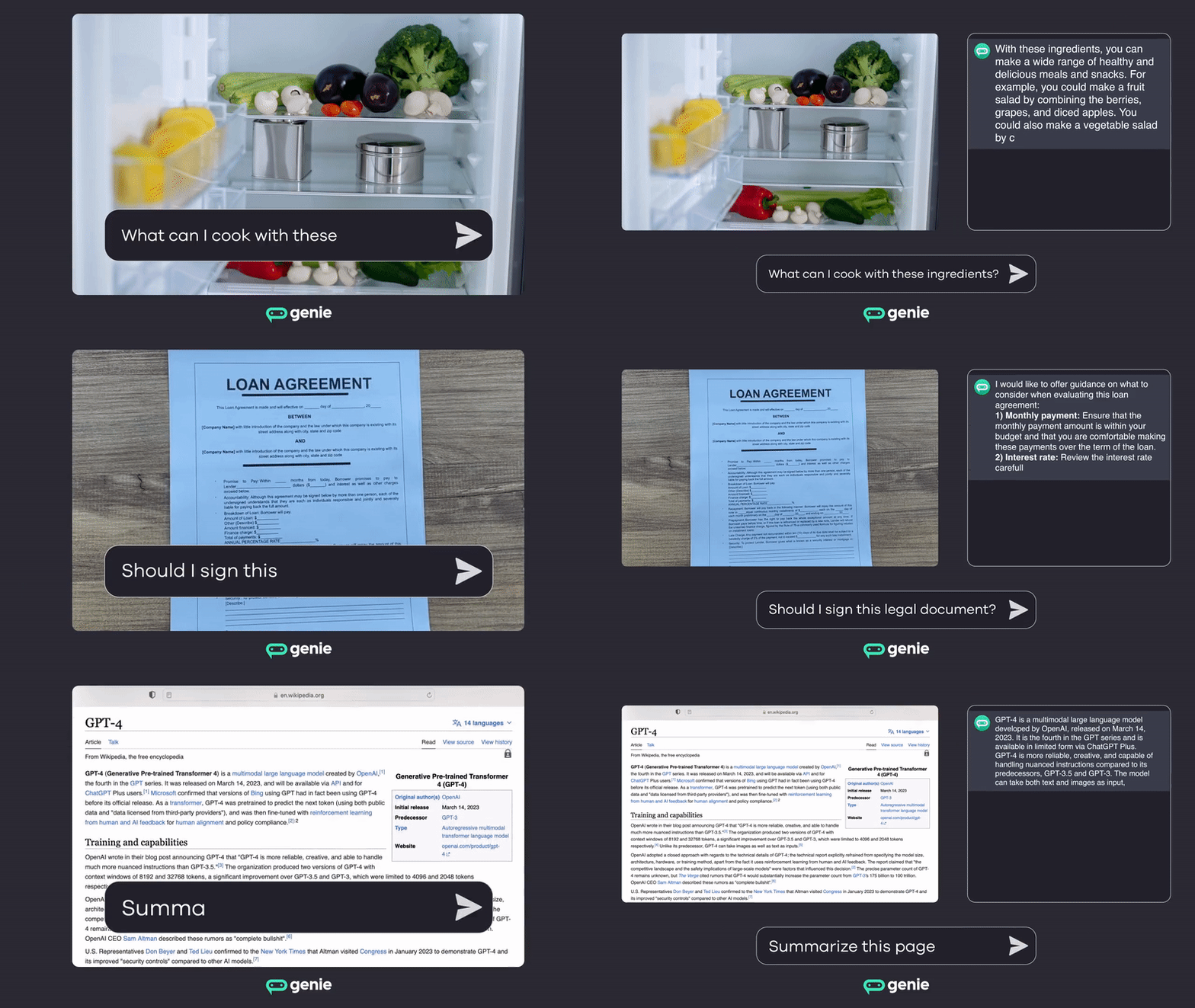
- Documents: ability to extract critical insights and key points from large volumes of text, facilitating faster information retrieval and comprehension. Generative AI can be applied to document generation, where it can produce human-like texts, reports, or even creative writing based on specific prompts or templates. Moreover, the technology can aid in sentiment analysis, identifying emotions and opinions expressed within documents, which is valuable for market research, customer feedback analysis, and social media monitoring. Long context windows now allow entire contracts, reports, or codebases to be analyzed at once, and Retrieval-Augmented Generation (RAG) lets systems cite the passages behind each answer.
- Summarize: summarizing extensive documents, webpages, and diverse content quickly. Generative AI can sift through large volumes of text, extracting essential information and condensing it into concise and coherent summaries. This capability is particularly advantageous in information-heavy domains like journalism, research, and content curation, as it enables efficient knowledge extraction and dissemination. Moreover, Generative AI excels in summarizing webpages, helping users quickly grasp the key points and main ideas from online articles, blog posts, and news updates. Summaries can still omit crucial caveats or introduce details not present in the source, so high-stakes summaries should be checked against the original.
- Creative Expression:
- Narratives: produce compelling and imaginative narratives, stories, and creative writing. These AI-generated narratives can range from short stories and novels to scripts for movies and other forms of entertainment. By learning from vast datasets of existing literature and creative works, Generative AI can mimic the style and tone of different authors, allowing for the creation of unique and diverse storytelling experiences. Furthermore, Generative AI's ability to understand context and coherence ensures that the narratives it generates remain engaging and cohesive. Imitating specific living authors' styles and training on their books without permission are at the center of current copyright litigation.
- Stories: weaving together characters, plots, and settings to produce compelling and original stories. This application of Generative AI has the potential to revolutionize the creative writing process, serving as an inspiring tool for authors and storytellers by offering fresh ideas and alternative perspectives. AI-generated stories can range from short narratives to more extensive literary works, each with its distinct voice and style.
- Scriptwriting: creative expression across various media, including scripts, news, radio programs, movies, TV shows, and other forms of entertainment. In the field of scriptwriting, Generative AI can craft compelling dialogue, character interactions, and plotlines, offering invaluable assistance to screenwriters and playwrights in generating fresh and innovative content. For news generation, Generative AI can analyze vast amounts of data and produce summaries and reports, expediting the process of news dissemination and enhancing information accessibility. The 2023 Writers Guild of America agreement established early ground rules for AI in Hollywood screenwriting, and AI-generated text published to inform the public now carries labeling duties in the EU unless a person takes editorial responsibility.
Co-Pilot
AI co-pilots are artificial intelligence systems that assist humans in performing tasks. These systems can be used in a variety of applications, from helping pilots fly planes to assisting people in their daily lives. For example, Microsoft announced its AI-powered digital Assistants named ‘Copilot’ which it said had the potential to "revolutionize how people operate fundamentally and unleash a new wave of productivity increase". Measured productivity effects have since proven real but uneven, depending heavily on the task and how work is reorganized around the tool.
- Coding: AI-powered developer tool that assists software developers with coding tasks by providing suggestions, examples, and explanations for code that is being written; by allowing developers to interact with code using natural language commands. This novel approach simplifies the coding process, making it more accessible to non-experts and streamlining collaboration among programmers. The AI-driven coding Assistants can suggest code snippets, fix errors, and provide context-aware suggestions. Coding tools have since evolved into agents that can edit many files, run tests, and open pull requests; controlled studies show both speedups and, in some expert settings, slowdowns, so teams should measure results rather than assume them. See AI Pair Programming.
- Operating System: Microsoft announced at its 2023 Build developer conference that it would incorporate generative artificial intelligence into Windows with a feature called “Windows Copilot,” initially a persistent sidebar on the desktop activated by a taskbar button. Microsoft later replaced the sidebar design with a standalone Copilot app and added a dedicated Copilot key on new PC keyboards.
- Office Productivity: Copilot for Microsoft 365, embedded in apps like Word, PowerPoint, Excel, and Outlook, launched on GPT-4 and a Large Language Model (LLM) grounded in the user's organizational data; Copilots were also extended to Dynamics 365 business apps, Power Platform, and Microsoft's security suite. The product has since been renamed Microsoft 365 Copilot and become multi-model: GPT-5 arrived in August 2025, and Anthropic's Claude models were added in September 2025, first in the Researcher agent and Copilot Studio, so organizations can choose a model per task.
- Job Listing: analyze and understand job descriptions and candidate resumes more effectively. This enables recruiters to identify the most suitable candidates efficiently, saving time and effort in the hiring process. Moreover, Generative AI can aid in generating more comprehensive and tailored job listings, optimizing the language and content to attract a diverse pool of candidates. The technology can also help in automating candidate screening, highlighting relevant skills and experiences, and providing personalized feedback to applicants. Automated screening is legally sensitive: hiring is classified as a high-risk use under the EU AI Act, and several US jurisdictions require bias audits or notices for automated employment decision tools.
Visual
AI systems can learn from vast datasets of images, videos, and graphics, capturing the underlying patterns, textures, and styles present in visual data. With this knowledge, Generative AI can create original artworks, digital illustrations, and visually striking designs, blurring the line between human creativity and artificial intelligence. Most current image and video generators use latent diffusion or related flow-matching methods, sometimes combined with autoregressive transformers, and leading providers now attach watermarks or C2PA content credentials to their output.
- Images: produce lifelike images that are often indistinguishable from real photographs to casual viewers. By training on vast datasets of diverse images, the generative AI system can learn intricate details, textures, and styles, enabling it to create compelling images of objects, scenes, and lifelike portraits of people. Text rendering, hands, and precise spatial instructions, once common failure points, have improved substantially, and modern systems can edit existing images through conversation.
- 2D/3D Models: learn from vast datasets of existing models, be it images, blueprints, or 3D meshes. By comprehending underlying patterns and structures, Generative AI can then generate new models with growing accuracy and creativity. In the realm of 2D models, this technology can produce diverse artwork, designs, and illustrations with impressive complexity and style. When it comes to 3D models, Generative AI can synthesize realistic and detailed objects, environments, and characters, proving valuable in fields like gaming, virtual reality, and architecture.
- Faces and Avatars: analyze and understand the intricate features and nuances present in large datasets of human faces. Armed with this knowledge, they can then generate new faces and avatars that exhibit lifelike qualities, from facial expressions and skin textures to hairstyles and eye colors. This technology finds widespread applications in various industries, from gaming and animation, where it allows for the creation of lifelike characters, to virtual reality and augmented reality experiences, where it enables users to embody digital personas. Furthermore, Generative AI facilitates the personalization of avatars, allowing users to craft their ideal virtual representation, and thus, enhancing the sense of immersion and engagement in virtual worlds. The same capability enables impersonation and non-consensual imagery, which is why deepfake labeling rules and takedown laws now apply in several jurisdictions (see Fake).
- Drawings: acquired an understanding of diverse drawing styles and artistic elements by analyzing vast collections of existing artwork. By learning the intricate details of brush strokes, colors, and compositions, Generative AI can produce new drawings that exhibit creativity and diversity. This technology has broad applications, from aiding artists and designers in generating novel ideas and inspirations to providing interactive tools that transform rough sketches into polished artworks. Additionally, Generative AI has the potential to democratize art creation, allowing individuals without traditional artistic skills to express themselves through drawings and visual storytelling.
- Photographs: can learn from vast datasets of real images and understand intricate details, textures, and styles present in photographs. By leveraging this knowledge, Generative AI can produce new photographs that are visually indistinguishable from real images to most viewers. This technology has potential in various applications, from creative endeavors like generating novel scenes and landscapes, to practical uses such as image augmentation for data augmentation in machine learning. It can also assist in restoring old or damaged photographs, filling in missing details plausibly; restored details are inferred rather than recovered, so restorations should not be treated as documentary evidence.
- Artwork: can learn from extensive collections of existing artwork and have gained an understanding of various artistic styles, techniques, and aesthetics. With this knowledge, Generative AI can create new and unique pieces of art that exhibit creativity and imagination. From generating abstract pieces to photorealistic landscapes, the AI's capacity to produce art has become increasingly sophisticated and refined. Artists and designers can now collaborate with Generative AI as a tool to spark inspiration, discover novel ideas, and experiment with new artistic directions. Whether training on artists' work without consent is lawful is being contested in courts; the UK High Court's 2025 Getty Images v. Stability AI decision found that model weights do not store copies of training images, while US cases remain unresolved.
- Video and Animation: can learn from massive collections of video data, comprehending the temporal relationships and patterns within video sequences. With this knowledge, Generative AI can generate entirely new videos, blending scenes, objects, and characters into visual narratives. Moreover, the AI's predictive capabilities allow it to anticipate and generate future frames in a video sequence, enabling smooth and realistic animations. This technology finds applications in diverse fields, from entertainment and gaming, where it can create lifelike characters and dynamic virtual worlds, to film and visual effects, where it streamlines the animation process and enhances storytelling possibilities. Since 2025, leading video models generate synchronized dialogue and sound along with images, and world models such as Genie 3 generate explorable environments in real time; see Recent Developments.
Audio
AI systems can learn from extensive collections of audio data, capturing the intricacies of musical tones, voice inflections, and ambient sounds. With this knowledge, Generative AI can compose original music, produce unique sound effects, and even mimic human voices with high accuracy. This technology opens up new possibilities for musicians, sound designers, and content creators, empowering them to explore new sonic territories and enhance their creative output. See Synthesize Speech and Music.
- Voice: can learn from vast datasets of audio recordings and speech patterns, capturing the intricate nuances of human vocalizations and sounds. By understanding the underlying structures and patterns of different languages and accents, Generative AI can produce highly realistic and expressive voice recordings that listeners often cannot distinguish from human speech. Additionally, this technology allows for the creation of entirely new audio content, from music compositions to sound effects, offering new opportunities for creative expression. Furthermore, Generative AI can be applied to voice cloning, enabling users to have their voices replicated for various applications, including personalized voice Assistants or audiobook narrations. Cloning from only a few seconds of audio also enables fraud and impersonation; after an AI-generated robocall imitated a US presidential candidate in early 2024, the US Federal Communications Commission ruled that AI-generated voices in robocalls fall under existing restrictions on artificial voices. Consent and verification are essential.
- Music and Audio: can learn from extensive datasets of existing music and audio, grasping the intricacies of musical structure, melody, harmony, and rhythm. With this knowledge, Generative AI can generate original music compositions across various genres and styles. This technology not only fosters novel musical expressions but also opens up new avenues for collaboration between artists and AI, enriching the creative process by providing fresh ideas and inspiration. Moreover, Generative AI enables the creation of unique soundscapes, sound effects, and audio textures that find applications in various industries, including gaming, film, and virtual reality experiences. Record labels have sued and negotiated with AI music companies over training data, and streaming platforms have introduced policies on AI-generated tracks and impersonation.
Data
AI systems can learn from vast datasets and understand underlying patterns, structures, and relationships within the data. With this knowledge, Generative AI can generate synthetic data artifacts that closely resemble real-world samples, making it invaluable for applications like data augmentation, where the augmentation of existing data with synthetic examples enhances model performance and generalization. See Data Augmentation, Data Labeling, and Auto-Tagging.
- Training: create synthetic data that closely resembles real-world samples. This capability is particularly beneficial when dealing with limited or imbalanced datasets, as Generative AI can augment the existing data, making it more diverse and comprehensive. Additionally, Generative AI can generate data for rare or challenging scenarios, providing crucial training examples that are difficult to obtain in real life. Furthermore, Generative AI allows for data anonymization and privacy preservation, making it possible to share datasets without compromising sensitive information; note that synthetic data can still leak details of real records if the generator memorized them, so privacy should be tested rather than assumed. This technology has vast applications in various fields, including computer vision, natural language processing, and speech recognition. Research published in Nature in 2024 showed that repeatedly training models on their own output, replacing real data, causes "model collapse," while later work found that keeping real data and accumulating synthetic data alongside it avoids collapse in tested settings.
- Test: create synthetic data that closely resembles real-world samples, providing a diverse and representative test set. This is particularly valuable in scenarios where acquiring real test data is expensive, time-consuming, or impractical. Generative AI enables the creation of a wide range of test data, spanning different data distributions, classes, and scenarios, which helps assess the generalization and robustness of machine learning algorithms. Moreover, Generative AI can generate challenging and edge cases that may be rare or difficult to encounter in real data, facilitating comprehensive testing of models under various conditions. As a result, Generative AI enhances the reliability and accuracy of model evaluation, empowering researchers and practitioners to thoroughly test their AI systems, identify potential weaknesses, and ultimately improve the overall performance and effectiveness of machine learning models. Synthetic test sets should be validated against real data, because a generator's blind spots can be reproduced in the tests themselves (see Out-of-Distribution (OOD) Generalization).
- Scenario Context: can learn from diverse datasets of scenarios, encompassing different environments, interactions, and events. With this knowledge, Generative AI can create synthetic scenario context data, tailored to specific use cases and applications. This technology is particularly valuable in training AI models for tasks that require a deep comprehension of real-world context, such as natural language understanding, autonomous vehicles, and robotics. By generating diverse and realistic scenarios, Generative AI enhances the generalization and robustness of AI systems, allowing them to adapt to a broad spectrum of real-world situations. Additionally, Generative AI enables the creation of simulated environments for testing and training AI applications, saving time and resources while offering a controlled and safe space for experimentation. Interactive world models are a recent step in this direction.
Designs
Generative AI can be used to develop artifacts for designs, providing a wealth of creative solutions and augmenting various industries' design processes. In product design, especially in fashion, architecture, and industrial design, Generative AI assists in generating innovative and aesthetically appealing concepts, accelerating the ideation and prototyping stages. For materials, Generative AI can propose novel materials with specific properties and characteristics, which must then be validated experimentally. In the metaverse, Generative AI plays a role in creating immersive and realistic virtual environments for gaming and simulation, enhancing user experiences and storytelling possibilities. Moreover, in the realm of gaming, Generative AI can generate diverse characters, landscapes, and assets, elevating game development and fostering player engagement. For fonts and typography, the AI can produce unique and artistic fonts, empowering designers to explore new territories in typographic expression. For specifications, infrastructure, and schematics, the AI can generate detailed documentation, aiding engineers and architects in their projects. Even in the pharmaceutical industry, Generative AI holds potential in drug discovery, accelerating research by generating molecular structures and predicting drug properties.
- Product Designs: can assist designers in generating novel and cutting-edge concepts, expediting the design process and sparking creativity. In fashion, it can create unique clothing designs and fabric patterns, pushing the boundaries of style and wearability. In architecture, it can generate futuristic building designs and optimize spatial layouts, improving sustainability and livability. See Architecture and Interior Design.
- Materials: can propose new materials with specific attributes, tailoring them to meet various industrial needs. This technology holds promise in material science and engineering, potentially enabling lightweight, durable, and sustainable materials for diverse applications, from high-performance alloys for aerospace to bio-inspired materials for medical devices. Results so far are contested: Google DeepMind's 2023 GNoME work reported 2.2 million new crystal structures, but independent chemists found scant evidence that sampled entries were novel, credible, and useful, and identified many near-duplicates. AI-proposed materials need expert review and synthesis before claims of discovery are justified.
- Metaverse: Generative AI has played a role in the development of the Metaverse, a virtual and interconnected world that encompasses a vast array of immersive experiences and interactions. Generative AI enables the synthesis of lifelike landscapes, interactive objects, and diverse characters, each with unique behaviors and attributes. This technology is a driving force behind the creation of expansive and evolving digital universes for gaming, social interactions, education, training, and even work. Through Generative AI, the Metaverse can expand and adapt, responding to the actions and preferences of its users.
- Gaming: can create vast and immersive gaming worlds filled with dynamic landscapes, diverse characters, and interactive elements. Moreover, AI-generated content can keep games evolving, offering new possibilities for exploration and discovery. In gameplay, Generative AI can also be applied to create intelligent NPCs (non-player characters) with sophisticated behaviors and decision-making capabilities, elevating the level of challenge and engagement for players. See Game Development with Generative AI.
- Fonts and Typography: produce unique and original fonts, ranging from classic and elegant to experimental and avant-garde. This technology empowers designers with a wide range of typographic choices, allowing them to explore new styles and create custom fonts tailored to specific projects and brand identities. Additionally, Generative AI enables the generation of font variations, making it easier to find the perfect fit for a particular design.
- Specifications: can learn from extensive datasets of existing specifications and comprehend the intricate details and formats. With this knowledge, Generative AI can draft accurate and standardized specifications for products, projects, or processes, streamlining the documentation process and ensuring consistency and clarity in communication. Generated specifications still require engineering review, since plausible but wrong values are a characteristic failure mode.
- Infrastructure: can analyze data from satellite images, geographical information systems, and architectural blueprints to generate comprehensive infrastructure designs. This technology aids urban planners, civil engineers, and architects in developing efficient and sustainable infrastructure solutions, optimizing resource utilization, and minimizing environmental impact; developing detailed plans and layouts for various infrastructure projects.
- Schematics: accelerates the design process for engineers and designers, enabling them to produce detailed and accurate schematics for various systems and circuits with less effort; generating complex technical drawings and diagrams.
- Drugs: can generate new molecular structures and predict their properties, including interactions with specific targets or diseases. This technology accelerates drug discovery by suggesting potential drug candidates, optimizing their effectiveness, and reducing the time and cost of the early discovery process. AlphaFold 3 (2024) predicts how proteins bind to other molecules, and AI-discovered drug candidates have entered clinical trials, with early mid-stage results reported in 2025. Truly individualized, AI-generated drugs remain a long-term aspiration rather than current practice, and clinical trials, not models, still determine safety and efficacy.
Techniques
Generative AI has emerged as a groundbreaking field with diverse applications and innovative techniques, Strategy & Tactics that drive its success across various domains. When applied to open-ended gaming, Generative AI demonstrates its ability to create intelligent Agents capable of learning and adapting in dynamic, unpredictable environments, leading to new advances in artificial intelligence-driven gaming experiences. Furthermore, Generative AI can handle some unanticipated scenarios, showcasing its capacity to address novel challenges, although generalization far outside the training distribution remains a known weakness. In the pursuit of these goals, Generative AI employs a plethora of techniques, including rules and inferences, where models learn from predefined guidelines and logical reasoning to make decisions. Reinforcement learning plays a pivotal role by allowing AI Agents to learn from trial and error and optimize their actions based on rewards and penalties. Additionally, alternative learning techniques supplement the Generative AI arsenal by embracing innovative approaches beyond traditional methodologies, making it a powerful force in the realm of cutting-edge AI research and development. As Generative AI continues to evolve and expand its applications, its techniques, strategies, and tactics remain at the forefront of pushing the boundaries of artificial intelligence capabilities in unforeseen and unprogrammed scenarios.
Strategies
Generative AI has found extensive applications in various strategic domains, showcasing its versatility and power in tackling complex challenges. One of the key areas where Generative AI excels is strategic decision-making. By leveraging generative models, AI systems can simulate and generate a multitude of possible scenarios, allowing them to explore different strategic options and outcomes. This capability proves valuable in fields such as finance, business, and military planning, where decision-makers can use generative models to assess risks, optimize resource allocation, and devise robust strategies. Moreover, in the realm of gaming and sports, Generative AI has enabled the development of intelligent Agents that can learn and adapt to opponents' strategies, making the gameplay more dynamic and engaging. Additionally, Generative AI has shown promise in generating novel strategies for various tasks, pushing the boundaries of human creativity and problem-solving. As Generative AI continues to advance, its strategic applications are likely to grow, empowering decision-makers across industries with intelligent tools to navigate complex scenarios and make informed choices. Simulated scenarios inherit the assumptions and biases of the model that generated them, so they support, rather than replace, human judgment and real-world data.
- Open-ended Gaming: In open-ended or sandbox games, players are given a high degree of freedom to explore and interact with the game world, often without strict objectives or predefined paths. These games allow players to shape their own experiences, making choices and decisions that can lead to various outcomes and adventures, giving rise to dynamic and unpredictable gameplay. Open-ended worlds are now a research testbed for generative agents, and world models such as Google DeepMind's Genie 3 can generate the explorable worlds themselves in real time.
- Unforeseen Scenarios: In adversarial situations, an AI system is faced with unforeseen and challenging scenarios that require strategic decision-making and adaptation. These scenarios often involve opponents or adversaries who actively work against the AI, posing difficult obstacles that demand clever and innovative strategies to overcome. Adversarial situations are prevalent in various AI applications, such as game playing, cybersecurity, and autonomous vehicles, where the AI system must navigate and respond effectively to dynamic and unpredictable environments. For generative systems specifically, a major adversarial risk is prompt injection, where instructions hidden in documents or web pages hijack an agent's behavior.
Tactics
Generative AI has proven to be a powerful tool when applied to various tactical domains, demonstrating its efficacy in devising effective and adaptive tactics for a wide range of applications. Generative AI continues to break new ground in intelligent problem-solving, optimization, and decision-making. One of the primary tactics utilized by Generative AI is reinforcement learning, where AI Agents learn from trial and error to optimize their actions based on feedback in the form of rewards or penalties. This approach has enabled the development of intelligent systems capable of mastering complex tasks, such as game playing, robotics control, and autonomous vehicles. Additionally, Generative AI leverages alternative learning techniques, exploring innovative methodologies beyond traditional methods to enhance its tactical prowess. These techniques encompass approaches like unsupervised learning, self-supervised learning, and transfer learning, which allow AI systems to leverage existing knowledge and experiences to improve their performance in new tasks and environments. In processes, Generative AI streamlines and optimizes workflows, improving efficiency and reducing manual intervention. By harnessing Generative AI's tactical capabilities, researchers and practitioners are unlocking new avenues for intelligent problem-solving, optimization, and decision-making in various fields, contributing to the continuous advancement of artificial intelligence technology.
- Rules/Inferences: one essential tactic employed by Generative AI is the use of rules and inferences. By learning from predefined guidelines and logical reasoning, AI models can make informed decisions based on explicit rules and inferred patterns. This tactic is particularly useful in knowledge-based systems, expert systems, and rule-based games. In current practice, written rules often take the form of system instructions or a "constitution" that guides a model's behavior during training and use (see Constitutional AI).
- Reinforcement Learning: is another pivotal tactic that has transformed AI applications. Through a process of trial and error, AI Agents learn to take actions that maximize cumulative rewards and minimize penalties, enabling them to excel in dynamic and uncertain environments. This approach has found remarkable success in areas like game playing, robotics, and autonomous vehicles, where the AI must learn from experience to navigate complex scenarios. For generative models, reinforcement learning is now central to post-training: learning from human preferences shapes helpful and safe behavior, and learning from verifiable rewards (correct math answers, passing code tests) produces reasoning models. See Policy Gradient (PG) and Proximal Policy Optimization (PPO).
- Novel Learning Methods: leverages various non-traditional and innovative methodologies that deviate from the conventional supervised, unsupervised, and reinforcement learning paradigms and other emerging approaches that aim to improve learning efficiency, data utilization, and generalization capabilities of AI systems. These tactics allow AI systems to capitalize on unlabelled data, learn from their own predictions, and transfer knowledge from one task to another, enhancing their adaptability and generalization abilities. Examples include self-supervised pretraining, in-context learning from examples in the prompt, distillation of large models into smaller ones, and synthetic data generated by stronger models.
- Processes: can analyze vast datasets of existing processes, comprehend the underlying patterns, and identify opportunities for improvement and efficiency. Generative AI can then propose new process designs, streamlining operations and reducing manual intervention. This technology enables the creation of innovative and data-driven processes that adapt to changing circumstances, ensuring adaptability and resilience in today's dynamic business landscape. Moreover, Generative AI can simulate different scenarios, allowing businesses to explore potential outcomes before implementing changes, mitigating risks and making informed decisions. The integration of Generative AI in process design can optimize resource allocation, reduce costs, and increase productivity, but surveys consistently find that measurable value comes mainly to organizations that redesign workflows rather than simply adding AI tools to existing ones.
Topics
Generative AI is a fascinating and rapidly evolving field that focuses on the creation of models capable of generating new data that resembles real-world examples. As Generative AI continues to make strides, it holds the potential to transform various industries and redefine the boundaries of artificial creativity.
- A fundamental concept within Generative AI is the comparison between Generative and Discriminative approaches. While discriminative models aim to distinguish and classify data into predefined categories, generative models go beyond classification by attempting to model the underlying distribution of the data, enabling them to generate entirely new samples.
- The adoption of Generative AI methods involves leveraging techniques like Variational Autoencoder (VAE)s, Generative Adversarial Network (GAN)s, diffusion models, and autoregressive models. However, this progress is not without challenges, as generative models are susceptible to hallucination: producing seemingly plausible but incorrect or unrealistic outputs.
- Deep Generative Modeling techniques have emerged as a solution to enhance the performance of generative models by employing deep neural networks.
- Moreover, advancements in Generative Modeling Language have revolutionized the way machines understand and produce human-like text, opening up avenues for creative applications such as text generation, translation, and dialogue systems.
Generative vs Discriminative
Background: What is a Generative Model? | Google More formally, given a set of data instances X and a set of labels Y:
- Generative models capture the joint probability p(X, Y), or just p(X) if there are no labels.
- Discriminative models capture the conditional probability p(Y | X).
A generative model includes the distribution of the data itself, and tells you how likely a given example is. For example, models that predict the next word in a sequence are typically generative models (usually much simpler than GANs) because they can assign a probability to a sequence of words.
Informally:
- Generative models can generate new data instances.
- Discriminative models discriminate between different kinds of data instances.
The two views are linked by Bayes' rule. A generative model that knows how data is produced for each label can be turned into a classifier:
- <math>p(Y \mid X) = \frac{p(X \mid Y)\, p(Y)}{p(X)}</math>
In practice, discriminative models are usually more accurate for pure classification because they spend all their capacity on the decision boundary, while generative models are harder to train but can create new samples, fill in missing data, and estimate how unusual an input is. Modern large language models blur the line: they are generative models that can also classify, simply by being asked. See Discriminative vs. Generative.
Generative AI Adoption Methods
The adoption of Generative AI involves incorporating generative models and algorithms into various applications and domains. Generative AI techniques enable the creation of new and realistic content, such as images, text, music, or videos, by learning patterns from existing data. Here are the key methods of adopting Generative AI:
- Training Custom Models: One adoption method involves training custom generative models specific to a particular use case or dataset. This method requires collecting and preprocessing relevant data and training the model to learn from that data. By fine-tuning the model's parameters and architecture, developers can create generative models tailored to their specific needs.
- This method offers flexibility and control, allowing developers to focus on the unique characteristics and requirements of their application. However, it requires expertise in data collection, model training, and optimization. Training a large model from scratch is now feasible mainly for well-funded organizations; most teams instead fine-tune existing models, often with parameter-efficient methods that update only a small fraction of weights.
- Utilizing Pretrained Models: Another adoption method is to use pretrained generative models that have been trained on large-scale datasets by experts or organizations. Pretrained models capture general patterns and styles from diverse data sources and can be readily used for content generation tasks. Developers can integrate these models into their applications without the need for extensive training or data collection.
- This method offers convenience and saves time as developers can leverage existing models that have already learned complex patterns. It is suitable for applications that do not require customization or fine-grained control over the generated content. Open-weight models, available through hubs such as Hugging Face, can be run privately on an organization's own infrastructure, and Stanford's 2026 AI Index found the best open models trailing the best closed models by only a few percentage points.
- API Services: Many companies and cloud service providers offer Generative AI as a service through APIs. These APIs provide developers with a simple and accessible way to integrate generative capabilities into their applications. By leveraging these services, developers can make API calls to generate content without the need to directly train or manage generative models.
- API services provide convenience, scalability, and consistent performance as the underlying generative models are maintained and optimized by the service providers. Developers can focus on utilizing the generative capabilities without worrying about the complexities of model training and deployment. The trade-off is dependence on a vendor: models are updated or retired on the provider's schedule, as developers who built on OpenAI's Sora video API learned when it was shut down in September 2026.
- Retrieval and Grounding: Rather than retraining a model on company knowledge, many organizations connect a model to their documents through Retrieval-Augmented Generation (RAG), so answers draw on current, citable sources. This reduces, but does not eliminate, hallucination.
- Agents and Tool Integration: Generative models can be given tools (search, databases, code execution, business applications) and orchestrated as agents that complete multi-step tasks. Standards such as the Model Context Protocol make integrations reusable across AI products. Agents require careful permissioning and monitoring because errors compound across steps and hidden instructions can manipulate them.
- Frameworks and Libraries: There are various open-source frameworks and libraries available that provide tools, prebuilt models, and APIs for Generative AI. These frameworks, such as TensorFlow, PyTorch, or Keras, offer a wide range of functionalities and utilities for building and deploying generative models. Higher-level orchestration libraries such as LangChain help assemble prompts, retrieval, and tools into applications.
- Leveraging frameworks and libraries provides developers with flexibility, customization, and control over the generative models. They offer extensive documentation, tutorials, and community support, making it easier to adopt and implement Generative AI solutions.
- Collaboration and Knowledge Sharing: The adoption of Generative AI can be facilitated through collaboration and knowledge sharing within the AI community. Developers, researchers, and enthusiasts can collaborate on open-source projects, contribute to shared repositories, and participate in online forums or conferences dedicated to Generative AI.
- Collaboration and knowledge sharing accelerate the adoption process by pooling expertise, sharing resources, and collectively advancing the state of Generative AI. It fosters innovation and encourages the development of best practices and guidelines for effective adoption.
| If you need... | Start with | Watch out for |
|---|---|---|
| General writing, analysis, or coding help | A hosted assistant or API | Data privacy terms; verify facts |
| Answers grounded in your own documents | Retrieval-augmented generation over a pretrained model | Retrieval quality; citation checking |
| A consistent style, format, or narrow skill | Fine-tuning a pretrained or open-weight model | Overfitting; maintenance as base models change |
| Multi-step automation across systems | Agents with tool connections | Permissions, monitoring, prompt injection |
| Full control, privacy, or offline use | Self-hosted open-weight models | Hardware costs; safety tuning is your responsibility |
| A new capability not covered by existing models | Training a custom model | Data, compute, and expertise requirements |
Hallucination
YouTube search... ...Google search
- Got It AI creates truth checker for ChatGPT ‘hallucinations’ | Dean Takahashi - VentureBeat
- CheckGPT | Got It AI
- AI Hallucination Cases | Damien Charlotin ... database of court decisions involving AI-fabricated citations and other hallucinated content
Hallucination is a term used to describe when Large Language Models (LLMs) generate text that is factually incorrect or entirely fictional. Hallucination refers to mistakes in the generated text that are semantically or syntactically plausible but are in fact incorrect or nonsensical. This occurs because the model’s primary objective is to generate text that is coherent and contextually appropriate, rather than factually accurate. The model’s training data may contain inaccuracies, inconsistencies, and fictional content, and the model has no way of distinguishing between fact and fiction. As a result, it may generate text that aligns with the patterns observed in the training data but is not grounded in reality. From a technical perspective, hallucination in language models can be attributed to a lack of ground truth from external sources. Hallucination can be a serious problem for LLMs because it can lead to the spread of misinformation, expose confidential information, and create unrealistic expectations about what LLMs can do. Many researchers prefer the term "confabulation," borrowed from neurology, because the model is not perceiving anything; it is filling gaps with plausible inventions.
Example: In artificial intelligence (AI) a hallucination or artificial hallucination is a confident response by an AI that does not seem to be justified by its training data. For example, a hallucinating chatbot with no knowledge of Tesla's revenue might internally pick a random number (such as "$13.6 billion") that the chatbot deems plausible, and then go on to falsely and repeatedly insist that Tesla's revenue is $13.6 billion, with no sign of internal awareness that the figure was a product of its own imagination. Such phenomena are termed "hallucinations", in analogy with the phenomenon of hallucination in human psychology. Note that while a human hallucination is a percept by a human that cannot sensibly be associated with the portion of the external world that the human is currently directly observing with sense organs, an AI hallucination is instead a confident response by an AI that cannot be grounded in any of its training data. AI hallucination gained prominence around 2022 alongside the rollout of certain Large Language Model (LLM) such as ChatGPT. Users complained that such bots often seemed to "sociopathically" and pointlessly embed plausible-sounding random falsehoods within its generated content. Another example of hallucination in artificial intelligence is when the AI or chatbot forget that they are one and claim to be human By 2023, analysts considered frequent hallucination to be a major problem in LLM technology. Wikipedia
AI hallucinations are less like human exaggerations and more like confident guessing on an exam: models are rewarded for producing an answer, not for saying "I don't know," so they fill gaps with plausible inventions.
What causes it. Current research points to several interacting causes:
- Statistical pressure in pretraining. Facts that appear rarely in the training data cannot be learned reliably, so the model produces plausible patterns instead. Kalai and colleagues (2025) showed formally that the share of facts appearing only once in the data sets a floor on error rates for such facts.
- Evaluation incentives. Most benchmarks score abstentions as wrong, which rewards guessing during post-training.
- Missing or poor context. Without retrieved sources, the model relies on memory; with irrelevant or misleading sources, it can faithfully summarize the wrong material.
- Sycophancy. Models trained on human approval tend to agree with the user's framing, including false premises in the question.
How often it happens. Rates vary enormously by task and model. On short factual summaries of supplied documents, leading models now make few errors; on open questions about obscure facts, legal citations, or niche technical details, error rates can remain high. Stanford researchers found specialized legal research tools using retrieval still hallucinated 17 to 33 percent of the time in a 2025 peer-reviewed study, and court records show well over a thousand filings containing fabricated authorities.
How to reduce it.
- Ground answers in supplied or retrieved sources and require citations, then check that the citations exist and say what is claimed.
- Ask the model to state uncertainty or answer "I don't know" when sources are missing.
- Use sampling-based checks such as semantic entropy, or ask for several independent answers and compare them.
- Keep a human expert in the loop for consequential outputs, and treat fluent prose as a reason for more scrutiny, not less.
Ground truth refers to data that accurately represents the real-world phenomena or outcomes that an AI model aims to predict, classify, or generate. Ground truth is information that is known to be real or true, provided by direct observation and measurement (i.e. empirical evidence) as opposed to information provided by inference. For generative systems, ground truth is what hallucination is measured against, and building reliable ground-truth datasets for open-ended text is itself a major research challenge.
Deep Generative Modeling
Deep generative modeling uses neural networks to represent complex probability distributions over images, audio, text, and other data. The major approaches, summarized in The Physics above, are autoregressive models, variational autoencoders, generative adversarial networks, normalizing flows, energy-based models, and diffusion and score-based models. Each trades off sample quality, diversity, speed, and the ability to compute the likelihood of data. Since about 2021, diffusion has dominated image, video, and audio generation, while autoregressive transformers dominate language; the two families increasingly borrow from each other, as diffusion language models and autoregressive image generators show.
Generative Modeling Language
Language generation rests on the autoregressive factorization described above: a Transformer reads all previous tokens through attention and predicts a probability distribution over the next token. Scaling these models, then aligning them with instruction tuning and reinforcement learning, produced today's chat assistants; adding reinforcement learning on verifiable problems produced reasoning models. See Large Language Model (LLM) and Generative Pre-trained Transformer (GPT).
MIT GenAI Summit
Resources
Additional Viewing
MIT 6.S191: Deep Generative Modeling (2026 edition). Ava Amini's lecture in MIT's introductory deep learning course covers how generative models learn data distributions, from autoencoders and variational autoencoders to generative adversarial networks and the ideas behind diffusion. Released in April 2026 with slides and labs at introtodeeplearning.com, it is a clear, current introduction to the model families and mathematics described on this page. Watch on YouTube
MIT 6.S191: Language Models and New Frontiers (2025 edition). Ava Amini explains how large language models generate text, their capabilities and limitations, and emerging research directions in generative AI. It complements the Generative Modeling Language and Hallucination sections by connecting next-token prediction to the strengths and failure modes of chat systems. Watch on YouTube
Deep Dive into LLMs like ChatGPT, Andrej Karpathy (February 2025, about 3.5 hours). Karpathy walks through the full pipeline behind chat assistants: data, tokenization, pretraining, supervised fine-tuning, and reinforcement learning, including reasoning models. He devotes substantial time to why models hallucinate and how tool use and retrieval mitigate it, making this one of the best general-audience explanations of generative language models. Watch on YouTube
How I Use LLMs, Andrej Karpathy (February 2025, about 2 hours 11 minutes). A practical tour of today's generative AI tools: choosing models, reasoning modes, web search and deep research, file uploads, code interpreters, voice, and image and video generation. It turns the concepts on this page into concrete, everyday workflows. Watch on YouTube
References
Foundations
- Auto-Encoding Variational Bayes | Diederik Kingma and Max Welling (2013) Introduces the variational autoencoder.
- Generative Adversarial Networks | Ian Goodfellow and colleagues (2014) Introduces adversarial training for generative models.
- Attention Is All You Need | Ashish Vaswani and colleagues, Google (2017) Introduces the transformer architecture underlying modern language models.
- Denoising Diffusion Probabilistic Models | Jonathan Ho, Ajay Jain, and Pieter Abbeel (2020) Makes diffusion models practical for high-quality image generation.
- High-Resolution Image Synthesis with Latent Diffusion Models | Robin Rombach and colleagues (2022) The latent diffusion approach behind Stable Diffusion.
- Background: What is a Generative Model? | Google Concise explanation of generative versus discriminative modeling.
State of the field and recent models
- Technical Performance, 2026 AI Index Report | Stanford HAI Benchmarks, open versus closed model gaps, and adoption data as of early 2026.
- DeepSeek-R1: Incentivizing Reasoning Capability in LLMs via Reinforcement Learning | DeepSeek-AI (2025; peer-reviewed version in Nature) Shows reasoning can emerge from reinforcement learning on verifiable rewards.
- Genie 3: A New Frontier for World Models | Google DeepMind (August 2025) Real-time, interactive world generation at 720p and 24 frames per second, with stated limitations.
- OpenAI Sets Two-Stage Sora Shutdown | The Decoder Reports the discontinuation of the Sora app (April 2026) and API (September 2026).
- Introducing Mercury 2 | Inception Labs (February 2026) Company announcement of a diffusion language model emphasizing parallel decoding speed.
- Expanding Model Choice in Microsoft 365 Copilot | Microsoft (September 2025) Adds Anthropic's Claude models alongside OpenAI models in Microsoft 365 Copilot.
- Donating the Model Context Protocol and Establishing the Agentic AI Foundation | Anthropic (December 2025) Moves the leading agent tool-connection standard to the Linux Foundation.
- Measuring the Environmental Impact of Delivering AI at Google Scale | Google (2025) Reports about 0.24 Wh of energy for a median Gemini text prompt.
Hallucination and reliability
- Why Language Models Hallucinate | Adam Tauman Kalai, Ofir Nachum, Santosh Vempala, and Edwin Zhang (2025) Argues hallucinations arise from statistical pressures and persist because evaluations reward guessing.
- Detecting Hallucinations in Large Language Models Using Semantic Entropy | Sebastian Farquhar and colleagues, Nature (2024) Measures uncertainty over meanings to flag confabulations.
- Large Legal Fictions: Profiling Legal Hallucinations in Large Language Models | Matthew Dahl and colleagues, Stanford RegLab (2024) Finds general-purpose chatbots hallucinate on a majority of legal queries.
- AI on Trial: Legal Models Hallucinate in 1 out of 6 (or More) Benchmarking Queries | Stanford HAI Summary of the preregistered study of Lexis+ AI and Westlaw tools, later published in the Journal of Empirical Legal Studies.
- AI Hallucination Cases | Damien Charlotin, HEC Paris Continuously updated database of court decisions involving AI-fabricated content.
Provenance, data, and law
- Scalable Watermarking for Identifying Large Language Model Outputs | Sumanth Dathathri and colleagues, Google DeepMind, Nature (2024) Describes SynthID-Text, a production text watermark.
- Coalition for Content Provenance and Authenticity (C2PA) Open standard for content credentials describing how media was created and edited.
- EU AI Act Article 50 Transparency Obligations Go Live | Baker Botts (September 2026) Explains disclosure, machine-readable marking, and deepfake labeling duties enforceable from August 2026.
- Artificial Intelligence Case Tracker | Banner Witcoff Tracks major AI copyright cases, including Bartz v. Anthropic, Kadrey v. Meta, and Getty Images v. Stability AI.
- AI Models Collapse When Trained on Recursively Generated Data | Ilia Shumailov and colleagues, Nature (2024) Demonstrates degradation when models train on their own output.
Science
- Accurate Structure Prediction of Biomolecular Interactions with AlphaFold 3 | Josh Abramson and colleagues, Nature (2024) Extends structure prediction to complexes with DNA, RNA, ligands, and ions.
- Scaling Deep Learning for Materials Discovery | Amil Merchant and colleagues, Google DeepMind, Nature (2023) The GNoME study reporting 2.2 million predicted crystal structures.
- Artificial Intelligence Driving Materials Discovery? Perspective on the Article: Scaling Deep Learning for Materials Discovery | Anthony Cheetham and Ram Seshadri, Chemistry of Materials (2024) Critical evaluation finding scant evidence of novel, credible, and useful compounds in sampled GNoME entries.