Development
Youtube ... Quora ...Google search ...Google News ...Bing News
- Development ... Notebooks ... AI Pair Programming ... Codeless ... Hugging Face ... AIOps/MLOps ... AIaaS/MLaaS
- Analytics ... Visualization ... Graphical Tools ... Diagrams & Business Analysis ... Requirements ... Loop ... Bayes ... Network Pattern
- Conversational AI ... ChatGPT | OpenAI ... Gemini | Google ... Claude | Anthropic ... Bing/Copilot | Microsoft ... Siri | Apple ... Meta ... Perplexity ... You ... phind ... Grok | xAI ... Groq ... Ernie | Baidu ... DeepSeek ... Alibaba
- Libraries & Frameworks Overview ... Libraries & Frameworks ... Git - GitHub and GitLab ... Other Coding options
- Strategy & Tactics ... Project Management ... Best Practices ... Checklists ... Project Check-in ... Evaluation ... Measures
- Risk, Compliance and Regulation ... Ethics ... Privacy ... Law ... AI Governance ... AI Verification and Validation
- Smart Cities
- Telecommunications ... Computer Networks ... 5G ... Satellite Communications ... Quantum Communications ... Smart Cities ... Digital Twin ... Internet of Things (IoT) ... AI Broadcast; Radio, Stream, TV ... Space-based Data Centers
- Agents/Assistants ... Robotic Process Automation ... Personal Companions ... Productivity ... Email ... Negotiation ... LangChain
- Data Science ... Governance ... Preprocessing ... Exploration ... Interoperability ... Master Data Management (MDM) ... Bias and Variances ... Benchmarks ... Datasets
- Excel ... Documents ... Database; Vector & Relational ... Graph ... LlamaIndex
- Data Quality ...validity, accuracy, cleaning, completeness, consistency, encoding, padding, augmentation, labeling, auto-tagging, normalization, standardization, and imbalanced data
- Large Language Model (LLM) ... Multimodal ... Foundation Models (FM) ... Generative Pre-trained ... Transformer ... Attention ... GAN ... BERT
- Python ... GenAI w/ Python ... JavaScript ... GenAI w/ JavaScript ... TensorFlow ... PyTorch
- Gaming ... Game-Based Learning (GBL) ... Security ... Generative AI ... Games - Metaverse ... Quantum ... Game Theory ... Design
- Prompt Engineering (PE) ...PromptBase ... Prompt Injection Attack
- Artificial Intelligence (AI) ... Generative AI ... Machine Learning (ML) ... Deep Learning ... Neural Network ... Reinforcement ... Learning Techniques
- Google Natural Language
- World Models
- Service Capabilities
- AI Marketplace & Toolkit/Model Interoperability
- Artificial General Intelligence (AGI) to Singularity ... Curiosity ... Emergence ... Moonshots ... Explainable AI ... Automated Learning
- Immersive Reality ... Metaverse ... Omniverse ... Transhumanism ... Religion
- Symbiotic Intelligence ... Bio-inspired Computing ... Neuroscience ... Connecting Brains ... Nanobots ... Molecular ... Neuromorphic ... Evolutionary/Genetic
- Learning Techniques
- Differentiable Programming
- Humor ... Writing/Publishing ... Storytelling ... Broadcast ... Journalism/News ... Podcasts ... Books, Radio & Movies - Exploring Possibilities
- TransmogrifAI - workflows on Spark | Salesforce ... GitHub
- Graphpipe | Oracle
- Kite works with the top Python editors; Atom, PyCharm, Sublime, VS Code and Vim
- Machine Learning vs Traditional Programming | Oleksii Kharkovyna - Towards Data Science - Medium
- Track: Solving Software Engineering Problems with Machine Learning | Cyril Magnin III - QCon.ai
- Re-imagining developer productivity with AI-assisted tools | Amanda Silver - Microsoft ...AI-assisted IntelliSense GPT-2 transformer
- Smart modeling tools – AI to help you model better | Jordi Cabot - Modeling Languages
- A Great Model is Not Enough: Deploying AI Without Technical Debt | DataKitchen - Medium
- Machine Learning for Big Code and Naturalness | ML4code ...Research on machine learning for source code.
- 6 Ways AI Transforms Software Development | Mariya Yao - MetaMaven
- Towards a DSL for AI Engineering Process Modeling | Sergio Morales - MOdeling LAnguages
- Bill Gates: People Don’t Realize What’s Coming | Somnath Singh - Medium
- AlphaCode | Google DeepMind ... capable of writing computer programs at a competitive level.
- Introducing Devin, the first AI software engineer | Cognition ... And setting a new state of the art on the SWE-bench coding benchmark
Machine Learning vs Traditional Modeling
Major differences:
- More emphasis on information pipeline management; data collection, preparation, feature determination, and pipeline configuration management.
- Developing a machine learning application is more iterative and explorative process than traditional software engineering. Learning / Testing / Validation of models is an upfront task
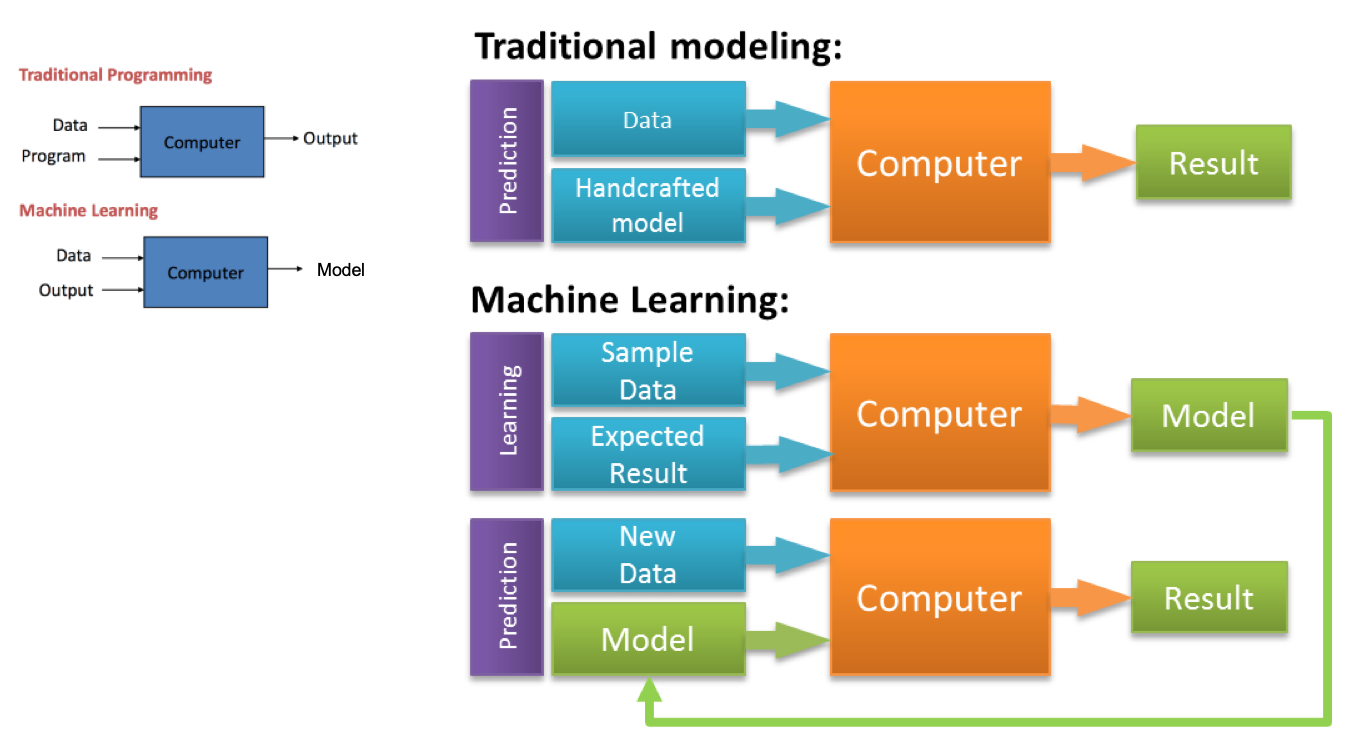
Developing a machine learning application is even more iterative and explorative process than software engineering. Machine learning is applied on problems that are too complicated for humans to figure out (that is why we ask a computer to find a solution for us!). Differences between machine learning and software engineering | Antti Ajanki - Futurice
We had a deal, programmers are supposed to automate everyone else's jobs, not automate our jobs.
AI Playgrounds
AI Playgrounds, LLM playground, model playground, model studio, and "prompt engineering IDE, the playground is the sandbox itself: a browser workspace where you write a prompt, set the dials, run it, and inspect exactly what came back. When a vendor bundles that sandbox with API keys, billing, usage logs, team settings, and evaluation tools, the whole package usually goes by developer console or developer platform. Every major model lab now ships one, and by 2026 most have grown far beyond a text box with a temperature slider.
If using a standard chat app like ChatGPT or Gemini is like ordering dinner at a restaurant, an LLM playground is like stepping into a commercial test kitchen. The restaurant decides the recipe, the portion size, and the plating, and it never shows you the kitchen. In the test kitchen, you control the oven temperature, ingredient ratios, and prep rules (system instructions, token limits, structured JSON outputs, tools, and API keys), so you can build a repeatable recipe. Once the dish comes out right, you write it down as a recipe card (exported code or a saved, versioned prompt). Your line cooks (your app or script) can then reproduce it the same way a thousand times a day.
That distinction matters more than it looks. Consumer chat apps wrap the model in their own hidden instructions, memory, tools, and interface choices. As a result, the answer you get in a chat window can differ from what the same model returns through the API. A playground strips most of that away, so what you test is much closer to what you ship.
What You Control in a Playground
Most playgrounds expose the same core controls, even when the labels differ. Once you learn them, you can use them in every tool in this section.
- System instructions
- These are the standing orders the model reads before every request: role, rules, tone, and output format. Think of them as the laminated card taped above the prep station. A good pattern is to keep stable rules here ("Return only MediaWiki markup. Never invent citations.") and put the changing material, like the raw notes you want converted, in the user message. That separation makes prompts easier to reuse, test, and cache.
- Prompt variables and templates
- Placeholders mark the parts of a prompt that change from run to run. Claude Console uses double curly braces (for example
{{article_text}}), and the OpenAI Playground uses single braces such as{user_goal}. Variables are what turn a one-off prompt into a template you can run against dozens of test inputs. - Sampling and length controls
- Temperature and top-p control how adventurous the model's word choices are, and a max output tokens setting caps the length. Low temperature suits extraction, classification, and formatting, while higher settings suit brainstorming. Newer reasoning models often lock or ignore temperature. Instead, they offer a reasoning or "effort" setting that trades speed and cost for deeper thinking.
- Structured output
- This setting forces the response to match a JSON schema you define. Asking for JSON in a prompt usually works, but enforcing a schema means the API guarantees valid, parseable output every time. As of 2026, Google, OpenAI, and Anthropic all offer schema enforcement.
- Tools and grounding
- Function calling lets the model ask your own code to take an action. Built-in tools go further: web search grounding, code execution, URL fetching, and file search run on the provider's servers inside a single API call.
- Code export and API keys
- The "Get code" button is the bridge from experiment to product. It turns the exact prompt, model, and settings you just tested into Python, JavaScript, or cURL that you can paste into a script.
- Usage and cost visibility
- Token counts, latency figures, and spend dashboards show you whether a prompt that works is also one you can afford at scale.
Industry Terminology
The space moves fast, and vendors rarely agree on names. These are the labels you'll see most often in documentation, job posts, and comparison articles.
| Term | What it means | Typical examples |
|---|---|---|
| LLM playground (also AI playground, model playground) | A browser sandbox for testing prompts and settings against one or more models | OpenAI Playground, GroqCloud Playground |
| Model studio or developer console / developer platform | A lab's own playground, bundled with API keys, billing, logs, and often evaluation tools | Google AI Studio, Claude Console, Mistral AI Studio |
| Prompt engineering IDE or prompt management platform | Tools for versioning, testing, and deploying prompts, usually across several model vendors | PromptLayer, Langfuse, Braintrust |
| LLM gateway (also AI gateway, model router) | One API key and endpoint that routes requests to many providers, with fallbacks and unified billing | OpenRouter, Vercel AI Gateway |
| BYOK chat client (also LLM frontend) | A polished chat interface that runs on your own API keys, so you pay providers directly | TypingMind, LibreChat, LobeChat |
| LLMOps platform or visual workflow / agent builder | A drag-and-drop canvas for chaining prompts, retrieval, tools, and agents into pipelines | Dify, Flowise, OpenAI Agent Builder |
| AI app builder (casually, "vibe coding" platform) | You describe an app in plain English and get a running, deployable application | Bolt.new, Lovable, Google AI Studio Build mode |
| Agentic IDE | A full code editor where autonomous agents plan, write, run, and test code across a project | Google Antigravity, Cursor, Windsurf |
Depending on what you use AI Studio for most, the space breaks down into three groups: direct model studios, multi-model gateways and clients, and visual and agentic builders.
Direct Model Studios (The Closest Match)
Every major AI lab runs its own developer sandbox for testing prompts, tweaking model parameters, and getting API keys. These studios are the closest match to Google AI Studio because they do the same job: they make the lab's own models easy to try, then give you everything you need to call them from code. The tradeoff is lock-in. Each studio runs only its own company's models, so comparing vendors means opening several tabs or using a gateway (covered in the next section).
Google AI Studio
Google AI Studio (aistudio.google.com) is Google's free, browser-based workspace for the Gemini model family. The classic prompt view includes system instructions, sampling controls, a structured output toggle, and built-in tools like Grounding with Google Search, code execution, and URL context. Gemini's very large context window (a million tokens or more on current models) lets you drop whole books, long videos, audio files, or codebases straight into a prompt. That remains one of its biggest practical advantages.
Two features make it more than a prompt box:
- Compare Mode, added in October 2024, splits the screen so you can send the same prompt to two models. You see each model's latency and can adjust system instructions on each side.
- Build mode turns a plain-English description into a working web app with live preview, code inspection, and GitHub export. That puts AI Studio in the AI app builder category as well.
Google pushed Build mode much further at I/O 2026 (May 19, 2026):
- Android apps: You can now build native Android apps in the Build tab. AI Studio generates Kotlin code using Jetpack Compose and previews the app in an Android emulator that runs in your browser. It can also install the app on a real device over ADB and publish it to the Google Play internal test track in one click.
- Google Workspace access: Apps you build can work with your Google Workspace data, such as dashboards built on Sheets or tools that organize Drive files.
- Design tools: The Build agent can generate custom images with Nano Banana, and a new annotation tool lets you draw directly on the preview to request changes.
- Free deployment: New builders can deploy their first two apps to Google Cloud at no cost and without a credit card.
- Mobile app: A mobile version of AI Studio opened for pre-registration.
- Export to Antigravity: When a prototype outgrows the browser, you can export the whole project, including conversation history, files, and secrets, into Google Antigravity for local development.
Google is also consolidating its tools. In March 2026, it announced that Firebase Studio (formerly Project IDX) would be discontinued, with shutdown planned for March 2027. That leaves AI Studio and Antigravity as Google's main AI development tools.
OpenAI Playground
The OpenAI Playground, part of the OpenAI Platform at platform.openai.com, is the direct counterpart to Google AI Studio for the GPT model family, including OpenAI's reasoning models. In it you can:
- Test system prompts and adjust sampling settings.
- Force outputs to match a structured JSON schema.
- Attach tools such as function calling, file search, web search, and Code Interpreter.
- Compare models side by side.
- Export your prompt as Python or JavaScript code.
The biggest recent change is that prompts are now saved, versioned objects rather than scratchpad text. You create a prompt, add {variables} for the parts that change, and click Publish to get a Prompt ID. The Responses API and the Agents SDK accept the same variables, so the prompt you tested is exactly the one your code calls. If you call a Prompt ID without naming a version, you always get the latest one.
Two more tools sit on top of saved prompts:
- Linked Evals: You can link an Eval (a saved set of test cases) to a prompt. It fills in the variables for you and shows pass or fail results on the prompt's page.
- Optimize: This tool rewrites your prompt or suggests fixes, with a summary of what changed. You can apply the changes in one click.
At DevDay on October 6, 2025, OpenAI added Agent Builder as part of its AgentKit toolkit. It is a visual canvas where you drag nodes together into multi-step agent workflows, with versioning, preview runs, and evaluation settings built into each step. On stage, OpenAI's Christina Huang built and shipped a working agent in about eight minutes. Agent Builder puts the OpenAI Platform partly in the workflow builder category too.
Claude Console (formerly Anthropic Console)
Anthropic's developer environment for the Claude model family now lives at platform.claude.com, alongside its documentation, and Anthropic calls it the Claude Console. The Workbench is where you write and run prompts by hand. Two assistants sit on top of it:
- Prompt generator: You describe a task in one sentence (for example, "Triage inbound customer support requests"), and Claude drafts a full, structured prompt with variables already in place.
- Prompt improver: You paste a prompt that isn't quite working,
Act as an expert technical writer and update the submitted MediaWiki section (and any subsections) and provide the result as a code block for copy and paste. Use proper MediaWiki syntax for all formatting. The text must be clear, direct, and conversational.
Do not add new wiki links. It is okay to include current wiki links.
Update the section and subsections by performing thorough research. The update must be longer than the code posted, providing substantially more and better material.
Follow these specific instructions:
1. Scope and Section Hierarchy:
  * Work strictly within the provided section and its subsections.
  * Maintain the correct MediaWiki header levels (for example, == Section ==, === Subsection ===, ==== Sub-subsection ====) as appropriate for the content hierarchy.
  * If the section includes an overview, bullet points, or core principles, expand each element with deeper technical explanation, practical examples, or real-world analogies.
2. Content and Research Expansion:
  * Perform research to bring the section up to date with the latest verified developments, empirical studies, or industry findings.
  * Expand the narrative with substantive technical depth and context rather than filler.
  * Preserve all existing wiki links exactly as written in the original snippet, but do not invent or add any new internal wiki links.
3. Additional Viewing:
  * Include a subsection titled === Additional Viewing === at the end of the section.
  * Provide links and summaries for verified recent YouTube tutorials, lectures, or discussions that are 20 minutes or longer.
  * Put each video ID in this exact format: Provided ID could not be validated..
  * Below each video tag, include a concise 2 to 3 sentence summary explaining the content, key speakers, and specific insights covered.
4. Voice and Formatting:
  * Write in an active, direct, conversational voice that sounds like a thoughtful human.
  * Do not use em dashes; use standard commas, colons, or parentheses instead.
  * Output only the updated section and subsections inside a single code block ready for direct copy and paste into the MediaWiki source editor.
  * Do NOT include inline reference tags: <ref name="sandia" />, sandia here is an example
  * Do not use citations, instead references need to be hyperlinks in this bulleted mediawiki format: [http... title | author] description
[INSERT SECTION CONTENT HERE]
AI Pair Programming Tools
- Development ... Notebooks ... AI Pair Programming ... Codeless ... Hugging Face ... AIOps/MLOps ... AIaaS/MLaaS
- Analytics ... Bayes ... Loop ... Visualization ... Diagrams & Generative AI for Business Analysis ... Network Pattern
- GitHub Copilot vs OpenAI Codex. Which should you use? | Aiden Tilgner - Medium
- GitHub Copilot Open Source Alternatives | Matthew Mayo -KDnuggets
- Cursor ... The AI-first Code Editor; Build software faster in an editor designed for pair-programming with AI
These tools assist software developers by generating code snippet suggestions based on the context and intent of the code being written. Today, AI-powered software development tools are allowing people to build software solutions using the same language that they use when they talk to other people. These AI-powered tools translate natural language into the programming languages that computers understand. How AI makes developers’ lives easier, and helps everybody learn to develop software | John Roach - Microsoft

Image to Code
Text to Code
ChatGPT | OpenAI for Development
YouTube ... Quora ...Google search ...Google News ...Bing News
- ChatGPT | OpenAI
- Game Development with ChatGPT
- Agents/Assistants ... Robotic Process Automation ... Personal Companions ... Productivity ... Email ... Negotiation ... LangChain
- Python ... Generative AI with Python ... Javascript ... Generative AI with Javascript ... Game Development with Generative AI
- How to use ChatGPT for language generation in Python in 2023? | John Williams - Its ChatGPT ...Python
- How to use chatGPT for UI/UX design: 25 examples | Thalion - Medium
- Build a Chatbot Based on Your Own Documents with ChatGPT | Step-by-Step Guide | Vasos Koupparis
ChatGPT to create a Chatbot
Website Development with ChatGPT
Youtube ... Quora ...Google search ...Google News ...Bing News
- Game Development with ChatGPT
- Want to build a website? Just ask ChatGPT in plain english | Kevin Collier - NBC News
Chatgpt4.ai Copilot
YouTube ... Quora ...Google search ...Google News ...Bing News
Bing/Copilot
Codex | OpenAI
Youtube ... Quora ...Google search ...Google News ...Bing News
- OpenAI Codex
- Playground
- OpenAI's API
- Evaluating Large Language Models Trained on Code | Mark Chen et al.
Codex, a Generative_Pre-trained_Transformer_(GPT) language model fine-tuned on publicly available code from Microsoft's GitHub. Codex requires that you access it via their API, or Playground. Create your own fine-tuned OpenAI model by feeding it training data from files; then would be able to generate much more accurate and detailed responses; understanding the context of a file and generate very accurate, but specific code completion based on the file. Codex powers Microsoft's GitHub Copilot.
Amazon
CodeWhisperer
YouTube ... Quora ...Google search ...Google News ...Bing News
- Amazon CodeWhisperer | Amazon ... Build applications faster and more securely with your AI coding companion
- AWS Toolkit for Visual Studio Code | Amazon
- Amazon launches CodeWhisperer, a GitHub Copilot-like AI pair programming tool | Frederic Lardinois - TechCrunch
Amazon CodeWhisperer, a machine learning (ML)–powered service that helps improve developer productivity by generating code recommendations based on developers’ comments in natural language and their code in the IDE. Imagine being a software developer with an AI-powered coding companion, making your coding faster and easier. Amazon CodeWhisperer does just that. It uses generative AI under the hood to provide code suggestions in real time, based on a user’s comments and their prior code. It’s now available in preview as part of the AWS IDE Toolkit, which means developers can immediately use it right inside their preferred IDEs, including Visual Studio Code, IntelliJ IDEA, PyCharm, WebStorm and Amazon’s own AWS Cloud 9. Support for the AWS Lambda Console is also coming soon. Tool can autocomplete entire functions based on only a comment or a few keystrokes. Amazon trained the system, which currently supports Java, Javascript and Python, on billions of lines of publicly available open source code and its own codebase, as well as publicly available documentation and code on public forums.
AI code Assistants are software tools that use artificial intelligence to help developers write code faster and more accurately. They can generate code, suggest code completions, detect errors, and more. Here are some of the AI code Assistants available today:
AskCodi
An AI code Assistants that excels in writing documentation and unit tests. It can generate documentation from code comments or natural language queries, and create unit tests from code snippets or test cases. It supports Python, Java, JavaScript, C#, and PHP. It works as a web app or a browser extension.
Codiga
An AI code Assistant that helps ensure code quality and security. It can analyze code for errors, bugs, vulnerabilities, performance issues, style violations, and best practices. It can also suggest code improvements and refactorings. It supports Python, Java, JavaScript, TypeScript, C#, PHP, Ruby, Go, and Swift. It works as a web app or a VS Code extension.
Tabnine
An AI code Assistant that helps developers ship code faster without exposing intellectual property. It uses deep learning to provide code completions for any language in any editor. It can also suggest relevant documentation and code examples. It works offline and does not send any code to the cloud.
Sourcegraph Cody
An AI code Assistant that helps developers find and reuse code snippets from GitHub. It can search for code snippets based on natural language queries or keywords, and provide context and explanations for the results. It supports over 20 programming languages, such as Python, Java, JavaScript, C#, Ruby, Go, and Rust. It works as a web app or a VS Code extension.
Captain Stack
Youtube search... ...Google search
- Captain Stack ...Code suggestion for VSCode
This feature is somewhat similar to GitHub Copilot's code suggestion. But instead of using AI, it sends your search query to Google, then retrieves StackOverflow answers and autocompletes them for you.
GPT-Code-Clippy (GPT-CC)
Youtube search... ...Google search
an open source version of GitHub Copilot, a language model -- based on GPT-3, called GPT-Codex -- that is fine-tuned on publicly available code from GitHub.
Second Mate
Youtube search... ...Google search
An open-source, mini imitation of GitHub Copilot using EleutherAI GPT-Neo-2.7B (via Huggingface Model Hub) for Emacs.
Clara-Copilot VSCode
Youtube search... ...Google search
This feature is somewhat similar to GitHub Copilot's code suggestion. But instead of using AI, it sends your search query to Google, then retrieves StackOverflow answers and autocompletes them for you.
DeepCode
No-code AI
No-code AI, or codeless AI, refers to using a development platform with a visual, code-free, and often drag-and-drop interface to deploy AI and machine learning models. No-code AI solutions aim to allow non-technical users to create ML models without delving into details of every stage of creating ML models. No-code AI uses graphical user interfaces (GUIs) and pre-built machine learning models to build AI-based applications. It lets users input data, configure the model, and quickly create intelligent applications without coding expertise. The no-code AI toolset includes the following features:
- Data preparation: This feature allows users to prepare their data for machine learning by cleaning, transforming, and featurizing it.
- Model building: This feature allows users to select the right machine learning algorithm for their problem and train a model on their data.
- Model evaluation: This feature allows users to evaluate the performance of their models and compare different models to find the best one for their needs.
- Model deployment: This feature allows users to deploy their models to production so that they can be used to make predictions.
- Model monitoring: This feature allows users to monitor the performance of their models over time and make adjustments as needed.
DataRobot
a cloud-based platform that provides a complete solution for machine learning, from data preparation to model deployment. Its no-code AI toolset makes it easy for business users and non-technical professionals to create and deploy machine learning models.
Google Cloud AutoML
a suite of tools that automate the machine learning process for different types of tasks, such as image classification, text classification, and natural language processing. Its no-code interface makes it easy for anyone to create and deploy machine learning models without having to write any code.
Amazon SageMaker Autopilot
a fully managed service that automates the machine learning process for a variety of tasks. Its no-code interface makes it easy for anyone to create and deploy machine learning models without having to write any code.
Microsoft Azure Machine Learning Designer
a graphical tool that makes it easy to create and deploy machine learning models without having to write any code. It supports a variety of machine learning tasks, including image classification, text classification, and natural language processing.
H2O Driverless AI
a cloud-based platform that automates the machine learning process for a variety of tasks. Its no-code interface makes it easy for anyone to create and deploy machine learning models without having to write any code.
Domino Data Lab
a cloud-based platform that provides a variety of tools for machine learning, including a no-code AI toolset. Its no-code interface makes it easy for anyone to create and deploy machine learning models without having to write any code.
Clarizen
helps businesses automate their workflows and make better decisions. It offers a variety of AI-powered tools, including a no-code AI builder that lets users create and deploy machine learning models without having to write any code.
Obviously AI
AI platform that helps businesses build and deploy machine learning models without having to hire data scientists. Its no-code AI builder makes it easy to create and deploy machine learning models for a variety of tasks, such as customer segmentation, fraud detection, and product recommendations.
MonkeyLearn
a no-code AI platform that helps businesses extract insights from text data. It offers a variety of pre-trained AI models that can be used for tasks such as sentiment analysis, topic modeling, and named entity recognition.
Akkio
a no-code AI platform that helps businesses build and deploy machine learning models for a variety of tasks, such as fraud detection, customer segmentation, and product recommendations. Its no-code AI builder makes it easy to create and deploy machine learning models without having to write any code.
Teachable Machine
a free web app from Google that lets you create machine learning models for image classification, sound classification, and object detection without having to write any code. Teachable Machine no-code AI toolset
Lobe
a no-code AI platform that helps businesses create and deploy machine learning models for image classification, text classification, and natural language processing. Its no-code AI builder makes it easy to create and deploy machine learning models without having to write any code.
Appen
crowdsourcing platform that offers a variety of no-code AI tools, such as its Image Labeler tool, which can be used to label images for machine learning models.
Scale AI
a crowdsourcing platform that offers a variety of no-code AI tools, such as its Natural Language Processing tool, which can be used to label text for machine learning models.
AI Builder
a no-code AI platform from Microsoft that helps businesses build and deploy machine learning models for a variety of tasks, such as customer segmentation, fraud detection, and product recommendations. Its no-code AI builder makes it easy to create and deploy machine learning models without having to write any code.
Amazon Lex
a cloud-based service that helps businesses build conversational AI experiences. It offers a no-code interface that makes it easy to create chatbots that can understand and respond to natural language queries.
Google Dialogflow
a cloud-based service that helps businesses build conversational AI experiences. It offers a no-code interface that makes it easy to create chatbots that can understand and respond to natural language queries.
RunwayML
Supports a wide range of AI applications, including image synthesis, style transfer, natural language processing, and object detection
Glide
Makes it easy to build and deploy custom tools with clicks, not code
Noogata
Comes with pre-built AI blocks that can be used for a variety of tasks, such as predictive maintenance, fraud detection, and customer segmentation
Replit
- Phind
- Ghostwriter | Replit ... your partner in code. Harness the power of Replit’s AI to boost your productivity and creativity
Replit is an online integrated development environment (IDE) platform that provides a cloud-based workspace for coding, debugging, and deploying applications. It also offers a number of features that can help developers to be more productive, including a built-in code editor, a debugger, a terminal, and a file manager. In addition, Replit offers a number of integrations with other services, such as GitHub, Bitbucket, and Heroku. One of the most interesting features of Replit is its integration with AI.
Replit's AI Assistant can help developers with a variety of tasks, such as code completion, debugging, and documentation. The AI Assistants can also be used to generate code, which can be helpful for developers who are new to a particular programming language or who are looking for inspiration. Overall, Replit is a powerful and versatile IDE platform that can be used by developers of all levels of experience. The integration with AI makes Replit a particularly interesting option for developers who are looking for ways to be more productive and to learn new programming languages. It can generate code from natural language prompts or voice commands, and provide interactive feedback and guidance. It supports over 50 programming languages and frameworks, such as Python, JavaScript, HTML, CSS, React, TensorFlow, and PyTorch. It works as a web app or a mobile app.
Here are some examples of how AI can be used in Replit:
- Code completion: The AI Assistants can help developers to complete code by suggesting relevant functions, variables, and keywords.
- Debugging: The AI Assistant can help developers to debug their code by suggesting possible solutions to errors.
- Documentation: The AI Assistant can help developers to generate documentation for their code by extracting information from the code itself.
- Generating code: The AI Assistant can be used to generate code for a variety of tasks, such as creating web applications, mobile applications, and data science projects.
TerpreT Framework
TerpreT is a framework for building and deploying Natural Language Processing (NLP) models. It is designed to be easy to use and scalable, making it ideal for a variety of Natural Language Processing (NLP) tasks, such as text classification, question answering, and Natural Language Generation (NLG). TerpreT is based on the TensorFlow framework, which provides a powerful and flexible platform for Machine Learning (ML). TerpreT also includes a number of features that make it well-suited for NLP, such as:
- A built-in library of NLP pre-trained models
- A simple API for training and deploying NLP models
- A variety of tools for evaluating NLP models
- A community of developers and users who are actively contributing to the framework
TerpreT is a powerful and versatile framework that can be used to build and deploy a variety of NLP models. It is easy to use, scalable, and well-supported by a community of developers.
Here are some of the benefits of using TerpreT:
- Ease of use: TerpreT is designed to be easy to use, even for those with no prior experience with NLP or TensorFlow. The API is simple and intuitive, and the documentation is comprehensive.
- Scalability: TerpreT is designed to be scalable, so you can use it to train and deploy NLP models on large datasets.
- Flexibility: TerpreT is a versatile framework that can be used to build and deploy a variety of NLP models. It includes a built-in library of pre-trained models, and it can be used to train custom models from scratch.
- Community support: TerpreT is a actively supported framework with a large and growing community of users and developers. This means that you can get help and support if you need it.
Automating Web Applications

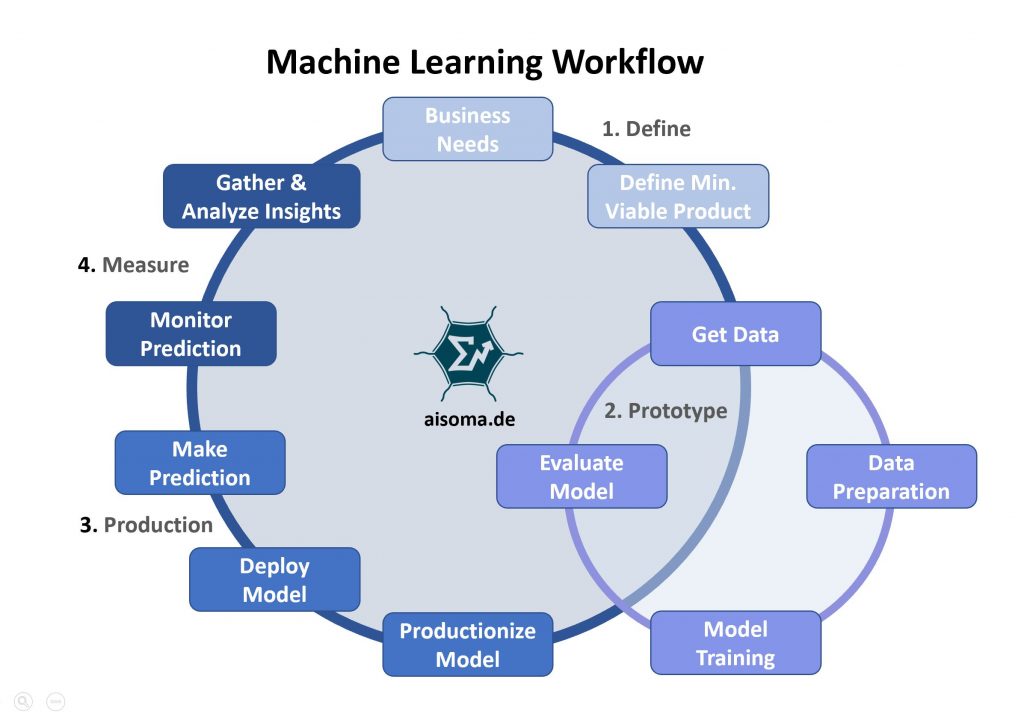
Software Development Life Cycle (SDLC)
Youtube search... ...Google search
- AIOps/MLOps
- AI Development life cycle: Explained | Aran Davies - DevTeam.Space
- Data Science –The need for a Systems Engineering approach | Ajit Jaokar - KDnuggets
- SDLC (Software Development Life Cycle) Tutorial: What is, Phases, Model | Guru99
- Organizing machine learning projects: project management guidelines | Jeremy Jordan
- The Deep Learning Toolset — An Overview | Timon Ruban - luminovo.ai - Medium
- How AI Will Change Software Development And Applications | Diego Lo Giudice - Forrester
- Artificial Intelligence in Testing: Tools and Advantages | Mitul Makadia - DZone
Reduce Bugs
Rust
- Rust... A language empowering everyone to build reliable and efficient software.
Rust is a systems programming language that has several unique features that help minimize and harden attack surfaces compared to other languages like C and C++. Rust's memory safety, concurrency model, security focus, and strong tooling help minimize and harden the attack surface compared to other systems programming languages.:
- Rust's memory safety guarantees: Rust's type system and ownership model eliminate entire classes of memory safety vulnerabilities like buffer overflows, use-after-free, and null pointer dereferences. This significantly reduces the attack surface by removing common sources of memory corruption bugs.
- Rust's concurrency model: Rust's concurrency primitives like threads and message passing are designed to avoid data races and other concurrency-related bugs. This helps prevent vulnerabilities that can arise from improper thread synchronization.
- Rust's focus on security: Security is a core design principle of Rust. The language and its standard library include features like cryptography, secure random number generation, and input validation to help developers build secure applications.
- Rust's tooling and ecosystem: Rust comes with a robust toolchain including a package manager, build system, and compiler that help developers find and fix security issues early in the development process. The Rust ecosystem also includes many security-focused libraries and tools.
Agile
Youtube search... ...Google search
- AI-Based Framework for Agile Project Management | Sandeep Aspari - Hackernoon
- How To Achieve Effective AI-Powered Agile Project Management | Martin F.R - Analytics India
- Using Artificial Intelligence to Boost Agile/DevOps Efficiency | Kristof Horvath
- AI-Based Framework for Agile Project Management | Stephanie Donahole - ReadWrite
- Web-Based Monte Carlo Simulation for Agile Estimation
- Lean Management Meets Artificial intelligence, Machine Learning, the Internet of All Things | Andrew Quibell - The Lean Post
- TastyCupcakes.org ... Fuel for Invention and Learning
- Innovation Games ... Creating Breakthrough Products Through Collaborative Play
- Excella ... Solve for today, evolve for tomorrow.
- Adventures with Agile ... a professional community of practice
AI has changed software development by exposing human perception, definition, and execution of programming. ...Future programmers won’t maintain complex repositories, analyze running times or create intricate programs. They’ll collect, sanitize, label, analyze, and visualize data feeding neural networks. 9 Ways To Implement Artificial Intelligence and Agile-Powered Management in Software Development | Chandresh Patel - DZone
...Introduce machine Learning (ML) techniques into your Software Development Life Cycle (SLDC) as follows:
1. Coding Assistants: Most of a developer’s time is spent debugging code and reading the documentation. With smart coding Assistant implemented using ML, developers can get quick feedback and recommendations based on the codebase, saving a lot of time. Great examples include Java’s Codota and Python’s Kite.
2. Automatic Coding Refactoring: It is important to have clean code because it makes collaboration a lot easier. Maintenance of clean code is also orders of magnitude easier than unclean code. Here's the deal; whenever an organization scales, refactoring becomes a painful necessity. With ML, it is easy to analyze code and optimize for performance by identifying potential areas for refactoring.
3. Making Strategic Decisions: A large chunk of a developer’s time is spent debating the features and products to prioritize. An AI model trained with data from past development projects can assess how applications perform, helping business leaders and engineering teams to identify methods of minimizing risk and maximizing impact.
4. Providing Precise Estimates: The profession of software development is known for exceeding budgets and timelines. To make a good estimate, it’s important to have a deep understanding of both the context and the development team. You can train an ML model using data from past projects like user stories, cost estimates, and feature definitions. This can prove very helpful in predicting effort and budget.
5. Analytics and Error Handling: Coding Assistants based on ML can identify patterns in historical data and identify common errors. If the engineer makes such an error during development, the coding Assistant will flag this. And that’s not all…after deployment, ML can be used to analyze logs and flag errors that can then be fixed. This makes the software developer proactive in solving errors. Who knows? Maybe in the future ML will correct software based on errors without the need for human intervention.
6. Rapid Prototyping: Converting business requirements into technology takes months at best or years to turn into technology. Today, however, ML is reducing development time by helping individuals with less technical knowledge to develop technologies.
7. Using AI for Project Planning: The human brain is an astonishingly great knowledge powerhouse. And what’s even more surprising is that we all have different cognitive abilities from one another. No two project managers will have the exact same thoughts on the same project. Enter ML. By replicating human intelligence, ML can create various permutations of a situation similar to the human brain.
8. Risk Estimation: Making informed decisions on risk estimation in software development is complex and factors in budgeting and scheduling constraints. In the beginning, healthy completion levels appear likely for every project. But here’s the kicker, when you start the project, the external environment and project interdependencies alter the probabilistic scenarios. Our limitation as humans is limited by the capacity to store and reproduce information. ML allows you to retrieve parameterized information on demand. You can train the AI model with past data of project start and end dates. This way, it will give you a realistic timeline for the current development project.
9. Project Resource Management: Delivering a software product depends on having the right people working on the project. Again, AI goes deep into the data on the history of past projects. It can give you information in real time on which developers are engaged in other projects. This makes it easy for you to know which developers are ready for deployment. Based on the ML prediction, you can either increase or reduce the number of developers.
Miro
- Miro ... your team's visual platform to connect, collaborate, and create — together.
Miro has rich, ready-to-use native capabilities for teams of every size to build out their vision with a creative, collaborative edge. That means supporting workflows in every corner of your business.
Miro AI is an AI collaboration tool that is integrated with the Miro platform. It uses artificial intelligence to help teams collaborate more effectively and efficiently. Miro AI is still under development, but it has the potential to significantly improve the way teams collaborate. Some of the features of Miro AI include:
- Automatic translation: Miro AI can automatically translate text into multiple languages, making it a valuable tool for teams with members from different countries.
- Optical character recognition (OCR): Miro AI can recognize text in images and PDFs, making it easier to organize and find information.
- Text analysis: Miro AI can analyze the text in your boards to identify trends and hidden insights.
- Recommendations: Miro AI can recommend ideas and resources that are relevant to your work.
- Clustering: Miro AI can cluster sticky notes by keywords or sentiment, making it easier to find related information.
- Ideas wall: Miro AI can create an "ideas wall" where team members can post their ideas and feedback.
- Discussions: Miro AI can facilitate discussions by summarizing the key points and identifying areas of agreement and disagreement.
Here are some specific examples of how Miro AI can be used to improve collaboration:
- A marketing team can use Miro AI to translate their marketing materials into multiple languages.
- A product development team can use Miro AI to analyze customer feedback and identify trends.
- A sales team can use Miro AI to create presentations and proposals.
- A project management team can use Miro AI to track progress and identify risks.
A design team can use Miro AI to brainstorm ideas and collaborate on designs.