(Deep) Convolutional Neural Network (DCNN/CNN)
YouTube ... Quora ...Google search ...Google News ...Bing News
- State Space Model (SSM) ... Mamba ... Sequence to Sequence (Seq2Seq) ... Recurrent Neural Network (RNN) ... Convolutional Neural Network (CNN)
- Large Language Model (LLM) ... Multimodal ... Native Multimodal Architectures ... Foundation Models (FM) ... Tabular Foundation Models (TabPFN) ... Time-Series Foundation Models (Chronos, TimesFM) ... Generative Pre-trained ... Transformer ... Attention ... GAN ... BERT ... Tokens
- Natural Language Processing (NLP) ... Generation (NLG) ... Classification (NLC) ... Understanding (NLU) ... Translation ... Summarization ... Sentiment ... Tools
- Artificial Intelligence (AI) ... Generative AI ... Machine Learning (ML) ... Deep Learning ... Neural Network ... Reinforcement ... AI Algorithms & Learning Methods Navigator
- Representation Learning
- Video/Image ... Vision ... Enhancement ... Fake ... Reconstruction ... Colorize ... Occlusions ... Predict image ... Image/Video Transfer Learning ... Classification
- Style Transfer
- Memory ... Lifelong Learning ... Memory Networks ... Hierarchical Temporal Memory (HTM) ... Hopfield Network (HN) ... False Memories
- An Intuitive Explanation of Convolutional Neural Networks | ujjwalkarn
- Neural Network Zoo | Fjodor Van Veen
- Guide
- CNN1. What is Computer Vision? | deeplearning.ai
- Convolutional Neural Networks for Visual Recognition | Stanford
- Learning AI if You Suck at Math — P5 — Deep Learning and Convolutional Neural Nets in Plain English! | Daniel Jeffries
- Graph Convolutional Network (GCN), Graph Neural Networks (Graph Nets), Geometric Deep Learning
- Foundations Built for a General Theory of Neural Networks | Kevin Hartnett
- CaImAn an open source tool for scalable calcium imaging data analysis | A. Giovannucci, J. Friedrich, P. Gunn, J. Kalfon, B. Brown, S. Koay, J. Taxidis, F. Najafi, J. Gauthier, P. Zhou, B. Khakh, D. Tank, D. Chklovskii, and E. Pnevmatikakis-eLIFE
- Convolutional Neural Networks: A Python Tutorial Using TensorFlow and Keras | Luciano Strika - MercadoLibre - KDnuggests
- A Beginner's Guide to Convolutional Neural Networks (CNNs) | Chris Nicholson - A.I. Wiki pathmind
- LeNet-5, convolutional neural networks | Yann LeCun
- Basic Convolutional Neural Network Architectures | Anomi Ragendran - DZone
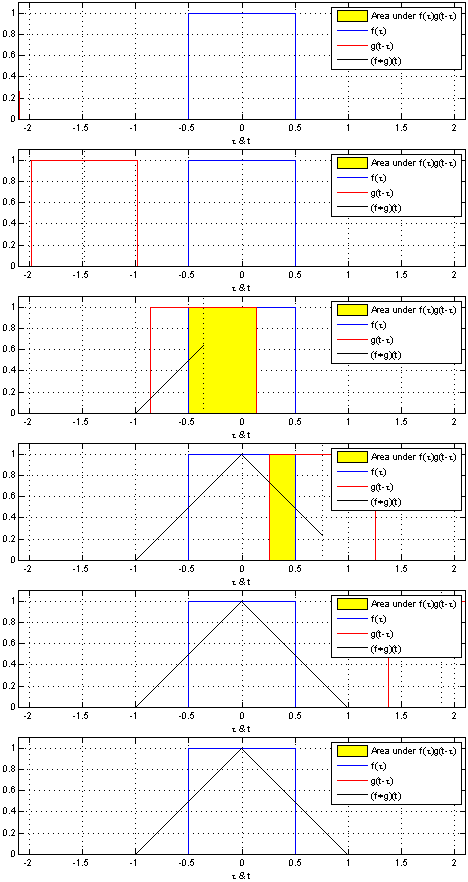
Convolution - is an integral that expresses the amount of overlap of one function g as it is shifted over another function f. It therefore "blends" one function with another.{Wolfram} a mathematical operation on two functions (f and g) to produce a third function that expresses how the shape of one is modified by the other. The term convolution refers to both the result function and to the process of computing it. Convolution is similar to cross-correlation. | Wikipedia

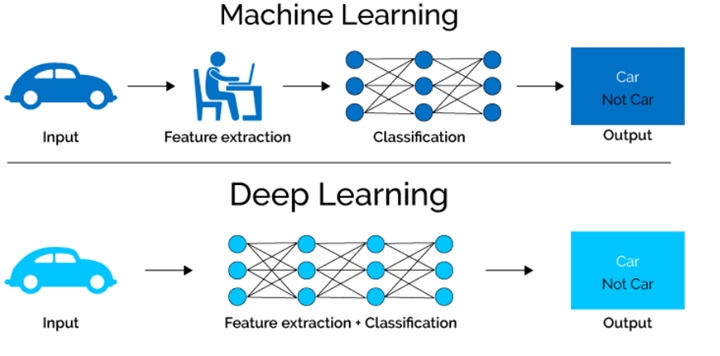
Convolutional Neural Networks (ConvNets or CNNs) classify images (e.g. name what they see), cluster them by similarity (photo search), and perform object recognition within scenes. They are algorithms that can identify faces, individuals, street signs, tumors, platypuses and many other aspects of visual data. Convolutional networks perform optical character recognition (OCR) to digitize text and make natural-language processing possible on analog and hand-written documents, where the images are symbols to be transcribed. CNNs can also be applied to sound when it is represented visually as a spectrogram. More recently, convolutional networks have been applied directly to text analytics as well as graph data with graph convolutional networks. They are primarily used for image processing but can also be used for other types of input such as as audio. A typical use case for CNNs is where you feed the network images and the network classifies the data, e.g. it outputs “cat” if you give it a cat picture and “dog” when you give it a dog picture. CNNs tend to start with an input “scanner” which is not intended to parse all the training data at once. For example, to input an image of 200 x 200 pixels, you wouldn’t want a layer with 40 000 nodes. Rather, you create a scanning input layer of say 20 x 20 which you feed the first 20 x 20 pixels of the image (usually starting in the upper left corner). Once you passed that input (and possibly use it for training) you feed it the next 20 x 20 pixels: you move the scanner one pixel to the right. Note that one wouldn’t move the input 20 pixels (or whatever scanner width) over, you’re not dissecting the image into blocks of 20 x 20, but rather you’re crawling over it. This input data is then fed through convolutional layers instead of normal layers, where not all nodes are connected to all nodes. Each node only concerns itself with close neighbouring cells (how close depends on the implementation, but usually not more than a few). These convolutional layers also tend to shrink as they become deeper, mostly by easily divisible factors of the input (so 20 would probably go to a layer of 10 followed by a layer of 5). Powers of two are very commonly used here, as they can be divided cleanly and completely by definition: 32, 16, 8, 4, 2, 1. Besides these convolutional layers, they also often feature pooling layers (Pooling / Sub-sampling: Max, Mean). Pooling is a way to filter out details: a commonly found pooling technique is max pooling, where we take say 2 x 2 pixels and pass on the pixel with the most amount of red. To apply CNNs for audio, you basically feed the input audio waves and inch over the length of the clip, segment by segment. Real world implementations of CNNs often glue an FFNN to the end to further process the data, which allows for highly non-linear abstractions. These networks are called DCNNs but the names and abbreviations between these two are often used interchangeably. LeCun, Yann, et al. “Gradient-based learning applied to document recognition.” Proceedings of the IEEE 86.11 (1998): 2278-2324.

Why do Convolutional Neural Networks work so well?
Algorithmic Simplicity explains the intuition behind why convolutional neural networks are so good at recognizing images.
How convolutional neural networks work, in depth
Brandon Rohrer walks step by step through the convolution, pooling, ReLU and fully connected layers of a CNN.
Feature Visualization & The OpenAI microscope
Yannic Kilcher looks at feature visualization and OpenAI Microscope, a tool for seeing what individual neurons in vision models respond to.
Convolutional Neural Networks - Ep. 8 (Deep Learning SIMPLIFIED)
Episode 8 of the Deep Learning SIMPLIFIED series from DeepLearning.TV gives a plain-language overview of convolutional neural networks.
A friendly introduction to Convolutional Neural Networks and Image Recognition
Luis Serrano gives a gentle, visual introduction to how convolutional neural networks recognize images.
Convolutional Neural Network (CNN) | Convolutional Neural Networks With TensorFlow | Edureka
Edureka tutorial explaining how convolutional neural networks work and how to build one with TensorFlow.
Convolutional Neural Networks with TensorFlow - Deep Learning with Neural Networks 13
Part 13 of the sentdex deep learning series, coding a convolutional neural network in TensorFlow.
TensorFlow Tutorial #02 Convolutional Neural Network
The second TensorFlow tutorial from Hvass Laboratories builds a convolutional neural network for classifying handwritten digits.
MIT 6.S094: Convolutional Neural Networks for End-to-End Learning of the Driving Task
Lex Fridman lecture from MIT 6.S094 on using convolutional neural networks to learn the driving task end to end from camera images.
Build a Neural Net in 4 Minutes
Siraj Raval codes a simple neural network in Python in about four minutes.
Convolutional Neural Networks - The Math of Intelligence (Week 4)
Week 4 of Siraj Raval's Math of Intelligence series explains the math behind convolutional neural networks.
CNN Architectures
The Evolution of Convolution Neural Networks
CodeEmporium traces how convolutional neural network architectures have evolved over the years.
Lecture 9 | CNN Architectures
Stanford CS231n lecture surveying landmark CNN architectures such as AlexNet, VGG, GoogLeNet and ResNet.
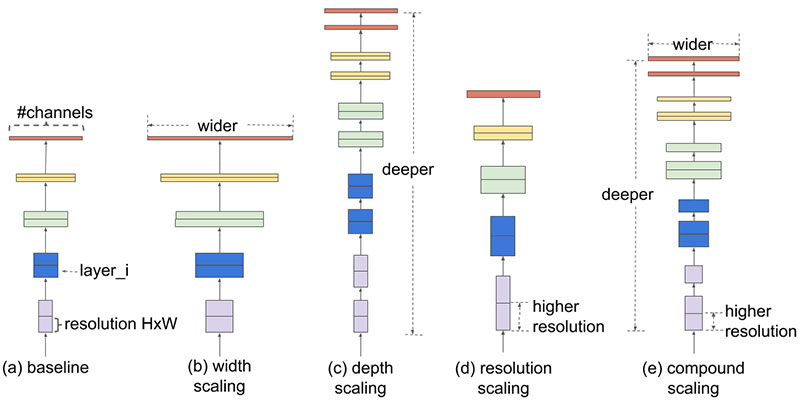
Compound Scaling
The researchers from the Google Research Brain Team demonstrated that there is an optimal ratio of depth, width, and resolution in order to maximize efficiency and accuracy. This is called compound scaling. The result is that EfficientNet’s performance surpasses the accuracy of other CNNs on ImageNet by up to 6% while being up to ten times more efficient in terms of speed and size.
DensePose
AI Learns Human Pose Estimation From Videos | Two Minute Papers #237
Two Minute Papers covers research on AI that learns to estimate human body poses from video.
DenseReg - Results for "dense human body correspondence". CVPR 2017
Results from DenseReg (CVPR 2017), which estimates dense correspondence between people in images and a 3D body model.
DensePose: Dense Human Pose Estimation In The Wild (CVPR 2018 Oral)
Alp Guler presents DensePose, which maps the pixels of people in ordinary images onto a 3D body surface (CVPR 2018 oral).
DensePose - 3D Machine Vision
Siraj Raval explains DensePose, which maps people in 2D images onto a 3D model of the human body.