Art
Youtube search... ...Google search
- Video/Image ... Vision ... Enhancement ... Fake ... Reconstruction ... Colorize ... Occlusions ... Predict image ... Image/Video Transfer Learning ... Classification ... Art ... Photography
- End-to-End Speech ... Synthesize Speech ... Speech Recognition ... Music
- Humor ... Writing/Publishing ... Storytelling ... Broadcast ... Journalism/News ... Podcasts ... Books, Radio & Movies - Exploring Possibilities
- Magenta
- Teaching Machines to Draw | David Ha - Google
- Neural Synesthesia - exploring the possibilities of immersive, digital media
- The US Copyright Office says an AI can’t copyright its art | Adi Robertson - The Verge
- The Weird and Wonderful World of AI Art
- AI won an art contest, and artists are furious | Rachel Metz - CNN
- Artist uses AI to extract color palettes from text descriptions | Benj Edwards - ARS Technica
- AI identifies surprising details about one of the most famous paintings in the world | Sanjana Gajbhiye - Earth.com
New technologies, and in particular artificial intelligence, are drastically changing the nature of creative processes. Computers are playing very significant roles in creative activities such as music, architecture, fine arts, and science. Indeed, the computer is already a canvas, a brush, a musical instrument, and so on. However, we believe that we must aim at more ambitious relations between computers and creativity. Rather than just seeing the computer as a tool to help human creators, we could see it as a creative entity in its own right. This view has triggered a new subfield of Artificial Intelligence called Computational Creativity. Artificial Intelligence and the Arts: Toward Computational Creativity | Ramón López de Mántaras - Article from the book The Next Step: Exponential Life - OpenMind BBVA
Can AI Create Visual Arts?
Can Computers Create Art? | Aaron Hertzmann | TEDxBeaconStreet
Aaron Hertzmann's TEDx talk asking whether computers can create art.
How This Guy Uses A.I. to Create Art | Obsessed | WIRED
WIRED profiles an artist who uses AI to create his work.
How Does A.I. Art Stack Up Against Human Art? (HBO)
VICE News on HBO compares AI-generated art with human art.
Creating art with Artificial Intelligence. | Harshit Agarwal | TEDxYouth@CIRS
Harshit Agarwal's TEDxYouth talk on creating art with artificial intelligence.
Using Artificial Intelligence to Generate Art // Creating MergeArt - Episode 1
Episode 1 of building MergeArt, a project that uses AI to generate art.
When AI generated paintings dance to music...
AI-generated paintings animated in sync with music.
When the painting comes to life... (Variation)
A variation of AI-generated paintings that come to life with music.
Broken Symmetry (AI-generated digital art)
Broken Symmetry, a piece of AI-generated digital art set to music.
Can an Artificial Intelligence Create Art?
PBS Idea Channel asks whether an artificial intelligence can create art.
How computers are learning to be creative | Blaise Agüera y Arcas
Blaise Agüera y Arcas' TED talk on how computers are learning to be creative.
We Taught an AI To Synthesize Materials 🔮
Two Minute Papers covers an AI taught to synthesize realistic materials for rendering.
Build an AI Artist - Machine Learning for Hackers #5
Siraj Raval builds an AI artist in Machine Learning for Hackers #5.
Neural Material Synthesis | Two Minute Papers #88
Two Minute Papers looks at neural networks that synthesize materials for computer graphics.
AI can do THIS!??! - Art & Animation with Artificial Intelligence
Jazza experiments with AI tools for art and animation.
How to Generate Art - Intro to Deep Learning #8
Siraj Raval shows how to generate art with deep learning (Intro to Deep Learning #8).
Deep Dream in TensorFlow - Learn Python for Data Science #5
Siraj Raval implements Deep Dream in TensorFlow.
The Art of Code - Dylan Beattie
Dylan Beattie's NDC talk on the art and creativity of code.
Stable Diffusion with ControlNet
- Stable Diffusion | Stability AI
- Adding Conditional Control to Text-to-Image Diffusion Models | L. Zhang, A. Rao, & M. Agrawala - arXiv
So how does it work? We've covered Stable Diffusion frequently before. It's a neural network model trained on millions of images scraped from the Internet. But the key here is ControlNet, which first appeared in a research paper titled "Adding Conditional Control to Text-to-Image Diffusion Models" by Lvmin Zhang, Anyi Rao, and Maneesh Agrawala in February 2023, and quickly became popular in the Stable Diffusion community. Typically, a Stable Diffusion image is created using a text prompt (called text2image) or an image prompt (img2img). ControlNet introduces additional guidance that can take the form of extracted information from a source image, including pose detection, depth mapping, normal mapping, edge detection, and much more. Using ControlNet, someone generating AI artwork can much more closely replicate the shape or pose of a subject in an image. - Funky AI-generated spiraling medieval village captivates social media | Benj Edwards - ARS Technical ... "This was the point where AI-generated art passed the Turing Test for me."
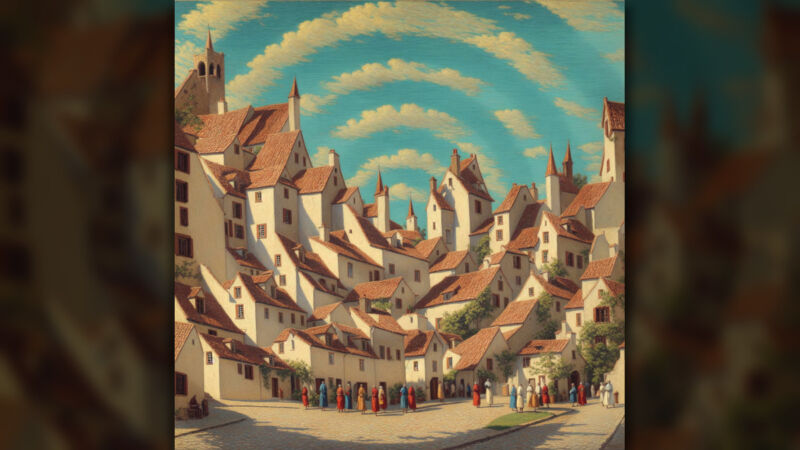
'https://cdn.arstechnica.net/wp-content/uploads/2023/09/spiral_hero_2-800x450.jpg'
Giga Manga
Giga Manga ... Google’s got a neat AI-assisted manga art generator for people who can’t draw
an online experimental platform that uses machine learning to turn your scribbles into manga illustrations. It uses a suite of AI and machine learning tools — trained by over 140,000 high-res images — to transform your doodle into the protagonist of a doujinshi.
Starryai
starryai is an AI art generator app. You simply enter a text prompt and Starryai transforms your words into works of art. Generate art 🎨 simply by describing what you want to see -- your words into art. Starryai
Starryai completion - Part 1
Part 1 of creating images with the Starryai AI art app.
NightCafe
Web-based app – start from a text prompt. Generate, tweak and download up to 2 artworks per day for free. NightCafe lets you generate art using either VQGAN+CLIP (”Artistic”) or CLIP-Guided Diffusion (”Coherent”). NightCafe
Night cafe - AI generated images
Showcase of AI-generated images made with NightCafe.
PlayForm
Web-based app – several intriguing tools. Start with the ‘Pro-Art Filters’ to apply filters to your uploaded photo, or go a bit deeper to train an AI to create new pictures based on stuff you upload PlayForm
Tutorial - Playform's Sketch to Image Process
Tutorial on Playform's sketch-to-image process.
HotPot
A collection of web-based AI tools to create, personalize, enlarge, sharpen, and more. PlayForm
Tech Thursday: Hotpot. AI, A website for restoring old pictures and more - JoyNews (26-8-21)
JoyNews looks at Hotpot.ai, a website for restoring old photos and other AI image tools.
Colab Notebooks
- The Big Sleep
- CLIP + Guided Diffusion 512x512
- Quick Guided Diffusion
- Disco Diffusion
- ruDALLE arbitrary resolution v2.0
- pixray Getting Started Notebook
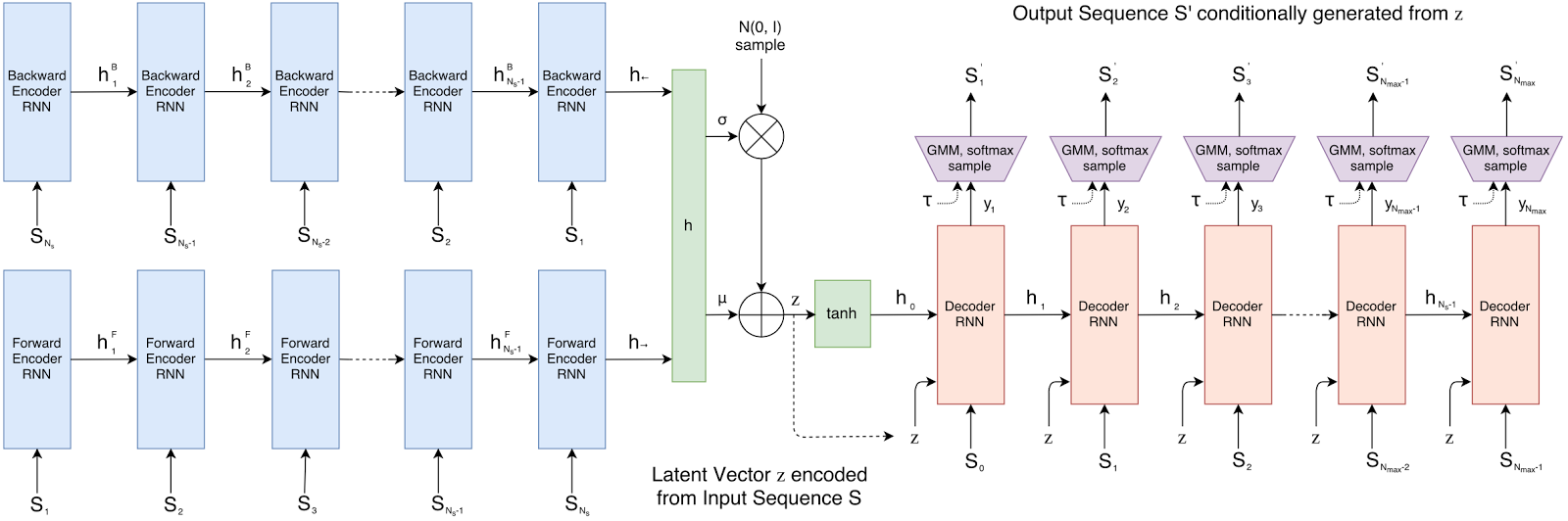
Recurrent Neural Network (RNN) & Art
Recurrent Neural Networks (RNNs) have found applications in various fields, including art, where they are used to create, analyze, and enhance various forms of artistic content. Here are some ways RNNs are used in the realm of art:
- Generating Artistic Text: RNNs can be trained on large text corpora, including literature, poetry, and other forms of written art, to generate text that mimics the style and tone of famous authors or poets. This is often referred to as "text generation" or "text completion."
- Generating Visual Art: RNNs can be used to generate visual art, such as paintings or drawings. Artists and researchers have trained RNNs on databases of existing artwork to create new pieces of art that capture certain styles or themes. For instance, the style transfer technique uses RNNs to blend the styles of different artworks.
- Image and Video Processing: RNNs are used for various image and video processing tasks in the art domain. For instance, they can be used for image captioning, where the network generates textual descriptions of images. They can also be used for video generation, manipulation, and enhancement.
- Artistic Style Transfer: Style transfer techniques, often using variants of RNNs, allow artists and creators to apply the artistic style of one image to another. This can lead to visually appealing and unique artistic effects.
- Interactive Art Installations: RNNs can be employed in interactive art installations, where they analyze input from sensors, cameras, or other sources and generate responsive and dynamic artistic content. This can create immersive and engaging experiences for viewers or participants.
- Art Critique and Analysis: RNNs and other neural network models can be used to analyze and critique artworks based on various parameters, such as composition, color usage, and style. This can help artists and art enthusiasts gain insights into the artistic qualities of a piece.
- Art Restoration and Preservation: RNNs can assist in the restoration and preservation of art by helping to reconstruct damaged or faded artwork based on existing fragments and historical data.
- Art Market Predictions: RNNs, along with other machine learning techniques, can be used to analyze trends in the art market, predict future art market developments, and assist collectors and investors in making informed decisions.