Difference between revisions of "Bias and Variances"
m |
m |
||
| (11 intermediate revisions by the same user not shown) | |||
| Line 2: | Line 2: | ||
|title=PRIMO.ai | |title=PRIMO.ai | ||
|titlemode=append | |titlemode=append | ||
| − | |keywords=artificial, intelligence, machine, learning, models | + | |keywords=ChatGPT, artificial, intelligence, machine, learning, GPT-4, GPT-5, NLP, NLG, NLC, NLU, models, data, singularity, moonshot, Sentience, AGI, Emergence, Moonshot, Explainable, TensorFlow, Google, Nvidia, Microsoft, Azure, Amazon, AWS, Hugging Face, OpenAI, Tensorflow, OpenAI, Google, Nvidia, Microsoft, Azure, Amazon, AWS, Meta, LLM, metaverse, assistants, agents, digital twin, IoT, Transhumanism, Immersive Reality, Generative AI, Conversational AI, Perplexity, Bing, You, Bard, Ernie, prompt Engineering LangChain, Video/Image, Vision, End-to-End Speech, Synthesize Speech, Speech Recognition, Stanford, MIT |description=Helpful resources for your journey with artificial intelligence; videos, articles, techniques, courses, profiles, and tools |
| − | |description=Helpful resources for your journey with artificial intelligence; videos, articles, techniques, courses, profiles, and tools | + | |
| + | <!-- Google tag (gtag.js) --> | ||
| + | <script async src="https://www.googletagmanager.com/gtag/js?id=G-4GCWLBVJ7T"></script> | ||
| + | <script> | ||
| + | window.dataLayer = window.dataLayer || []; | ||
| + | function gtag(){dataLayer.push(arguments);} | ||
| + | gtag('js', new Date()); | ||
| + | |||
| + | gtag('config', 'G-4GCWLBVJ7T'); | ||
| + | </script> | ||
}} | }} | ||
| − | [ | + | [https://www.youtube.com/results?search_query=ai+Data+Bias+Variances YouTube] |
| − | [ | + | [https://www.quora.com/search?q=ai%20Data%20Bias%20Variances ... Quora] |
| + | [https://www.google.com/search?q=ai+Data+Bias+Variances ...Google search] | ||
| + | [https://news.google.com/search?q=ai+Data+Bias+Variances ...Google News] | ||
| + | [https://www.bing.com/news/search?q=ai+Data+Bias+Variances&qft=interval%3d%228%22 ...Bing News] | ||
| − | * [[ | + | * [[Data Science]] ... [[Data Governance|Governance]] ... [[Data Preprocessing|Preprocessing]] ... [[Feature Exploration/Learning|Exploration]] ... [[Data Interoperability|Interoperability]] ... [[Algorithm Administration#Master Data Management (MDM)|Master Data Management (MDM)]] ... [[Bias and Variances]] ... [[Benchmarks]] ... [[Datasets]] |
| − | * | + | * [[Data Quality]] ...[[AI Verification and Validation|validity]], [[Evaluation - Measures#Accuracy|accuracy]], [[Data Quality#Data Cleaning|cleaning]], [[Data Quality#Data Completeness|completeness]], [[Data Quality#Data Consistency|consistency]], [[Data Quality#Data Encoding|encoding]], [[Data Quality#Zero Padding|padding]], [[Data Quality#Data Augmentation, Data Labeling, and Auto-Tagging|augmentation, labeling, auto-tagging]], [[Data Quality#Batch Norm(alization) & Standardization| normalization, standardization]], and [[Data Quality#Imbalanced Data|imbalanced data]] |
| − | *** [[Evaluation - Measures#Accuracy|Accuracy]] | + | * [[Backpropagation]] ... [[Feed Forward Neural Network (FF or FFNN)|FFNN]] ... [[Forward-Forward]] ... [[Activation Functions]] ...[[Softmax]] ... [[Loss]] ... [[Boosting]] ... [[Gradient Descent Optimization & Challenges|Gradient Descent]] ... [[Algorithm Administration#Hyperparameter|Hyperparameter]] ... [[Manifold Hypothesis]] ... [[Principal Component Analysis (PCA)|PCA]] |
| − | + | * [[Risk, Compliance and Regulation]] ... [[Ethics]] ... [[Privacy]] ... [[Law]] ... [[AI Governance]] ... [[AI Verification and Validation]] | |
| − | + | ** [[Evaluation - Measures#Accuracy|Accuracy]] | |
| − | + | ** [[Evaluation - Measures#Precision & Recall (Sensitivity)|Precision & Recall (Sensitivity)]] | |
| + | ** [[Evaluation - Measures#Specificity|Specificity]] | ||
** [[Explainable / Interpretable AI]] | ** [[Explainable / Interpretable AI]] | ||
| − | |||
** [[Algorithm Administration#Model Monitoring|Model Monitoring]] | ** [[Algorithm Administration#Model Monitoring|Model Monitoring]] | ||
| − | * [[ | + | * [[AI Solver]] ... [[Algorithms]] ... [[Algorithm Administration|Administration]] ... [[Model Search]] ... [[Discriminative vs. Generative]] ... [[Train, Validate, and Test]] |
| − | * [[ | + | * [[Policy]] ... [[Policy vs Plan]] ... [[Constitutional AI]] ... [[Trust Region Policy Optimization (TRPO)]] ... [[Policy Gradient (PG)]] ... [[Proximal Policy Optimization (PPO)]] |
| − | |||
| − | |||
* [[Overfitting Challenge]] | * [[Overfitting Challenge]] | ||
| − | * [ | + | * [https://becominghuman.ai/a-basic-recipe-for-machine-learning-2fbebd3549f5 A Basic Recipe for Machine Learning | Hafidz Zulkifli] |
| − | + | * [https://en.wikipedia.org/wiki/Inductive_bias Inductive Bias | Wikipedia] | |
| − | * [ | + | |
| − | + | ||
| − | + | Two terms of <b>bias</b> in Artificial Intelligence: | |
| − | + | ||
| − | + | # <b>Node Bias</b> - The activation of a node in a neural network is determined by the following: output = activation function (dot_product(weights, inputs) + bias) This means when calculating the output of a node, the inputs are multiplied by weights, and a bias value is added to the result. The bias value allows the activation function to be shifted to the left or right, to better fit the data. Hence changes to the weights alter the steepness of the sigmoid curve, whilst the bias offsets it, shifting the entire curve so it fits better. Note also how the bias only influences the output values, it doesn’t interact with the actual input data. [https://medium.com/deeper-learning/glossary-of-deep-learning-bias-cf49d9c895e2 Glossary of Deep Learning: Bias | Jaron Collis - Deeper Learning] | |
| + | # <b>Model Bias</b> - Bias can creep into algorithms in several ways. AI systems learn to make decisions based on training data, which can include biased human decisions or reflect historical or social inequities, even if sensitive variables such as gender, race, or sexual orientation are removed. [https://hbr.org/2019/10/what-do-we-do-about-the-biases-in-ai#:~:text=Bias%20can%20creep%20into%20algorithms,or%20sexual%20orientation%20are%20removed.&text=Bias%20is%20all%20of%20our%20responsibility. What Do We Do About the Biases in AI? | J. Manyika, J. Silberg, and B. Presten - Harvard Business Review] | ||
| + | = Node Bias = | ||
| − | + | https://cdn-images-1.medium.com/max/800/1*RvLVTYBiRXogAr6Ap5jgLA.png | |
| − | + | https://cdn-images-1.medium.com/max/800/0*ml9CpRkTA8fY9AFT.png | |
| Line 42: | Line 54: | ||
<youtube>SjQyLhQIXSM</youtube> | <youtube>SjQyLhQIXSM</youtube> | ||
<b>Bias/Variance (C2W1L02) | <b>Bias/Variance (C2W1L02) | ||
| − | </b><br>[[Creatives#Andrew Ng|Andrew Ng]] Deeplearning.ai Take the Deep Learning Specialization: | + | </b><br>[[Creatives#Andrew Ng|Andrew Ng]] Deeplearning.ai Take the Deep Learning Specialization: https://bit.ly/3amgU4n Check out all our courses: https://www.deeplearning.ai |
|} | |} | ||
|<!-- M --> | |<!-- M --> | ||
| Line 59: | Line 71: | ||
<youtube>C1N_PDHuJ6Q</youtube> | <youtube>C1N_PDHuJ6Q</youtube> | ||
<b>Basic Recipe for Machine Learning (C2W1L03) | <b>Basic Recipe for Machine Learning (C2W1L03) | ||
| − | </b><br>[[Creatives#Andrew Ng|Andrew Ng]] Deeplearning.ai Take the Deep Learning Specialization: | + | </b><br>[[Creatives#Andrew Ng|Andrew Ng]] Deeplearning.ai Take the Deep Learning Specialization: https://bit.ly/3cpg1K9 Check out all our courses: https://www.deeplearning.ai |
|} | |} | ||
|<!-- M --> | |<!-- M --> | ||
| Line 87: | Line 99: | ||
|} | |} | ||
|}<!-- B --> | |}<!-- B --> | ||
| + | |||
| + | |||
| + | * [https://ai.googleblog.com/2017/08/exploring-and-visualizing-open-global.html Exploring and Visualizing an Open Global Dataset | Reena Jana and Josh Lovejoy] | ||
| + | |||
| + | https://4.bp.blogspot.com/-KbGvGbxn8X4/WZ9MwE2GdOI/AAAAAAAAB-Y/zqkSZzRgBmcTnrxWE2_Zt4mBn7bng3poACLcBGAs/s640/chair-world-light-1000.gif | ||
| + | |||
| + | = Model Bias = | ||
| + | * [[Ethics]] | ||
| + | * [[Privacy]] | ||
| + | * [https://developer.ibm.com/articles/machine-learning-and-bias/ Machine learning and bias | IBM] [https://aif360.mybluemix.net/?_ga=2.258555210.1353694320.1576870371-739966746.1575208440 AI Fairness 360 Open Source Toolkit] extensible open source toolkit can help you examine, report, and mitigate discrimination and bias in machine learning models throughout the AI application lifecycle. Containing over 70 fairness metrics and 10 state-of-the-art bias mitigation algorithms | ||
| + | * [https://www.usatoday.com/story/tech/2020/07/22/uber-lyft-algorithms-discriminate-charge-more-non-white-areas/5481950002/ Was your Uber, Lyft fare high because of algorithm bias? | Coral Murphy - USA TODAY] | ||
| + | * [https://research.google.com/bigpicture/attacking-discrimination-in-ml/ Attacking discrimination with smarter machine learning |] [[Creatives#Martin Wattenberg |Martin Wattenberg]], [[Creatives#Fernanda Viegas |Fernanda Viegas]], and Moritz Hardt | ||
| + | * [https://www.technologyreview.com/s/612876/this-is-how-ai-bias-really-happensand-why-its-so-hard-to-fix/ This is how AI bias really happens—and why it’s so hard to fix | Karen Hao] | ||
| + | |||
{|<!-- T --> | {|<!-- T --> | ||
| valign="top" | | | valign="top" | | ||
| Line 93: | Line 119: | ||
<youtube>PWCtoVt1CJM</youtube> | <youtube>PWCtoVt1CJM</youtube> | ||
<b>How To Stop Artificial Intelligence From Marginalizing Communities? | Timnit Gebru | TEDxCollegePark | <b>How To Stop Artificial Intelligence From Marginalizing Communities? | Timnit Gebru | TEDxCollegePark | ||
| − | </b><br>Timnit Gebru, Stanford Alum and Co-Founder of Black in AI, shares remarkable insights to show how artificial intelligence is influencing thinking and decision-making in ways we didn't imagine and must counter before it further marginalizes people. Timnit works at Microsoft, New York in the Fairness Accountability Transparency and [[Ethics]] (FATE) Group where her team works on the complex social implications of AI, machine learning, data science, large-scale experimentation, and increasing automation. She previously worked at Stanford’s Artificial Intelligence Lab where she received her PhD, and is Co-Founder of Black in AI, an organization that aims to foster collaborations and discuss initiatives to increase the presence of Black people in the field of Artificial Intelligence. This talk was given at a TEDx event using the TED conference format but independently organized by a local community. Learn more at | + | </b><br>Timnit Gebru, Stanford Alum and Co-Founder of Black in AI, shares remarkable insights to show how artificial intelligence is influencing thinking and decision-making in ways we didn't imagine and must counter before it further marginalizes people. Timnit works at Microsoft, New York in the Fairness Accountability Transparency and [[Ethics]] (FATE) Group where her team works on the complex social implications of AI, machine learning, data science, large-scale experimentation, and increasing automation. She previously worked at Stanford’s Artificial Intelligence Lab where she received her PhD, and is Co-Founder of Black in AI, an organization that aims to foster collaborations and discuss initiatives to increase the presence of Black people in the field of Artificial Intelligence. This talk was given at a TEDx event using the TED conference format but independently organized by a local community. Learn more at https://www.ted.com/tedx |
|} | |} | ||
|<!-- M --> | |<!-- M --> | ||
| Line 104: | Line 130: | ||
|} | |} | ||
|}<!-- B --> | |}<!-- B --> | ||
| − | |||
| − | |||
| − | |||
| − | |||
Latest revision as of 22:44, 5 March 2024
YouTube ... Quora ...Google search ...Google News ...Bing News
- Data Science ... Governance ... Preprocessing ... Exploration ... Interoperability ... Master Data Management (MDM) ... Bias and Variances ... Benchmarks ... Datasets
- Data Quality ...validity, accuracy, cleaning, completeness, consistency, encoding, padding, augmentation, labeling, auto-tagging, normalization, standardization, and imbalanced data
- Backpropagation ... FFNN ... Forward-Forward ... Activation Functions ...Softmax ... Loss ... Boosting ... Gradient Descent ... Hyperparameter ... Manifold Hypothesis ... PCA
- Risk, Compliance and Regulation ... Ethics ... Privacy ... Law ... AI Governance ... AI Verification and Validation
- AI Solver ... Algorithms ... Administration ... Model Search ... Discriminative vs. Generative ... Train, Validate, and Test
- Policy ... Policy vs Plan ... Constitutional AI ... Trust Region Policy Optimization (TRPO) ... Policy Gradient (PG) ... Proximal Policy Optimization (PPO)
- Overfitting Challenge
- A Basic Recipe for Machine Learning | Hafidz Zulkifli
- Inductive Bias | Wikipedia
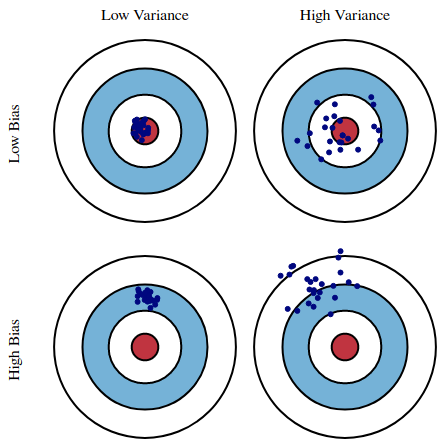
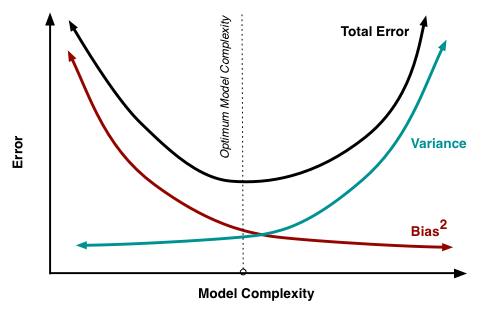
Two terms of bias in Artificial Intelligence:
- Node Bias - The activation of a node in a neural network is determined by the following: output = activation function (dot_product(weights, inputs) + bias) This means when calculating the output of a node, the inputs are multiplied by weights, and a bias value is added to the result. The bias value allows the activation function to be shifted to the left or right, to better fit the data. Hence changes to the weights alter the steepness of the sigmoid curve, whilst the bias offsets it, shifting the entire curve so it fits better. Note also how the bias only influences the output values, it doesn’t interact with the actual input data. Glossary of Deep Learning: Bias | Jaron Collis - Deeper Learning
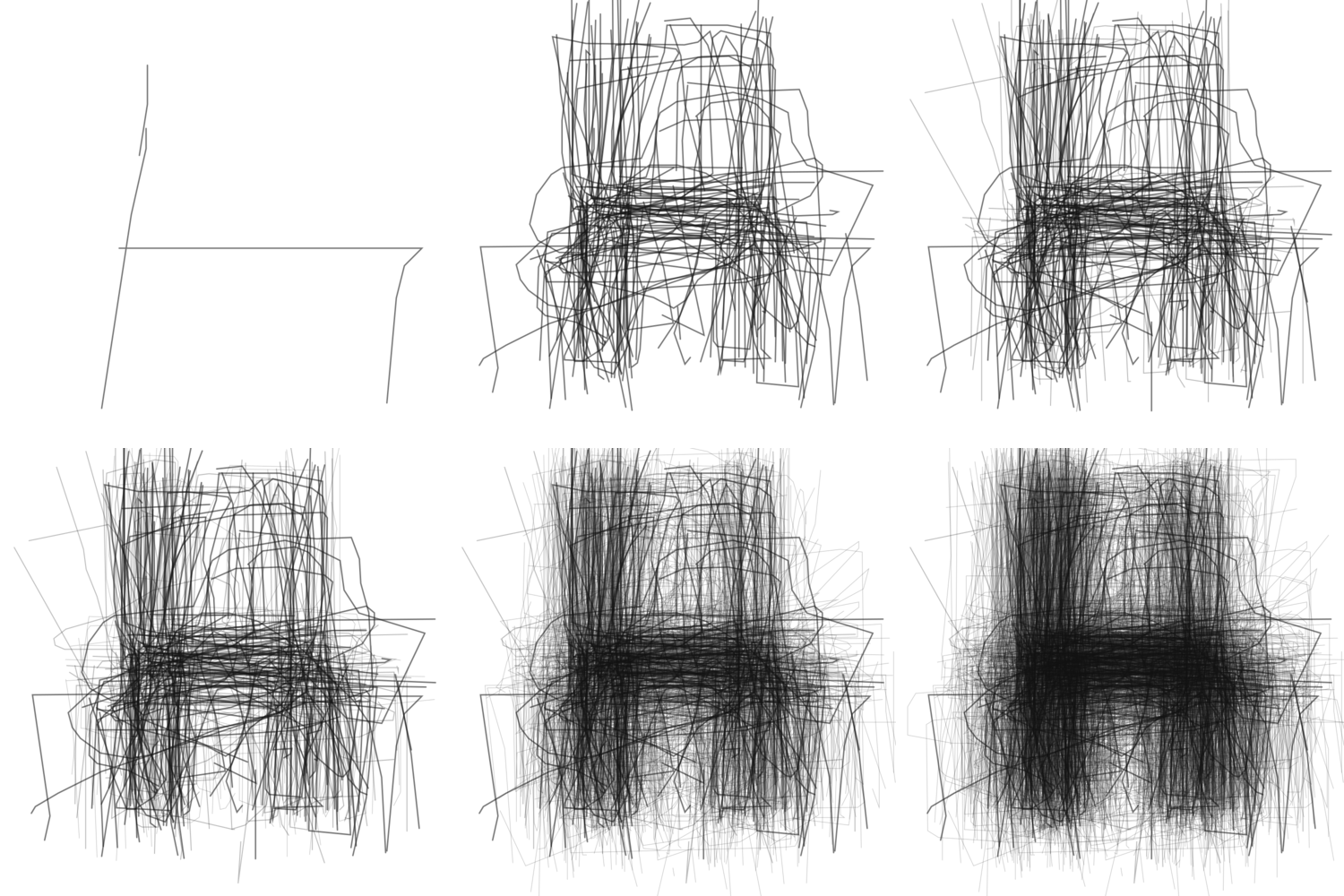
- Model Bias - Bias can creep into algorithms in several ways. AI systems learn to make decisions based on training data, which can include biased human decisions or reflect historical or social inequities, even if sensitive variables such as gender, race, or sexual orientation are removed. What Do We Do About the Biases in AI? | J. Manyika, J. Silberg, and B. Presten - Harvard Business Review
Node Bias
|
|
|
|
|
|
Model Bias
- Ethics
- Privacy
- Machine learning and bias | IBM AI Fairness 360 Open Source Toolkit extensible open source toolkit can help you examine, report, and mitigate discrimination and bias in machine learning models throughout the AI application lifecycle. Containing over 70 fairness metrics and 10 state-of-the-art bias mitigation algorithms
- Was your Uber, Lyft fare high because of algorithm bias? | Coral Murphy - USA TODAY
- Attacking discrimination with smarter machine learning | Martin Wattenberg, Fernanda Viegas, and Moritz Hardt
- This is how AI bias really happens—and why it’s so hard to fix | Karen Hao
|
|
