Difference between revisions of "COVID-19"
m |
m |
||
| (16 intermediate revisions by the same user not shown) | |||
| Line 2: | Line 2: | ||
|title=PRIMO.ai | |title=PRIMO.ai | ||
|titlemode=append | |titlemode=append | ||
| − | |keywords=artificial, intelligence, machine, learning, models | + | |keywords=ChatGPT, artificial, intelligence, machine, learning, GPT-4, GPT-5, NLP, NLG, NLC, NLU, models, data, singularity, moonshot, Sentience, AGI, Emergence, Moonshot, Explainable, TensorFlow, Google, Nvidia, Microsoft, Azure, Amazon, AWS, Hugging Face, OpenAI, Tensorflow, OpenAI, Google, Nvidia, Microsoft, Azure, Amazon, AWS, Meta, LLM, metaverse, assistants, agents, digital twin, IoT, Transhumanism, Immersive Reality, Generative AI, Conversational AI, Perplexity, Bing, You, Bard, Ernie, prompt Engineering LangChain, Video/Image, Vision, End-to-End Speech, Synthesize Speech, Speech Recognition, Stanford, MIT |description=Helpful resources for your journey with artificial intelligence; videos, articles, techniques, courses, profiles, and tools |
| − | |description=Helpful resources for your journey with artificial intelligence; videos, articles, techniques, courses, profiles, and tools | + | |
| + | <!-- Google tag (gtag.js) --> | ||
| + | <script async src="https://www.googletagmanager.com/gtag/js?id=G-4GCWLBVJ7T"></script> | ||
| + | <script> | ||
| + | window.dataLayer = window.dataLayer || []; | ||
| + | function gtag(){dataLayer.push(arguments);} | ||
| + | gtag('js', new Date()); | ||
| + | |||
| + | gtag('config', 'G-4GCWLBVJ7T'); | ||
| + | </script> | ||
}} | }} | ||
[https://www.youtube.com/results?search_query=COVID+19+corona+virus+novel+coronavirus+ai Youtube search...] | [https://www.youtube.com/results?search_query=COVID+19+corona+virus+novel+coronavirus+ai Youtube search...] | ||
| Line 14: | Line 23: | ||
** [[Healthcare]] | ** [[Healthcare]] | ||
** [[Bioinformatics]] | ** [[Bioinformatics]] | ||
| − | + | * [[Risk, Compliance and Regulation]] ... [[Ethics]] ... [[Privacy]] ... [[Law]] ... [[AI Governance]] ... [[AI Verification and Validation]] | |
| − | * | + | * [[Cybersecurity]] ... [[Open-Source Intelligence - OSINT |OSINT]] ... [[Cybersecurity Frameworks, Architectures & Roadmaps | Frameworks]] ... [[Cybersecurity References|References]] ... [[Offense - Adversarial Threats/Attacks| Offense]] ... [[National Institute of Standards and Technology (NIST)|NIST]] ... [[U.S. Department of Homeland Security (DHS)| DHS]] ... [[Screening; Passenger, Luggage, & Cargo|Screening]] ... [[Law Enforcement]] ... [[Government Services|Government]] ... [[Defense]] ... [[Joint Capabilities Integration and Development System (JCIDS)#Cybersecurity & Acquisition Lifecycle Integration| Lifecycle Integration]] ... [[Cybersecurity Companies/Products|Products]] ... [[Cybersecurity: Evaluating & Selling|Evaluating]] |
| − | |||
| − | |||
| − | |||
| − | |||
| − | |||
* [[First Responder]] | * [[First Responder]] | ||
| − | * [[Network Pattern]] | + | * [[Analytics]] ... [[Visualization]] ... [[Graphical Tools for Modeling AI Components|Graphical Tools]] ... [[Diagrams for Business Analysis|Diagrams]] & [[Generative AI for Business Analysis|Business Analysis]] ... [[Requirements Management|Requirements]] ... [[Loop]] ... [[Bayes]] ... [[Network Pattern]] |
| + | * [[Contextual Literature-Based Discovery (C-LBD)]] | ||
* [[Large Language Model (LLM)]] ... [[Natural Language Processing (NLP)]] ...[[Natural Language Generation (NLG)|Generation]] ... [[Natural Language Classification (NLC)|Classification]] ... [[Natural Language Processing (NLP)#Natural Language Understanding (NLU)|Understanding]] ... [[Language Translation|Translation]] ... [[Natural Language Tools & Services|Tools & Services]] | * [[Large Language Model (LLM)]] ... [[Natural Language Processing (NLP)]] ...[[Natural Language Generation (NLG)|Generation]] ... [[Natural Language Classification (NLC)|Classification]] ... [[Natural Language Processing (NLP)#Natural Language Understanding (NLU)|Understanding]] ... [[Language Translation|Translation]] ... [[Natural Language Tools & Services|Tools & Services]] | ||
| + | * [[Conversational AI]] ... [[ChatGPT]] | [[OpenAI]] ... [[Bing/Copilot]] | [[Microsoft]] ... [[Gemini]] | [[Google]] ... [[Claude]] | [[Anthropic]] ... [[Perplexity]] ... [[You]] ... [[phind]] ... [[Ernie]] | [[Baidu]] | ||
* [https://thenextweb.com/neural/2020/07/24/heres-why-ai-didnt-save-us-from-covid-19/ Here’s why AI didn’t save us from COVID-19 | Tristan Greene - TNW] | * [https://thenextweb.com/neural/2020/07/24/heres-why-ai-didnt-save-us-from-covid-19/ Here’s why AI didn’t save us from COVID-19 | Tristan Greene - TNW] | ||
| + | * [[Life~Meaning]] ... [[Consciousness]] ... [[Loop#Feedback Loop - Creating Consciousness|Creating Consciousness]] ... [[Quantum#Quantum Biology|Quantum Biology]] ... [[Orch-OR]] ... [[TAME]] ... [[Protein Folding & Discovery|Proteins]] | ||
| + | * [https://fortune.com/well/2023/10/13/scientists-use-artifical-intelligence-predict-next-big-covid-variants-pandemic-hiv-flu-lassa-nipah-virus/ Scientists are using AI to forecast the future of COVID—and, potentially, to predict the next pandemic | Erin Prater - Fortune] | ||
| + | |||
{|<!-- T --> | {|<!-- T --> | ||
| Line 49: | Line 58: | ||
<youtube>ehjVRmHqTvA</youtube> | <youtube>ehjVRmHqTvA</youtube> | ||
<b>Collective and Augmented Intelligence Against COVID-19 (CAIAC) Launch | <b>Collective and Augmented Intelligence Against COVID-19 (CAIAC) Launch | ||
| − | </b><br>A virtual event hosted by the Stanford Institute for Human-Centered Artificial Intelligence (HAI) and the AI Initiative at The Future Society to officially announce a global alliance on the COVID-19 pandemic response. The alliance will provide an information service not yet available that is vitally important to facing and mitigating the crisis. In parallel with the UN High Level Political Forum, the launch agenda will include details on the partnership and speakers from the private sector, academia, government, and multilateral institutions, including UNESCO, the World Bank, the WHO and UN Global Pulse, offering unique | + | </b><br>A virtual event hosted by the Stanford Institute for Human-Centered Artificial Intelligence (HAI) and the AI Initiative at The Future Society to officially announce a global alliance on the COVID-19 pandemic response. The alliance will provide an information service not yet available that is vitally important to facing and mitigating the crisis. In parallel with the UN High Level Political Forum, the launch agenda will include details on the partnership and speakers from the private sector, academia, government, and multilateral institutions, including UNESCO, the World Bank, the WHO and UN Global Pulse, offering unique [[perspective]]s on the roadblocks and opportunities to addressing the COVID-19 pandemic. Topics covered will include challenges with disparate data and determining meaningful information in the fight against the virus, as well as the importance of building multi-stakeholder collaborations. [[Creatives#Fei-Fei Li |Fei-Fei Li]] |
|} | |} | ||
|<!-- M --> | |<!-- M --> | ||
| Line 127: | Line 136: | ||
<youtube>A0uBdY4Crlg</youtube> | <youtube>A0uBdY4Crlg</youtube> | ||
<b>Analyzing COVID-19: Can the Data Community Help? | <b>Analyzing COVID-19: Can the Data Community Help? | ||
| − | </b><br>Online Tech Talk hosted by Denny Lee, Developer Advocate @ Databricks My name is Denny Lee and I’m a Developer Advocate at Databricks. But before this, I was a biostatistician working on HIV/AIDS research at the Fred Hutchinson Cancer Research Center and University of Washington Virology Lab in the Seattle-area. Watching my friends and colleagues working the front lines of this current pandemic has inspired me to see if we - as the data scientist community - can potentially help with “flattening the curve”. But before we dive into data science, remember - the most important thing you can do is wash your hands and social distancing! With the current concerns over SARS-Cov-2 and COVID-19, there are now available various COVID-19 datasets on Kaggle and GitHub as well as competitions such as the COVID-19 Open Research Dataset Challenge (CORD-19). Whether you are a student or a professional data scientist, we thought we could help out by providing a primer session with notebooks on how to start analyzing these datasets. For this primer session we will review (and shortly publish thereafter) iPython notebooks working with Apache Spark and/or Pandas (or both) for the following datas sets. | + | </b><br>Online Tech Talk hosted by Denny Lee, Developer Advocate @ [[Databricks]] My name is Denny Lee and I’m a Developer Advocate at [[Databricks]]. But before this, I was a biostatistician working on HIV/AIDS research at the Fred Hutchinson Cancer Research Center and University of Washington Virology Lab in the Seattle-area. Watching my friends and colleagues working the front lines of this current pandemic has inspired me to see if we - as the data scientist community - can potentially help with “flattening the curve”. But before we dive into data science, remember - the most important thing you can do is wash your hands and social distancing! With the current concerns over SARS-Cov-2 and COVID-19, there are now available various COVID-19 datasets on Kaggle and GitHub as well as competitions such as the COVID-19 Open Research Dataset Challenge (CORD-19). Whether you are a student or a professional data scientist, we thought we could help out by providing a primer session with notebooks on how to start analyzing these datasets. For this primer session we will review (and shortly publish thereafter) iPython notebooks working with Apache Spark and/or Pandas (or both) for the following datas sets. |
|} | |} | ||
|<!-- M --> | |<!-- M --> | ||
| Line 228: | Line 237: | ||
|| | || | ||
<youtube>8dskS7iOZZs</youtube> | <youtube>8dskS7iOZZs</youtube> | ||
| − | <b>Graph Gurus 37: Combining Natural Language Processing with a Graph Database for COVID-19 Dataset | + | <b>[[Graph]] Gurus 37: Combining Natural Language Processing with a [[Graph]] [[Database]] for COVID-19 Dataset |
</b><br>Learn how to process text and extract entities (words and phrases) as well as classes linking the entities using SciSpacy, a [[Natural Language Processing (NLP)]] tool. Import the output of NLP and semantically link it in TigerGraph Run advanced analytics queries with TigerGraph to analyze the relationships and deliver insights | </b><br>Learn how to process text and extract entities (words and phrases) as well as classes linking the entities using SciSpacy, a [[Natural Language Processing (NLP)]] tool. Import the output of NLP and semantically link it in TigerGraph Run advanced analytics queries with TigerGraph to analyze the relationships and deliver insights | ||
|} | |} | ||
| Line 245: | Line 254: | ||
* [[StructBERT]] - Fight Coronavirus | * [[StructBERT]] - Fight Coronavirus | ||
| − | When the Coronavirus outbreak hit [[Government Services#China|China]], Alibaba’s DAMO Academy developed the [[StructBERT]] NLP model. Being deployed in Alibaba’s ecosystem, the model powered not only the search engine on Alibaba’s retail platforms but also anonymous healthcare data analysis. By analyzing the text of medical records and epidemiological investigation, the Centers for Disease Control (CDCs) used [[StructBERT]] for fighting against COVID-19 in [[Government Services#China|China]] cities. Being based on the BERT pre-trained model, StructBert not only understands the context of words in search queries but also leverages the structural information: sentence-level ordering and word-level ordering. | + | When the Coronavirus outbreak hit [[Government Services#China|China]], Alibaba’s DAMO Academy developed the [[StructBERT]] NLP model. Being deployed in Alibaba’s ecosystem, the model powered not only the search engine on Alibaba’s retail platforms but also anonymous healthcare data analysis. By analyzing the text of medical records and epidemiological investigation, the Centers for Disease Control (CDCs) used [[StructBERT]] for fighting against COVID-19 in [[Government Services#China|China]] cities. Being based on the BERT pre-trained model, StructBert not only understands the [[context]] of words in search queries but also leverages the structural information: sentence-level ordering and word-level ordering. |
== [[Kaggle]] == | == [[Kaggle]] == | ||
| Line 358: | Line 367: | ||
|| | || | ||
<youtube>Gi-wfXFDK44</youtube> | <youtube>Gi-wfXFDK44</youtube> | ||
| − | <b>Detecting COVID - 19 cases with RPA, #AI and Machine Learning - UiPath | + | <b>Detecting COVID - 19 cases with [[Robotic Process Automation (RPA)]], #AI and Machine Learning - UiPath |
</b><br>Based on UiPath AI Fabric and with a touch of MachineLearning, Radu Pruna from our Immersion Lab built a model for detecting COVID-19 cases from X-ray chest images in seconds. The model is described in this paper - https://bit.ly/3awDEym. | </b><br>Based on UiPath AI Fabric and with a touch of MachineLearning, Radu Pruna from our Immersion Lab built a model for detecting COVID-19 cases from X-ray chest images in seconds. The model is described in this paper - https://bit.ly/3awDEym. | ||
|} | |} | ||
| Line 445: | Line 454: | ||
<youtube>pQM-OGfLAX0</youtube> | <youtube>pQM-OGfLAX0</youtube> | ||
<b>A Spatiotemporal Epidemic Model to Quantify the Effects of Contact Tracing, Testing, and Containment | <b>A Spatiotemporal Epidemic Model to Quantify the Effects of Contact Tracing, Testing, and Containment | ||
| − | </b><br>Motivated by the current COVID-19 outbreak, we introduce a novel epidemic model based on marked temporal point processes that is specifically designed to make fine-grained spatiotemporal predictions about the course of the disease in a population. Our model can make use and benefit from data gathered by a variety of contact tracing technologies and it can quantify the effects that different testing and tracing strategies, social distancing measures, and business restrictions may have on the course of the disease. Building on our model, we use [[Bayes|Bayesian]] optimization to estimate the risk of exposure of each individual at the sites they visit and the difference in transmission rate between asymptomatic and symptomatic individuals from historical longitudinal testing data. Experiments using real COVID-19 data and mobility patterns from several towns and regions in Germany and Switzerland demonstrate that our model can be used to quantify the effects of tracing, testing, and containment strategies at an unprecedented spatiotemporal resolution. To facilitate research and informed policy-making, particularly in the context of the current COVID-19 outbreak, we are releasing an open-source implementation of our framework at https://github.com/covid19-model. Manuel Gomez Rodriguez is a tenure-track faculty at Max Planck Institute for Software Systems. Manuel develops human-centered machine learning models and algorithms for the analysis, modeling and control of social, information and networked systems. | + | </b><br>Motivated by the current COVID-19 outbreak, we introduce a novel epidemic model based on marked temporal point processes that is specifically designed to make fine-grained spatiotemporal predictions about the course of the disease in a population. Our model can make use and benefit from data gathered by a variety of contact tracing technologies and it can quantify the effects that different testing and tracing strategies, social distancing measures, and business restrictions may have on the course of the disease. Building on our model, we use [[Bayes|Bayesian]] optimization to estimate the risk of exposure of each individual at the sites they visit and the difference in transmission rate between asymptomatic and symptomatic individuals from historical longitudinal testing data. Experiments using real COVID-19 data and mobility patterns from several towns and regions in Germany and Switzerland demonstrate that our model can be used to quantify the effects of tracing, testing, and containment strategies at an unprecedented spatiotemporal resolution. To facilitate research and informed policy-making, particularly in the [[context]] of the current COVID-19 outbreak, we are releasing an open-source implementation of our framework at https://github.com/covid19-model. Manuel Gomez Rodriguez is a tenure-track faculty at Max Planck Institute for Software Systems. Manuel develops human-centered machine learning models and algorithms for the analysis, modeling and control of social, information and networked systems. |
|} | |} | ||
|<!-- M --> | |<!-- M --> | ||
| Line 566: | Line 575: | ||
13:45 - Dr. Eva Lee - Modeling and Evaluating Intervention Options and Strategies for COVID-19 Containment: A Biological-Behavioral-Logistics Computation Decision Framework | 13:45 - Dr. Eva Lee - Modeling and Evaluating Intervention Options and Strategies for COVID-19 Containment: A Biological-Behavioral-Logistics Computation Decision Framework | ||
14:45 - break | 14:45 - break | ||
| − | 15:00 - Roger Ng, MD - Ray NG, MD - COVID-19: A Front-Line Physician’s Perspective | + | 15:00 - Roger Ng, MD - Ray NG, MD - COVID-19: A Front-Line Physician’s [[Perspective]] |
15:45 - Dr. Deborah Duong - Modeling COVID-19 Using Simulated [[Agents]] with Intelligence and Culture | 15:45 - Dr. Deborah Duong - Modeling COVID-19 Using Simulated [[Agents]] with Intelligence and Culture | ||
16:30 - Break | 16:30 - Break | ||
| − | 16:45 - Vinay Gupta, Dr. Anish Mohammad, Dr. Mircea Davidescu, Dr.Nabarun Dasgupta - Panel: Simulating the Pandemic: Perspectives on COVID-19 Modeling. Moderate by Gina Smith | + | 16:45 - Vinay Gupta, Dr. Anish Mohammad, Dr. Mircea Davidescu, Dr.Nabarun Dasgupta - Panel: Simulating the Pandemic: [[Perspectives]] on COVID-19 Modeling. Moderate by Gina Smith |
17:45 - Break | 17:45 - Break | ||
17:50 - Dr. Ben Goertzel - [[Agents|Agent]]-Based Modeling of COVID-19 -- Next Steps and Broader Implications | 17:50 - Dr. Ben Goertzel - [[Agents|Agent]]-Based Modeling of COVID-19 -- Next Steps and Broader Implications | ||
| Line 616: | Line 625: | ||
<youtube>LQCGeboXZkc</youtube> | <youtube>LQCGeboXZkc</youtube> | ||
<b>Data Modelling and Analysis of COVID-19 Spread using Python Code: Session by a Data Scientist | <b>Data Modelling and Analysis of COVID-19 Spread using Python Code: Session by a Data Scientist | ||
| − | </b><br>Currently, there are so many dashboards and statistics around the Coronavirus spread available all over the internet. With so much information and expert opinions, to see different nations adopting different strategies, from complete lockdown to social distancing to herd immunity, one is left thinking as to what the right strategy is for them. Is there any basis to these opinions and advice? This session is an attempt of data modelling and analysing Coronavirus (COVID-19) spread with the help of data science and data analytics in python code. This analysis will help us to find the basis behind common notions about the virus spread from purely a dataset perspective. So, let’s flex some data science muscles and jump right into it. | + | </b><br>Currently, there are so many dashboards and statistics around the Coronavirus spread available all over the internet. With so much information and expert opinions, to see different nations adopting different strategies, from complete lockdown to social distancing to herd immunity, one is left thinking as to what the right strategy is for them. Is there any basis to these opinions and advice? This session is an attempt of data modelling and analysing Coronavirus (COVID-19) spread with the help of data science and data analytics in python code. This analysis will help us to find the basis behind common notions about the virus spread from purely a dataset [[perspective]]. So, let’s flex some data science muscles and jump right into it. |
|} | |} | ||
|<!-- M --> | |<!-- M --> | ||
| Line 780: | Line 789: | ||
<youtube>q6KW1Q1XyzA</youtube> | <youtube>q6KW1Q1XyzA</youtube> | ||
<b>Using Artificial Intelligence to Unlock the structure of SARS-COV-2 | <b>Using Artificial Intelligence to Unlock the structure of SARS-COV-2 | ||
| − | </b><br>In this video clip, Museum of Science educator Megan Litwhiler discusses how computer scientists are using an artificial | + | </b><br>In this video clip, Museum of Science educator Megan Litwhiler discusses how computer scientists are using an artificial [[Neural Network]] called AlphaFold to learn more about the structure of the virus that causes COVID-19. |
This program was supported by the MIT Center for Brains, Minds and Machines NSF award | This program was supported by the MIT Center for Brains, Minds and Machines NSF award | ||
|} | |} | ||
| Line 817: | Line 826: | ||
<youtube>6l3RxlwEVlE</youtube> | <youtube>6l3RxlwEVlE</youtube> | ||
<b>Knowledge Graphs for Drug Repurposing | <b>Knowledge Graphs for Drug Repurposing | ||
| − | </b><br>Vassilis Ioannidis presents his team's work at AWS on open-sourcing a biological knowledge graph to fight COVID-19. The problem of drug repurposing is discussed in the context of knowledge graph representation learning. | + | </b><br>Vassilis Ioannidis presents his team's work at AWS on open-sourcing a biological knowledge graph to fight COVID-19. The problem of drug repurposing is discussed in the [[context]] of knowledge graph representation learning. |
|} | |} | ||
|<!-- M --> | |<!-- M --> | ||
| Line 939: | Line 948: | ||
<youtube>oKcsMT_A5Q0</youtube> | <youtube>oKcsMT_A5Q0</youtube> | ||
<b>Graph Technologies - More than just Social (Distancing) Networks | <b>Graph Technologies - More than just Social (Distancing) Networks | ||
| − | </b><br>Graphs have become a hot topic in the data analytics area, but what can they do for organizations? Graphs excel at analyzing latent relationships in large networks of data – so they’re great for fraud analytics, manufacturing dependency analysis, customer 360 analysis – use cases that relational models struggle with. Oracle provides robust and scalable graph data management, query, and analytics – for free in Oracle Database. Hans Viehmann, Product Manager EMEA, Oracle @SpatialHannes and Gianni Ceresa, Managing Director at DATAlysis, Oracle ACE Director @G_Ceresa will introduce you to what graphs are all about, what problems they solve, and how you can get started using them right in Oracle Database. | + | </b><br>Graphs have become a hot topic in the data analytics area, but what can they do for organizations? Graphs excel at analyzing [[latent]] relationships in large networks of data – so they’re great for fraud analytics, manufacturing dependency analysis, customer 360 analysis – use cases that relational models struggle with. Oracle provides robust and scalable graph data management, query, and analytics – for free in Oracle [[Database]]. Hans Viehmann, Product Manager EMEA, Oracle @SpatialHannes and Gianni Ceresa, Managing Director at DATAlysis, Oracle ACE Director @G_Ceresa will introduce you to what graphs are all about, what problems they solve, and how you can get started using them right in Oracle [[Database]]. |
|} | |} | ||
|}<!-- B --> | |}<!-- B --> | ||
| Line 976: | Line 985: | ||
<youtube>pvGf_SqOKx8</youtube> | <youtube>pvGf_SqOKx8</youtube> | ||
<b>Asset Tracking Solutions for COVID-19 | <b>Asset Tracking Solutions for COVID-19 | ||
| − | </b><br>In the COVID-19 context, government authorities and commercial companies have been looking at recent technologies such as IoT to find all sorts of solutions to respond to the crisis. Social distancing, people tracking and asset monitoring have become crucial aspects of keeping the situation under control. In this webinar, LoRa Alliance® members will be addressing the following challenges with their LoRaWAN® solutions that currently exist in the market: | + | </b><br>In the COVID-19 [[context]], government authorities and commercial companies have been looking at recent technologies such as IoT to find all sorts of solutions to respond to the crisis. Social distancing, people tracking and asset monitoring have become crucial aspects of keeping the situation under control. In this webinar, LoRa Alliance® members will be addressing the following challenges with their LoRaWAN® solutions that currently exist in the market: |
• How to facilitate social distancing for workers while respecting [[privacy]] regulations? | • How to facilitate social distancing for workers while respecting [[privacy]] regulations? | ||
Latest revision as of 08:36, 7 January 2026
Youtube search... ... Quora search ...Google search ...Google News ...Bing News
- Case Studies
- Risk, Compliance and Regulation ... Ethics ... Privacy ... Law ... AI Governance ... AI Verification and Validation
- Cybersecurity ... OSINT ... Frameworks ... References ... Offense ... NIST ... DHS ... Screening ... Law Enforcement ... Government ... Defense ... Lifecycle Integration ... Products ... Evaluating
- First Responder
- Analytics ... Visualization ... Graphical Tools ... Diagrams & Business Analysis ... Requirements ... Loop ... Bayes ... Network Pattern
- Contextual Literature-Based Discovery (C-LBD)
- Large Language Model (LLM) ... Natural Language Processing (NLP) ...Generation ... Classification ... Understanding ... Translation ... Tools & Services
- Conversational AI ... ChatGPT | OpenAI ... Bing/Copilot | Microsoft ... Gemini | Google ... Claude | Anthropic ... Perplexity ... You ... phind ... Ernie | Baidu
- Here’s why AI didn’t save us from COVID-19 | Tristan Greene - TNW
- Life~Meaning ... Consciousness ... Creating Consciousness ... Quantum Biology ... Orch-OR ... TAME ... Proteins
- Scientists are using AI to forecast the future of COVID—and, potentially, to predict the next pandemic | Erin Prater - Fortune
|
|
|
|
|
|
|
|
|
|
Contents
Research
- Tech News: Data and Artificial Intelligence in the COVID-19 crisis | Louis Fourie - IOL
- COVID-19: How we’re continuing to help | Sundar Pichai - Google
- AI for Health; We are mobilizing our efforts on the AI for Health Initiative to support researchers and organizations responding to COVID-19 | Microsoft
- Stanford alum investigates link between genomics and COVID-19 vulnerability | Joelle Chien - The Stanford Daily ...Ancestry, a U.S.-based genealogy company, has collected DNA data from 750,000 participants in order to investigate the link between genes and COVID-19 susceptibility.
|
|
|
|
Research Tools
- Journalist's Toolbox - COVID-19 Data and Research | Society of Professional Journalists
- arXiv research papers
- Semantic Scholar
- Geospatial and Semantic Mapping Platform for Massive COVID-19 Scientific Publication Search | X. Ye, J. Du, X. Gong, S. Na, W. Li & S. Kudva
Research Datasets
Using natural language processing, AI could generate valuable new insights from the published research.
- State Representative Estimates for Hospital Utilization | HHS Protect Public Data Hub
- COVID-19 Open Research Dataset (CORD-19) contains the text of more than 45 000 scholarly research papers. Of these articles, 33 000 are full text in particular on the Covid-19 and coronavirus family.
- PubMed Central (PMC) database | National Center for Biotechnology Information ( NCBI) 27,502 scientific articles on Covid-19, Severe Acute Respiratory Syndrome (SARS) and Middle East Respiratory Syndrome (MERS)]
- Data and Resources ...Global research on coronavirus disease (COVID-19) | World Health Organization (WHO)
- ACM Digital Library | Association for Computing Machinery support of COVID-19 research is opening up their library for research through June 2020
- COVID-19 Drug Repurposing Datasets Now Available in Collaboration with Vectorspace AI, Amazon & Microsoft | PR Newswire
|
|
Which help to uncover potential patterns across research papers...
- Covidex | University of Waterloo and NYU a using NLP and information retrieval (IR) components
- Blacklight discovery platform framework GitHub
- Solr providing distributed indexing, replication and load-balanced querying, automated failover and recovery, centralized configuration
- Anserini IR toolkit for replicable information retrieval research
- Pyserini Python bindings for Anserini
- Transformers | HuggingFace
- AUEB NLP Group COVID-19 Search Engine | AUEB's NLP Group an Experimental Document and Snippet Retrieval Search Engine for CORD-19
- COVID Search | Sinequa an experimental portal for CORD-19
- Vespa’s CORD-19 Search trawls for vetted research papers
- COVID Scholar | Lawrence Berkeley National Laboratory (Berkeley Lab) using the Vespa.ai open source project
- COVID-19 Search | Microsoft - powered by Azure Cognitive Search
- AWS CORD-19 Search | Amazon...Query the COVID-19 Open Research Dataset (CORD-19), with natural language questions and answers from Amazon Kendra.
- Sketch Engine with 19 Corpus | Sketch Engine ...about
- covidsearch | Korea University’s DMIS Lab - Real-time question answering on 31K COVID-19 related articles ...GitHub
- Coronavirus Research Repository - The Elsevier Coronavirus Research Repository with scholarly articles on COVID-19, SARS, MERS and other corona viruses
- Element AI leveraging a semantic search model, users can search with keywords, phrases and even copy entire paragraphs of text into the search bar Knowledge Scout
- CORD-19 Explorer | Allen Institute for AI full-text search engine helping people explore the dataset and identify potential research efforts.
- COVID-19 Data Hub | tableau ... Download tableau public
- COVID-19 Research Explorer | Google
- PubMed Central® (PMC) is a free full-text archive of biomedical and life sciences journal literature | U.S. National Institutes of Health's National Library of Medicine (NIH/NLM)
COVID-19 Knowledge Graph
- Building and querying the AWS COVID-19 knowledge graph |Amazon Web Services (AWS)
- COVID-19 Knowledge Graph | Covid Graph.org a non-profit collaboration of researchers, software developers, data scientists and medical professionals. We have built a research and communication platform that encompasses over 40,000 publications, case statistics, genes and functions, molecular data and much more.
- Fighting COVID-19 with Knowledge Graphs; National Science Foundation awards funding for a semantic integration platform | UC San Diego News Center the San Diego Supercomputer Center (SDSC) to organize COVID-19 information into a transdisciplinary knowledge network that integrates health, pathogen, and environmental data to better track cases to improve analysis and forecasting

|
|
NLP-Powered Epidemiological Investigation
- StructBERT - Fight Coronavirus
When the Coronavirus outbreak hit China, Alibaba’s DAMO Academy developed the StructBERT NLP model. Being deployed in Alibaba’s ecosystem, the model powered not only the search engine on Alibaba’s retail platforms but also anonymous healthcare data analysis. By analyzing the text of medical records and epidemiological investigation, the Centers for Disease Control (CDCs) used StructBERT for fighting against COVID-19 in China cities. Being based on the BERT pre-trained model, StructBert not only understands the context of words in search queries but also leverages the structural information: sentence-level ordering and word-level ordering.
Kaggle
The primary goal of Kaggle’s COVID-19 effort is to find factors that impact the transmission of COVID-19 (particularly those that map to the NASEM/WHO open scientific questions). You've already shown great results in producing meaningful insights to help address the pandemic! - Kaggle Team
- COVID-19 Open Research Dataset Challenge (CORD-19) in response to the COVID-19 pandemic
- COVID-19 Global Forecasting Challenge week 2 of Kaggle's COVID19 forecasting series: The primary goal is not only to forecast accurately, but to find factors that impact transmission rate of COVID-19. You are encouraged to pull in, curate, and share data sources that might be helpful. If you find variables that look like they impact the transmission rate, please share your findings in a notebook.
- COVID-19 Dataset Challenge: Kagglers will need to find, curate, share -- and join -- useful public datasets. You can review the relevant threads for sharing datasets and discussing dataset ideas to get an idea of the types of things that Kagglers find most useful. For this challenge we are only considering public datasets on Kaggle.
Acknowledgments
- COVID-19 Map ...| Johns Hopkins University & Medicine - The Center for Systems Science and Engineering (CSSE) - Coronavirus Resource Center
- White House Office of Science and Technology Policy (OSTP) for pulling together the key open questions.

|
|
|
|
Virus Management & Operations
Virus Testing
|
|
Virus Detection
- COVID-19: Validation of Disease by Machine Learning Approach: Coronavirus Disease
- AI Aids DOD in Early Detection of COVID-19 | David Vergun - DOD News
- AI can detect COVID-19 by listening to your coughs | Jon Fingas - Engadget ...This could lead to a pre-screening app you could use
- Virus detection using nanoparticles and deep neural network–enabled smartphone system | M. Draz, A. Vasan, A. Muthupandian, M. Kanakasabapathy, P. Thirumalaju, A. Sreeram, S. Krishnakumar, V. Yogesh, W. Lin, X. Yu, R. Chung and H. Shafiee - Science Advances
|
|
|
|
|
|
|
Contact Tracing
- Using AI to beat coronavirus in Latin America, one ride at a time
- When COVID-19 Came to the Kuikuro | Isabela Dias - Slate ...has only 210 confirmed cases of COVID-19, which is significantly lower than the 26,000 confirmed cases among Brazil’s other indigenous groups.
|
|
|
|
|
|
Tracking
- COVID-19 Map ...| Johns Hopkins University & Medicine - The Center for Systems Science and Engineering (CSSE) - Coronavirus Resource Center
- Covid Tracking Project
- COVID-19 got into Northern California several different ways | genomeweb/Modern Healthcare
- Coronavirus tracked: the latest figures as the pandemic spreads | FT Visual & Data Journalism team - Financial Times
|
|
|
|
|
|
Reading COVID-19 graphics
|
|
Simulations
- Why outbreaks like coronavirus spread exponentially, and how to “flatten the curve” | Harry Stevens - The Washington Post
- Outbreak | Kevin Simler - Melting Asphalt
|
|
Outbreak Prediction
- Propagation analysis and prediction of the COVID19 | L. Li, Z. Yang, Z. Dang, C. Meng, J. Huang, H. Meng, D. Wang, G Chen, J. Zhang, H. Peng and Y. Shao
- COVID-19 spread predicted using weather forecasting technique | University of Reading
- COVID-19 Patient Health Prediction Using Boosted Random Forest Algorithm | C. Iwendi, A. Bashir, A. Peshkar, R. Sujatha, J. Chatterjee, S. Pasupuleti, R. Mishra, S. Pillai and O. Jo - Frontiers in Public Health ...Boosted Random Forest
- Cedar-Sinai Unveils COVID-19 Machine Learning Forecasting Tool | Samantha McGrail - HIT Infrastructure ...The machine learning platform runs multiple forecasting models to prepare for increasing COVID-19 patient volumes, with an 85 percent to 95 percent accuracy.
|
|
|
|
|
|
|
|
Vaccines and the Immune Response
- Computational predictions of protein structures associated with COVID-19 | DeepMind
- Human Genome Sequencing and Deep Learning Could Lead to a Coronavirus Vaccine – Opinion | Antoine Tardif - UNITE.AI
- COVID-19 Update: Structural Modeling, New Funding, Vaccine News | Bio-IT World
- Accelerating vaccine research for COVID-19 with high-performance computing and artificial intelligence | Peter Ungaro - Hewlett Packard Enterprise
- COVID-19 Coronavirus Vaccine Design Using Reverse Vaccinology and Machine Learning | E. Ong, M. Wong, A. Huffman, and Y. He - Frontiers in Immunology
- MIT’s machine learning designed a COVID-19 vaccine that could cover a lot more people | Tiernan Ray - ZDNet - Not all vaccines for COVID-19 will cover everyone, in fact many may have large gaps. A novel, large-scale machine learning project at MIT designed one that might protect many more people.
- MIT’s deep learning found an antibiotic for a germ nothing else could kill | Tiernan Ray - ZDNet
Vaccines are among the most powerful weapons we have for preventing infectious disease. In the 1950s, hundreds of thousands of Americans were infected by measles every year. But by 2015, after decades of vaccination, a mere 191 cases were reported. Unfortunately, most vaccines take years to develop, and in the midst of a pandemic, society can’t wait. One promising approach to accelerate this process is to use machine learning, a form of artificial intelligence, to guide vaccine design. What does it mean to design a vaccine? Vaccines work by exposing you to parts of a pathogen with the aim that your immune system will more easily recognize it in the future, mounting a quicker and more robust response. The oldest forms of vaccines were composed of dead viruses that are relatively safe but sometimes ineffective or live, weakened viruses that pose greater safety risks. More recent vaccines tend to contain specific components of a virus (such as the surface protein for hepatitis B vaccines) that are judged to be safe and effective. Future vaccines might even include specific viral protein fragments. Regardless of the way in which a vaccine is composed, the design goal is always to include viral components that are highly immunogenic: visible to your immune system and eliciting an immune response. Can artificial intelligence help us design vaccines? | Ethan Fast and Binbin Chen - Brookings Institution
|
|
|
|
|
|
|
|
|
|
Unlocking the Pathogen Puzzle
|
|
Mutations
- Graph
- Evolutionary Computation / Genetic Algorithms
- Machine learning model finds SARS-CoV-2 growing more infectious | Adrian de Novato - Guowei Wei, professor of biochemistry and molecular biology in the College of Natural Science, Michigan State University
- Monitoring COVID-19 | Graphen ...As of June 18, 2020, 22,402 different strains have been found from worldwide COVID-19 viruses. How did they evolve and propagate? Their whole genome sequences provides evidence. ...Major Types Map
|
|
Knowledge Graphs for Drug Repurposing
|
|
Drug Discovery
- Case Studies
- COVID-19 HPC Consortium Aids Use of Machine Learning and Molecular Modelling to Improve Drug Discovery | HospiMedica International staff writers
- Drug Discovery And Development Process | Slide Team
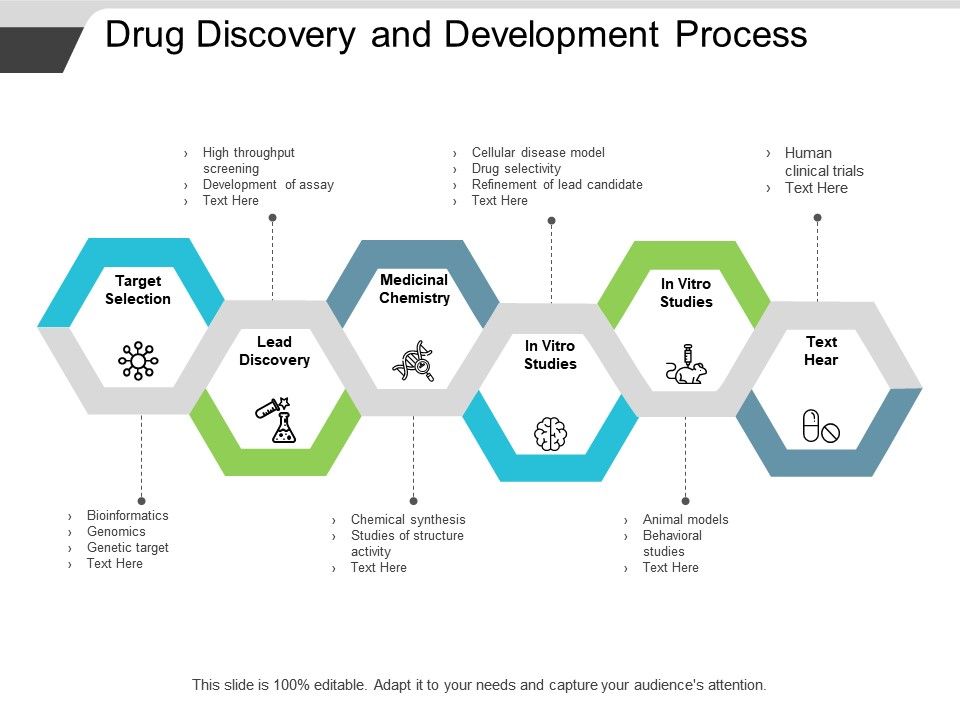
|
|
Fighting the Virus
|
|
|
|
Society Impacts
- Case Studies
- Societal upheaval during the COVID-19 pandemic underscores need for new AI data regulations | Bradford Newman Section 102(b) of The Artificial Intelligence Data Protection Act (AIDPA); House of Representatives Discussion Draft Bill
- Our weird behavior during the pandemic is messing with AI models | Will Douglas Heaven - MIT Technology Review
- The Pentagon Will Use AI to Predict Panic Buying, COVID-19 Hotspots | Patrick Tucker - Defense One... The Joint Artificial Intelligence Center (JAIC), has built a prototype AI tool that uses a wide variety of data streams to predict COVID-19 hotspots and related logistics and supply-chain problems. “Project Salus is operating as a dashboard platform that is fed into the Common Operational Picture (COP) interphases for both NORTHCOM and the National Guard.”
Social Distancing
- Amazon deploys AI ‘distance assistants’ to notify warehouse workers if they get too close | James Vincent - The Verge
- huperEyes | Huper Laboratories features an all-in-one AIoT Plug & Play, easy-to-install 3D stereo vision smart camera which is cybersecurity certified, with built-in web server, a pair of built-in mic and speaker, and digital input/output. It does not require another PC to run the 3D stereo video analytics so the total ownership is lower.
- The dystopian tech that companies are selling to help schools reopen sooner | Rebecca Heilweil - Vox ...this fall, AI could be watching students social distance and checking their masks.
|
|
|
|
Behavioral Health
|
|
Logistics
|
|
Policy - Data Driven Decisions
|
|
Intelligence Community (IC)
|
|
Understanding the Virus
- Ninja Nerd Medicine!
- Centers of Disease Control and Prevention (CDC)
- COVID-19 Vaccine & Therapeutics Tracker | BioRender
- Vaccines are not all created equal: a variety of ways to stop the virus that causes COVID-19 | Karen Weintraub and Ramon Padilla - USA TODAY
- Fighting COVID-19 with Epidemiology: A Johns Hopkins Teach-Out This free Teach-Out is for anyone who has been curious about how we identify and measure outbreaks like the COVID-19 epidemic and wants to understand the epidemiology of these infections.
What is Corona virus? What is COVID-19? Coronaviruses (CoV) are a large family of viruses that cause illness ranging from the common cold to more severe diseases such as Middle East Respiratory Syndrome (MERS-CoV) and Severe Acute Respiratory Syndrome (SARS-CoV). Coronavirus disease (COVID-19) caused by SARS-COV2 is a new strain that was discovered in 2019 and has not been previously identified in humans. Coronaviruses are zoonotic, meaning they are transmitted between animals and people. Detailed investigations found that SARS-CoV was transmitted from civet cats to humans and MERS-CoV from camels to humans. Several known coronaviruses are circulating in animals that have not yet infected humans. It is believed that COVID-19 was transmitted from pangolin to humans (current theory). Common signs of infection include respiratory symptoms, fever, cough, shortness of breath and breathing difficulties. In more severe cases, infection can cause pneumonia, severe acute
______________________________
______________________________
From email stating the source is The Center for Infectious Diseases at Johns Hopkins...
- The virus is not a living organism, but a protein molecule (DNA) covered by a protective layer of lipid (fat), which, when absorbed by the cells of the ocular, nasal or buccal mucosa, changes their genetic code. (mutation) and convert them into aggressor and multiplier cells.
- Since the virus is not a living organism but a protein molecule, it is not killed, but decays on its own. The disintegration time depends on the temperature, humidity and type of material where it lies.
- The virus is very fragile; the only thing that protects it is a thin outer layer of fat. That is why any soap or detergent is the best remedy, because the foam CUTS the FAT (that is why you have to rub so much: for 20 seconds or more, to make a lot of foam).
By dissolving the fat layer, the protein molecule disperses and breaks down on its own.
- HEAT melts fat; this is why it is so good to use water above 25 degrees Celsius for washing hands, clothes and everything. In addition, hot water makes more foam and that makes it even more useful.
- Alcohol or any mixture with alcohol over 65% DISSOLVES ANY FAT, especially the external lipid layer of the virus.
- Any mix with 1 part bleach and 5 parts water directly dissolves the protein, breaks it down from the inside.
- Oxygenated water helps long after soap, alcohol and chlorine, because peroxide dissolves the virus protein, but you have to use it pure and it hurts your skin.
- NO BACTERICIDE OR ANTIBIOTIC SERVES. The virus is not a living organism like bacteria; antibodies cannot kill what is not alive.
- NEVER shake used or unused clothing, sheets or cloth. While it is glued to a porous surface, it is very inert and disintegrates only
- between 3 hours (fabric and porous),
- 4 hours (copper and wood)
- 24 hours (cardboard),
- 42 hours (metal) and
- 72 hours (plastic).
But if you shake it or use a feather duster, the virus molecules float in the air for up to 3 hours, and can lodge in your nose.
- The virus molecules remain very stable in external cold, or artificial as air conditioners in houses and cars.
They also need moisture to stay stable, and especially darkness. Therefore, dehumidified, dry, warm and bright environments will degrade it faster.
- UV LIGHT on any object that may contain it breaks down the virus protein. For example, to disinfect and reuse a mask is perfect. Be careful, it also breaks down collagen (which is protein) in the skin.
- The virus CANNOT go through healthy skin.
- Vinegar is NOT useful because it does not break down the protective layer of fat.
- NO SPIRITS, NOR VODKA, serve. The strongest vodka is 40% alcohol, and you need 65%.
- LISTERINE IF IT SERVES! It is 65% alcohol.
- The more confined the space, the more concentration of the virus there can be. The more open or naturally ventilated, the less.
- You have to wash your hands before and after touching mucosa, food, locks, knobs, switches, remote control, cell phone, watches, computers, desks, TV, etc. And when using the bathroom.
- You have to HUMIDIFY HANDS DRY from so much washing them, because the molecules can hide in the micro cracks. The thicker the moisturizer, the better.
- Also keep your NAILS SHORT so that the virus does not hide there.
-JOHNS HOPKINS HOSPITAL
______________________________
The Exponential Power of Now | Nicholas P. Jewell is Chair of Biostatistics and Epidemiology at the London School of Medicine and Tropical Medicine
|
Epidemiology, Pathophysiology, Diagnostics
Sialic acids are a diverse group of carbohydrates that blossom like leaves from the tips of proteins covering the surfaces of human cells. ...This canopy of sugars is typically the first thing you'd bump into if you were the size of a virus or bacterium, so it's no surprise that these chemicals serve as a security badge, identifying friend from foe."Most coronaviruses infect cells in two steps – first by recognising abundant sialic acids as binding sites to gain a foothold, and then seeking out the higher affinity protein receptors like ACE2," says physician Ajit Varki. Strangely, a human-like elimination of the NeuA5c gene in mice gives them a boost in running ability, and in activating other parts of their immune system. Given the new cognitive and physical talents emerging in humans a couple of million years ago, asthma and cholera might well have been worth the swap. Humans Might Be So Sickly Because We Evolved to Avoid a Single Devastating Disease | Mike Mcrae and Ann Gibbons - Science Alert - Science Magazine
|
|
Treatment, Prognosis, Precautions | Zach Murphy
|
