Difference between revisions of "Cybersecurity Frameworks, Architectures & Roadmaps"
m |
m |
||
| Line 20: | Line 20: | ||
* [[Singularity]] ... [[Artificial Consciousness / Sentience|Sentience]] ... [[Artificial General Intelligence (AGI)| AGI]] ... [[Inside Out - Curious Optimistic Reasoning| Curious Reasoning]] ... [[Emergence]] ... [[Moonshots]] ... [[Explainable / Interpretable AI|Explainable AI]] ... [[Algorithm Administration#Automated Learning|Automated Learning]] | * [[Singularity]] ... [[Artificial Consciousness / Sentience|Sentience]] ... [[Artificial General Intelligence (AGI)| AGI]] ... [[Inside Out - Curious Optimistic Reasoning| Curious Reasoning]] ... [[Emergence]] ... [[Moonshots]] ... [[Explainable / Interpretable AI|Explainable AI]] ... [[Algorithm Administration#Automated Learning|Automated Learning]] | ||
* [[Libraries & Frameworks Overview]] ... [[Libraries & Frameworks]] ... [[Git - GitHub and GitLab]] ... [[Other Coding options]] | * [[Libraries & Frameworks Overview]] ... [[Libraries & Frameworks]] ... [[Git - GitHub and GitLab]] ... [[Other Coding options]] | ||
| + | * [https://www.cisecurity.org/insights/blog/align-to-a-framework-plan-a-cybersecurity-roadmaps-route (4) Align to a Framework: Plan a Cybersecurity Roadmap's Route - CIS] | ||
* [https://www.nist.gov/cyberframework NIST Cybersecurity Framework] - consists of standards, guidelines, and best practices to manage cybersecurity-related risk. | * [https://www.nist.gov/cyberframework NIST Cybersecurity Framework] - consists of standards, guidelines, and best practices to manage cybersecurity-related risk. | ||
| − | |||
* [https://www.iso.org/isoiec-27001-information-security.html ISO/IEC 27001] | * [https://www.iso.org/isoiec-27001-information-security.html ISO/IEC 27001] | ||
| − | * [https://www.cisecurity.org/controls | + | * [https://www.cisecurity.org/controls CIS Controls] |
* [https://learn.microsoft.com/en-us/security/cybersecurity-reference-architecture/mcra Microsoft Cybersecurity Reference Architectures] | * [https://learn.microsoft.com/en-us/security/cybersecurity-reference-architecture/mcra Microsoft Cybersecurity Reference Architectures] | ||
* [https://sabsa.org SABSA] | * [https://sabsa.org SABSA] | ||
| Line 38: | Line 38: | ||
* [https://learn.microsoft.com/en-us/security/cybersecurity-reference-architecture/mcra Microsoft Cybersecurity Reference Architectures - Security] | * [https://learn.microsoft.com/en-us/security/cybersecurity-reference-architecture/mcra Microsoft Cybersecurity Reference Architectures - Security] | ||
* [https://cyberexperts.com/cybersecurity-frameworks 23 Top Cybersecurity Frameworks | CyberExperts.com] | * [https://cyberexperts.com/cybersecurity-frameworks 23 Top Cybersecurity Frameworks | CyberExperts.com] | ||
| − | |||
* [https://securityintelligence.com/how-stix-taxii-and-cybox-can-help-with-standardizing-threat-information/ How STIX, TAXII and CybOX Can Help With Standardizing Threat Information] | * [https://securityintelligence.com/how-stix-taxii-and-cybox-can-help-with-standardizing-threat-information/ How STIX, TAXII and CybOX Can Help With Standardizing Threat Information] | ||
* [https://www.oasis-open.org/committees/tc_home.php?wg_abbrev=cti OASIS Cyber Threat Intelligence (CTI) TC] [https://openc2.org/ OpenC2] | * [https://www.oasis-open.org/committees/tc_home.php?wg_abbrev=cti OASIS Cyber Threat Intelligence (CTI) TC] [https://openc2.org/ OpenC2] | ||
Revision as of 16:55, 3 July 2023
- Cybersecurity ... OSINT ... Frameworks ... References ... Offense ... NIST ... DHS ... Screening ... Law Enforcement ... Government ... Defense ... Lifecycle Integration ... Products ... Evaluating
- Risk, Compliance and Regulation ... Ethics ... Privacy ... Law ... AI Governance ... AI Verification and Validation
- Singularity ... Sentience ... AGI ... Curious Reasoning ... Emergence ... Moonshots ... Explainable AI ... Automated Learning
- Libraries & Frameworks Overview ... Libraries & Frameworks ... Git - GitHub and GitLab ... Other Coding options
- (4) Align to a Framework: Plan a Cybersecurity Roadmap's Route - CIS
- NIST Cybersecurity Framework - consists of standards, guidelines, and best practices to manage cybersecurity-related risk.
- ISO/IEC 27001
- CIS Controls
- Microsoft Cybersecurity Reference Architectures
- SABSA
- TOGAF
- NIST Cybersecurity Framework Roadmap
- - Zero Trust Rapid Modernization Plan
- -CIS Cybersecurity Roadmap
- NIST FedRAMP security for the cloud
- United States Computer Emergency Readiness Team (US-CERT)
- Cybersecurity Reference Architecture | Microsoft
- ISO/IEC 15408-1 ISO/IEC Information Technology Task Force (ITTF)
- FIPS 140-2 Security Requirements for Cryptographic Modules
- Introduction to the Framework Roadmap | NIST
- Microsoft Cybersecurity Reference Architectures - Security
- 23 Top Cybersecurity Frameworks | CyberExperts.com
- How STIX, TAXII and CybOX Can Help With Standardizing Threat Information
- OASIS Cyber Threat Intelligence (CTI) TC OpenC2
- Using the Cybersecurity Framework
NOTE: Not necessarily restricted to artificial intelligence-based solutions.
Contents
Important Tools
Cybersecurity frameworks, architectures and roadmaps are important tools for organizations to improve their security posture and manage cyber risks. Here is some information about them from various sources:
Cybersecurity Frameworks
A cybersecurity framework is a set of standards, guidelines and best practices that help organizations to assess and improve their ability to prevent, detect and respond to cyber threats. A cybersecurity framework can help organizations to:
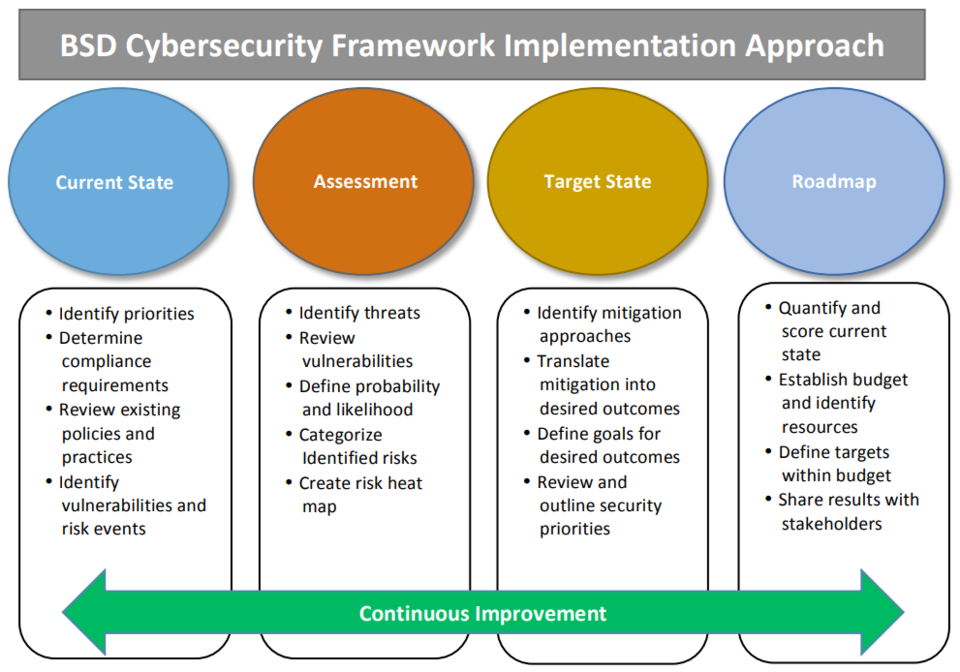
- Define their current and desired security state
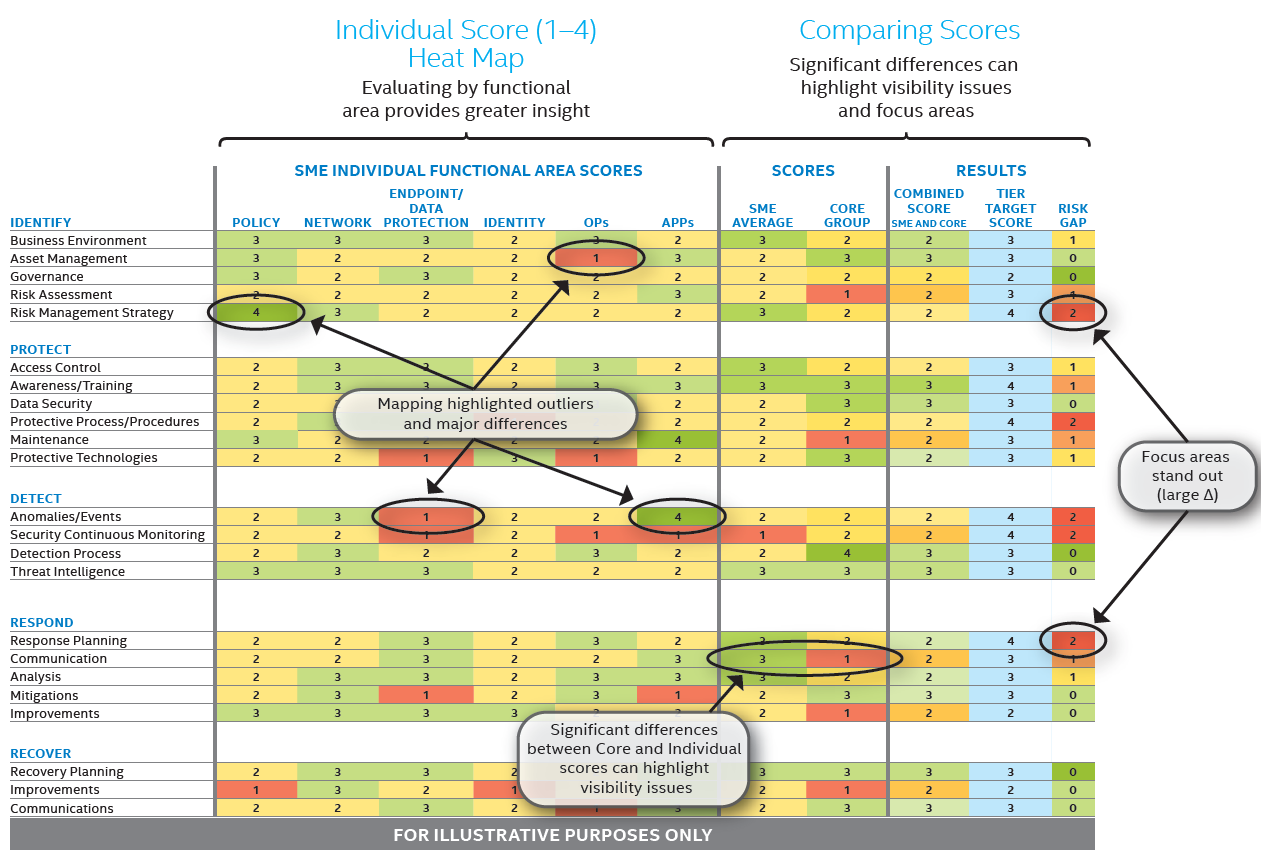
- Identify and prioritize gaps and risks
- Align security activities with business goals and requirements
- Communicate and collaborate with internal and external stakeholders
- Demonstrate compliance with regulations and industry standards
Some examples of cybersecurity frameworks are:
- NIST Cybersecurity Framework (CSF): A voluntary framework developed by the National Institute of Standards and Technology (NIST) for critical infrastructure sectors in the US, but widely adopted by other sectors and countries as well. The CSF consists of five core functions: Identify, Protect, Detect, Respond and Recover. Each function has a set of categories, subcategories and informative references that provide guidance on specific security outcomes.
- ISO/IEC 27001: An international standard for information security management systems (ISMS) that specifies the requirements for establishing, implementing, maintaining and improving an ISMS. The standard covers all aspects of information security, including risk assessment, policies, procedures, controls, monitoring, auditing and improvement. The standard also provides a certification scheme for organizations that want to demonstrate their compliance.
- CIS Controls: A set of 20 prioritized and actionable security controls developed by the Center for Internet Security (CIS) based on the most common and effective practices observed in real-world incidents. The CIS Controls cover both technical and organizational aspects of security, such as inventory, configuration, vulnerability management, access control, incident response and awareness training. The CIS Controls also provide implementation guidance for different types of organizations, such as small businesses, enterprises and cloud environments.
Cybersecurity Architectures
A cybersecurity architecture is a design or blueprint that describes how security components and processes are organized, integrated and configured to protect an organization's assets, data and operations from cyber threats. A cybersecurity architecture can help organizations to:
- Define the scope and boundaries of their security domain
- Identify and classify their assets, data and operations
- Select and implement appropriate security controls and technologies
- Define roles and responsibilities for security management and operations
- Establish security policies, standards and procedures
- Monitor and measure security performance and effectiveness
Some examples of cybersecurity architectures are:
- Microsoft Cybersecurity Reference Architectures (MCRA): A set of detailed technical diagrams that describe Microsoft's cybersecurity capabilities and how they integrate with Microsoft platforms and third-party platforms, such as Microsoft 365, Azure, ServiceNow, Salesforce, AWS and GCP. The MCRA covers various topics such as zero trust user access, security operations, operational technology (OT), multi-cloud and cross-platform capabilities, attack chain coverage, Azure native security controls and security organizational functions.
- SABSA: A framework and methodology for developing business-driven, risk-based and architecture-led security solutions. SABSA stands for Sherwood Applied Business Security Architecture. The framework consists of six layers: contextual (business), conceptual (architecture), logical (design), physical (implementation), component (build) and operational (management). Each layer has a set of attributes that define the security requirements, objectives, functions, services, components and metrics.
- TOGAF: A framework for enterprise architecture that provides a comprehensive approach to planning, designing, implementing and governing an organization's information technology. TOGAF stands for The Open Group Architecture Framework. The framework consists of four domains: business (strategy), data (information), application (system) and technology (infrastructure). Each domain has a set of principles, standards, models and views that guide the architecture development process.
Cybersecurity Roadmaps
A cybersecurity roadmap is a plan or strategy that outlines the steps and actions that an organization needs to take to achieve its security goals and objectives. A cybersecurity roadmap can help organizations to:
- Align their security initiatives with their business vision and mission
- Communicate their security vision and direction to stakeholders
- Prioritize their security investments and resources
- Track their progress and performance against their targets
- Adapt to changing threats, technologies and business needs
Some examples of cybersecurity roadmaps are:
- NIST Cybersecurity Framework Roadmap: A companion document to the NIST CSF that identifies key activities planned for improving and enhancing the CSF. The roadmap is not exhaustive in describing all planned activities within NIST but focuses on high-priority areas for development, alignment and collaboration. The roadmap version 1.1 identifies 14 areas such as confidence mechanisms, cyberattack lifecycle, cybersecurity workforce, cyber supply chain risk management, federal agency cybersecurity alignment, governance and enterprise risk management etc.
- Zero Trust Rapid Modernization Plan (RaMP): A part of the MCRA that provides a practical and actionable approach to implementing zero trust principles and practices in an organization. The RaMP consists of four phases: assess, plan, execute and optimize. Each phase has a set of steps, activities and deliverables that help organizations to define their zero trust vision, identify their current state and gaps, prioritize and implement zero trust capabilities and measure and improve their zero trust maturity.
- CIS Cybersecurity Roadmap: A guide for small and medium-sized businesses (SMBs) to improve their cybersecurity posture using the CIS Controls. The roadmap provides a simple and practical way to implement the CIS Controls based on three levels of security maturity: basic, foundational and organizational. The roadmap also provides tips, resources and tools to help SMBs with their security journey.
Making Sense
|
|
|
|
|
|
|
|
Trusted Internet Connections (TIC) 3
- Trusted Internet Connections | Cybersecurity & Infrastructure Security Agency, Department of Homeland Security (DHS)
|
|
Zero Trust
|
|
|
|