Difference between revisions of "Time"
m (→Deep-Space Positioning System (DPS)) |
m (→Assured-Positioning, Navigation and Timing (A-PNT)) |
||
| Line 301: | Line 301: | ||
|} | |} | ||
|}<!-- B --> | |}<!-- B --> | ||
| + | |||
| + | |||
| + | === <span id="Jamming and Spoofing GPS"></span>Jamming and Spoofing GPS === | ||
| + | [http://www.youtube.com/results?search_query=Jamming+Spoofing+Positioning+Navigation+Timing+PNT+GPS+GNSS+GB-GRAM+INS+CSAC+artificial+intelligence+ai YouTube search...] | ||
| + | [http://www.google.com/search?q=Jamming+Spoofing+Positioning+Navigation+Timing+PNT+GPS+GNSS+GB-GRAM+INS+CSAC+artificial+intelligence+ai ...Google search] | ||
| + | |||
| + | {|<!-- T --> | ||
| + | | valign="top" | | ||
| + | {| class="wikitable" style="width: 550px;" | ||
| + | || | ||
| + | <youtube>L2fZGVVH5lg</youtube> | ||
| + | <b>2019-06-19_The History of GPS Spoofing | ||
| + | </b><br>Incose Chesapeake Mr Dana Goward discussed the development of Global Positioning System (GPS) spoofing from a fiction account in film to being an everyday problem. | ||
| + | |<!-- M --> | ||
| + | | valign="top" | | ||
| + | {| class="wikitable" style="width: 550px;" | ||
| + | || | ||
| + | <youtube>r4UdHE3JNnU</youtube> | ||
| + | <b>How to fool a GPS - Todd Humphreys | ||
| + | </b><br>TED-Ed Todd Humphreys forecasts the near-future of geolocation when millimeter-accurate GPS "dots" will enable you to find pin-point locations, index-search your physical possessions ... or to track people without their knowledge. And the response to the sinister side of this technology may have unintended consequences of its own. (Filmed at TEDxAustin.) Talk by Todd Humphreys. | ||
| + | |} | ||
| + | |}<!-- B --> | ||
| + | |||
=== <span id="Assured-Positioning, Navigation and Timing (A-PNT)"></span>Assured-Positioning, Navigation and Timing (A-PNT) === | === <span id="Assured-Positioning, Navigation and Timing (A-PNT)"></span>Assured-Positioning, Navigation and Timing (A-PNT) === | ||
Revision as of 23:08, 24 November 2020
YouTube search... ...Google search
- Time ...Coordinated Universal Time UTC ... Clock ...Timekeeping | Wikipedia
- The Very Long and Fascinating History of Clocks | Christopher McFadden - Interesting Engineering
- What Is a Leap Second? | Konstantin Bikos and Anne Buckle - timeanddate.com
- Atomic clocks ...Tide Clock | Amazon
- Cybersecurity
- Crown Sterling ... changing the face of digital security with its non-integer-based algorithms that leverage time, AI and irrational numbers.
- Quantum cryptography ... the infosec industry looks to quantum cryptography and quantum key distribution (QKD)
- Time Series
- Models
- Transformer
- Generative Pre-trained Transformer (GPT)
- Attention Mechanism/Transformer Model
- Transformer-XL
- Sequence to Sequence (Seq2Seq)
- End-to-End Speech
- Neural Turing Machine
- Recurrent Neural Network (RNN)
- (Tree) Recursive Neural (Tensor) Network (RNTN)
- Temporal Difference (TD) Learning
- Time Series Forecasting - Statistical
- Time Series Forecasting - Deep Learning
- Spatial-Temporal Dynamic Network (STDN)
- Transformer
Whenever we have developed better clocks, we’ve learned something new about the world.
- Alexander Smith New Time Dilation Phenomenon Revealed: Timekeeping Theory Combines Quantum Clocks and Einstein’s Relativity - Dartmouth College
The Earth's rotation is so accurate it varies only in milliseconds ...do you feel the Earth rotation slowing down?
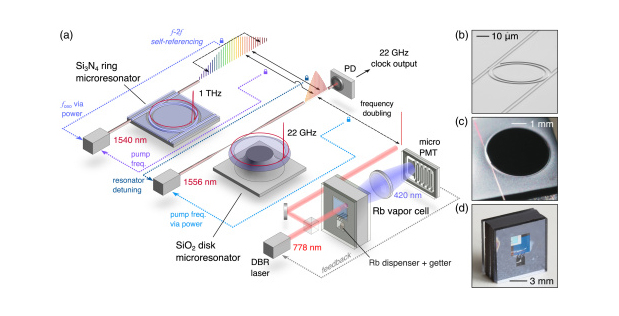
DARPA Making Progress on Miniaturized Atomic Clocks for Future PNT Applications | US Defense Advanced Research Projects Agency (DARPA)
|
|
|
|
|
|
|
|
|
|
Contents
YouTube search... ...Google search
- Case Studies
- Autonomous Drones
- Deepmind teaches AI to follow navigational directions like humans | Tristan Greene
- History of Navigation | Wikipedia
- Navigation Aids | Department of Transportation, Federal Aviation Administration
- VN-300 | Vectornav ...miniature, high-performance Dual Antenna Global Navigation Satellite Systems (GNSS)-Aided Inertial Navigation System (INS) that combines micro-electromechanical systems (MEMS) inertial sensors, two high-sensitivity GNSS receivers, and advanced Kalman filtering algorithms to provide optimal estimates of position, velocity, and orientation.
Navigation is a field of study that focuses on the process of monitoring and controlling the movement of a craft or vehicle from one place to another.[1] The field of navigation includes four general categories: land navigation, marine navigation, aeronautic navigation, and space navigation. Navigation | Wikipedia
|
|
Global Positioning System (GPS)
YouTube search... ...Google search
- Man-made (artificial) Satellites
- GPS has been copied by Russia's GLONASS, Europe’s Galileo, China's BeiDou, India’s IRNSS, and Japan’s QZSS
- Artificial intelligence in GPS navigation systems | Jeffrey L. Duffany
- RoadTagger: GPS system upgrade utilizes AI to make sure you're in the right lane | David Nield - New Atlas ...Artificial intelligence to update digital maps and improve GPS navigation | Amit Malewar - InceptiveMind
- GPS.gov
- Inside GNSS ...Global Navigation Satellite Systems
- Navstar | Space.com ...is a network of U.S. satellites that provide GPS services
- SpaceX launches third-generation GPS navigation satellite | CBS News ...GPS-3 satellite — the fourth in a series of more powerful third-generation navigation stations built by Lockheed Martin — was expected to be deployed about a 90 minutes after liftoff. Assuming tests and checkout go well, it will join a globe-spanning constellation of 31 GPS satellites.
- Air Force asks three U.S. contractors to develop miniature ASIC technology for next-gen GPS receivers | John Keller - Military & Aerospace Electronics ...small low-power-consumption GPS enabling technologies to include a next-generation ASIC for secure GPS land navigation.
- China Launches Beidou, Its Own Version of GPS | Andrew Jones - IEEE Spectrum ...China places the final Beidou navigation system satellite into orbit
- Big News For ISRO! Indian Navigation System (IRNSS) Gets Approval By IMP For Global Operations | Smriti Chaudhary - The EurAsuan Times
GPS receivers that use the L5 band can pinpoint to within 30 centimeters or 11.8 inches. The GPS concept is based on time and the known position of GPS specialized satellites. The satellites carry very stable atomic clocks that are synchronized with one another and with the ground clocks. Any drift from time maintained on the ground is corrected daily. In the same manner, the satellite locations are known with great precision. GPS receivers have clocks as well, but they are less stable and less precise. Each GPS satellite continuously transmits a radio signal containing the current time and data about its position. Since the speed of radio waves is constant and independent of the satellite speed, the time delay between when the satellite transmits a signal and the receiver receives it is proportional to the distance from the satellite to the receiver. A GPS receiver monitors multiple satellites and solves equations to determine the precise position of the receiver and its deviation from true time. At a minimum, four satellites must be in view of the receiver for it to compute four unknown quantities (three position coordinates and clock deviation from satellite time). Global Positioning System | Wikipedia
|
|
|
|
|
|
|
|
Deep-Space Positioning System (DPS)
YouTube search... ...Google search
- NASA is Making An AI-Based GPS For Space | Kristin Houser
- Frontier Development Lab (FDL) ...Artificial Intelligence Research for Space Science, Exploration & All Humankind
|
Jamming and Spoofing GPS
YouTube search... ...Google search
YouTube search... ...Google search
Like the GPS units in many automobiles today, a simple receiver and some processing power is all that is needed for accurate navigation. But, what if the GPS satellites suddenly became unavailable due to malfunction, enemy action or simple interference, such as driving into a tunnel? Unavailability of GPS would be inconvenient for drivers on the road, but could be disastrous for military missions. Extreme Miniaturization: Seven Devices, One Chip to Navigate without GPS | US Defense Advanced Research Projects Agency (DARPA)
Geolocation: Locating GPS/GNSS Jamming and SpoofingYouTube search... ...Google search
YouTube search... ...Google search
YouTube search... ...Google search
YouTube search... ...Google search
Typically, the performance of measurement devices is limited by deleterious effects such as thermal noise and vibration. Notable exceptions are atomic clocks, which operate very near their fundamental limits. Driving devices to their physical limits will open new application spaces critical to future DoD systems. Indeed, many defense-critical applications already require exceptionally precise time and frequency standards enabled only by atomic clocks. The Global Positioning System (GPS) and the internet are two key examples. Measurement systems based on atomic physics benefit from the exquisite properties of the atom. Among these are (a) precise frequency transitions, (b) the ability to initialize, control, and readout the atomic state and (c) environmental isolation. In addition, atomic properties are absolute, and do not “drift” over time. In this sense, atoms are self-calibrated, making them ideal for precision sensing. Quantum-Assisted Sensing and Readout (QuASAR) | US Defense Advanced Research Projects Agency (DARPA)
YouTube search... ...Google search
Time & MusicYouTube search... ...Google search
|
