Difference between revisions of "Time"
m (Put these in a hierarchical list based on commonality: * Autoregressive (AR): This algorithm uses past values of the time series to predict future values. It assumes that the current value is a linear function of previous values. For example, AR can be us) |
m (→Types) |
||
| Line 43: | Line 43: | ||
| − | |||
| − | |||
| − | + | = Algorithm Types = | |
| − | |||
| − | |||
| − | |||
| − | |||
| − | |||
| − | |||
| − | |||
| − | |||
| − | |||
| − | |||
| − | |||
| − | |||
| − | |||
| − | |||
| − | |||
| − | |||
| − | |||
| − | |||
| − | |||
| − | |||
| − | |||
| − | |||
* [[Forecasting#Time Series Forecasting - Statistical|Time Series Forecasting - Statistical]] | * [[Forecasting#Time Series Forecasting - Statistical|Time Series Forecasting - Statistical]] | ||
* [[Forecasting#Time Series Forecasting - Deep Learning|Time Series Forecasting - Deep Learning]] | * [[Forecasting#Time Series Forecasting - Deep Learning|Time Series Forecasting - Deep Learning]] | ||
| − | * [[Spatial-Temporal Dynamic Network (STDN)]] | + | |
| + | There are different types of time based AI algorithms, depending on the goal and the method of the algorithm. Some of the most common ones are: | ||
| + | |||
| + | * Time Series Forecasting: | ||
| + | ** Statistical: | ||
| + | *** Autoregressive (AR): This algorithm uses past values of the time series to predict future values. It assumes that the current value is a linear function of previous values. For example, AR can be used to forecast the weather based on historical data. | ||
| + | *** Autoregressive Integrated Moving Average (ARIMA): This algorithm is an extension of AR that also accounts for the trend and the seasonality of the time series. It uses differencing to make the time series stationary (i.e., having constant mean and variance) and then applies AR and moving average (MA) models. For example, ARIMA can be used to forecast the sales of a product based on past sales and seasonal patterns. | ||
| + | *** Seasonal Autoregressive Integrated Moving Average (SARIMA): This algorithm is a further extension of ARIMA that also accounts for the cyclic variations of the time series. It uses seasonal differencing and seasonal AR and MA models to capture the periodic fluctuations of the time series. For example, SARIMA can be used to forecast the electricity demand based on past demand and seasonal factors. | ||
| + | *** Exponential Smoothing (ES): This algorithm uses weighted averages of past values of the time series to predict future values. It gives more weight to recent values than older values, and it can also incorporate trend and seasonality components. For example, ES can be used to forecast the inventory level based on past demand and supply. | ||
| + | ** Deep Learning: | ||
| + | *** Prophet: This algorithm is a modern and flexible approach to time series forecasting developed by Facebook. It uses a decomposable model that consists of trend, seasonality, and holiday components, and it allows for adding custom effects and prior information. For example, Prophet can be used to forecast the web traffic for a data science blog website based on past traffic and special events. | ||
| + | * Neural Networks: | ||
| + | ** [[Recurrent Neural Network (RNN)]]: This algorithm is a type of deep learning model that can process sequential data such as time series. It uses a network of neurons that have feedback loops, which enable them to store information from previous inputs. For example, RNN can be used to forecast the prices of Bitcoin based on past prices and other factors. | ||
| + | *** [[Gated Recurrent Unit (GRU)]] | ||
| + | *** [[Long Short-Term Memory (LSTM)]]: This algorithm is a special type of RNN that can handle long-term dependencies in sequential data. It uses a memory cell that can store, update, and forget information over time, and it has gates that control the flow of information in and out of the cell. For example, LSTM can be used to forecast the generation of wind power based on past generation and weather conditions: | ||
| + | **** [[Bidirectional Long Short-Term Memory (BI-LSTM)]] | ||
| + | **** Bidirectional Long Short-Term Memory (BI-LSTM) with Attention Mechanism | ||
| + | **** [[Average-Stochastic Gradient Descent (SGD) Weight-Dropped LSTM (AWD-LSTM)]] | ||
| + | *** [[Sequence to Sequence (Seq2Seq)]] can map a variable-length input sequence to a variable-length output sequence. It is often used for natural language processing tasks, such as machine translation, text summarization, conversational models, and question answering. The Seq2Seq algorithm consists of two main components: an encoder and a decoder. The encoder reads the input sequence one timestep at a time and produces a hidden vector representation of the input. The decoder then uses the hidden vector as the initial state and generates the output sequence one timestep at a time, using the previous output as the input context. | ||
| + | ** [[Transformer]]: This algorithm is a state-of-the-art deep learning model that can process sequential data such as time series. It uses layers of attention mechanisms that can learn how to focus on relevant parts of the input data, and it can handle long-term dependencies and parallel computations efficiently. For example, Transformer can be used to forecast the spread of COVID-19 based on past cases and interventions. Transformer can process sequential data using layers of attention mechanisms, without using recurrent or convolutional layers. It can handle long-term dependencies and parallel computations efficiently, and it can achieve better results than RNN-based Seq2Seq models on various tasks. | ||
| + | *** [[Generative Pre-trained Transformer (GPT)]] | ||
| + | *** [[Attention]] Mechanism: This allows the decoder to selectively focus on different parts of the input sequence when generating the output, instead of relying on a single fixed vector. This can improve the performance and accuracy of the Seq2Seq model, especially for long sequences | ||
| + | **** [[Transformer-XL]] | ||
| + | *** Beam search: This is a technique to find the most probable output sequence given the input sequence, by keeping track of multiple candidate sequences and expanding them based on their probabilities. This can improve the quality and diversity of the output, compared to using a greedy or random search. | ||
| + | ** Convolutional Neural Network (CNN): This algorithm is another type of deep learning model that can process sequential data such as time series. It uses layers of filters that can extract features from local regions of the input data, and it can capture complex patterns and relationships in the data. For example, CNN can be used to forecast an avalanche in a famous ski resort based on past snowfall and temperature data. | ||
| + | * Other: | ||
| + | ** Gaussian Process (GP): This algorithm is a type of probabilistic model that can handle uncertainty and noise in time series data. It uses a function that defines how similar any two points in the input space are, and it produces a distribution over possible outputs for any given input. For example, GP can be used to forecast the depletion level of stocks in stores based on past sales and inventory data. | ||
| + | ** [[End-to-End Speech]] | ||
| + | ** [[Neural Turing Machine]] | ||
| + | ** [[(Tree) Recursive Neural (Tensor) Network (RNTN)]] | ||
| + | ** [[Temporal Difference (TD) Learning]] | ||
| + | ** [[Spatial-Temporal Dynamic Network (STDN)]] | ||
Revision as of 20:31, 9 June 2023
YouTube ... Quora ...Google search ...Google News ...Bing News
- Time ... Retrocausality ... Delayed Choice Quantum Eraser
- Government Services
- National Timing Centre ... Assured Time and Frequency for the UK
- Time ...Coordinated Universal Time UTC ... Clock ...Timekeeping | Wikipedia
- The Very Long and Fascinating History of Clocks | Christopher McFadden - Interesting Engineering
- What Is a Leap Second? | Konstantin Bikos and Anne Buckle - timeanddate.com
- Atomic clocks ...Tide Clock | Amazon
- Clock synchronization
- Time: Do the past, present, and future exist all at once? | BigThink (video) ... astrophysicist Michelle Thaller, science educator Bill Nye, author James Gleick, and neuroscientist Dean Buonomano discuss how the human brain perceives of the passage of time, the idea in theoretical physics of time as a fourth dimension, and the theory that space and time are interwoven.
- Cybersecurity
- Crown Sterling ... changing the face of digital security with its non-integer-based algorithms that leverage time, AI and irrational numbers.
- Quantum cryptography ... the infosec industry looks to quantum cryptography and quantum key distribution (QKD)
Contents
- 1 Time-based Algorithms
- 2 Algorithm Types
- 3 Precision Time Protocol (PTP)
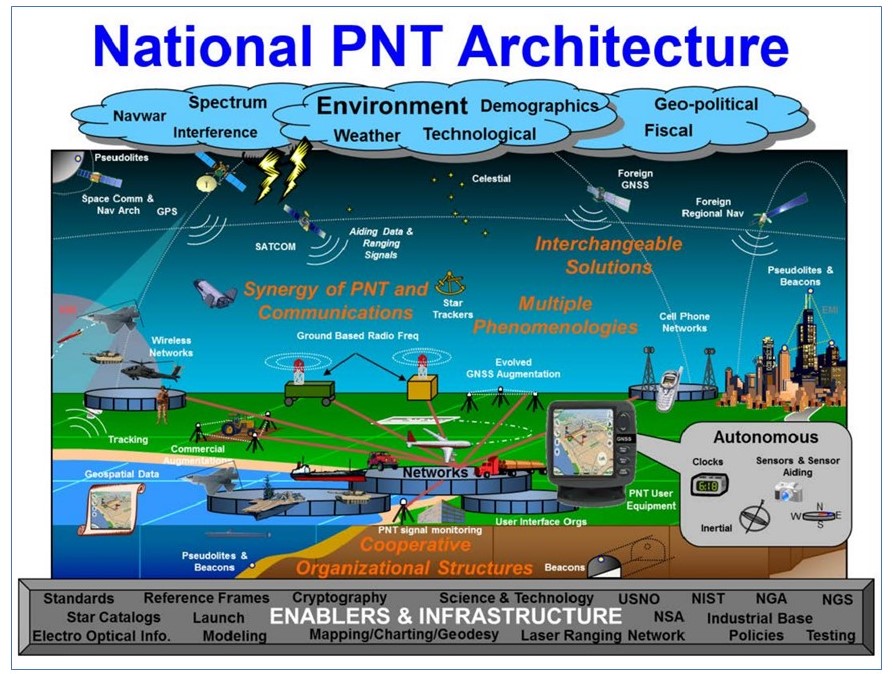
- 4 Positioning, Navigation and Timing (PNT)
- 5 Time & Music
Time-based Algorithms
- 10 Incredibly Useful Time Series Forecasting Algorithms
- Artificial intelligence (AI) algorithms: a complete overview
- New AI Algorithms Streamline Data Processing for Space-based ....
- Unlocking The Power Of Predictive Analytics With AI - Forbes
- What’s a Time Crystal? | Charles Q. Choi - IEEE Spectrum ... And how do Google researchers use quantum computers to make them? ... quantum system of many particles that organize themselves into a periodic pattern of motion—periodic in time rather than in space—that persists in perpetuity.
- This Mirror Reverses How Light Travels in Time There are already applications in wireless, radar, and optical-computing | Charles Q. Choi - IEEE Spectrum ... There are already applications in wireless, radar, and optical-computing ... These applications often reverse the order of signals to help process them.
Time based AI algorithms are algorithms that use time series data to make predictions or analyses. Time series data are data that are collected over time and have a temporal order. For example, the daily temperature, the stock prices, or the number of visitors to a website are all time series data.
Algorithm Types
There are different types of time based AI algorithms, depending on the goal and the method of the algorithm. Some of the most common ones are:
- Time Series Forecasting:
   ** Statistical:
       *** Autoregressive (AR): This algorithm uses past values of the time series to predict future values. It assumes that the current value is a linear function of previous values. For example, AR can be used to forecast the weather based on historical data.
       ***  Autoregressive Integrated Moving Average (ARIMA): This algorithm is an extension of AR that also accounts for the trend and the seasonality of the time series. It uses differencing to make the time series stationary (i.e., having constant mean and variance) and then applies AR and moving average (MA) models. For example, ARIMA can be used to forecast the sales of a product based on past sales and seasonal patterns.
       ***  Seasonal Autoregressive Integrated Moving Average (SARIMA): This algorithm is a further extension of ARIMA that also accounts for the cyclic variations of the time series. It uses seasonal differencing and seasonal AR and MA models to capture the periodic fluctuations of the time series. For example, SARIMA can be used to forecast the electricity demand based on past demand and seasonal factors.
       ***  Exponential Smoothing (ES): This algorithm uses weighted averages of past values of the time series to predict future values. It gives more weight to recent values than older values, and it can also incorporate trend and seasonality components. For example, ES can be used to forecast the inventory level based on past demand and supply.
   ** Deep Learning:
       *** Prophet: This algorithm is a modern and flexible approach to time series forecasting developed by Facebook. It uses a decomposable model that consists of trend, seasonality, and holiday components, and it allows for adding custom effects and prior information. For example, Prophet can be used to forecast the web traffic for a data science blog website based on past traffic and special events.
- Neural Networks:
   ** Recurrent Neural Network (RNN): This algorithm is a type of deep learning model that can process sequential data such as time series. It uses a network of neurons that have feedback loops, which enable them to store information from previous inputs. For example, RNN can be used to forecast the prices of Bitcoin based on past prices and other factors.
       *** Gated Recurrent Unit (GRU)
       *** Long Short-Term Memory (LSTM): This algorithm is a special type of RNN that can handle long-term dependencies in sequential data. It uses a memory cell that can store, update, and forget information over time, and it has gates that control the flow of information in and out of the cell. For example, LSTM can be used to forecast the generation of wind power based on past generation and weather conditions:
           **** Bidirectional Long Short-Term Memory (BI-LSTM)
           **** Bidirectional Long Short-Term Memory (BI-LSTM) with Attention Mechanism
           **** Average-Stochastic Gradient Descent (SGD) Weight-Dropped LSTM (AWD-LSTM)
       *** Sequence to Sequence (Seq2Seq) can map a variable-length input sequence to a variable-length output sequence. It is often used for natural language processing tasks, such as machine translation, text summarization, conversational models, and question answering. The Seq2Seq algorithm consists of two main components: an encoder and a decoder. The encoder reads the input sequence one timestep at a time and produces a hidden vector representation of the input. The decoder then uses the hidden vector as the initial state and generates the output sequence one timestep at a time, using the previous output as the input context.
   ** Transformer: This algorithm is a state-of-the-art deep learning model that can process sequential data such as time series. It uses layers of attention mechanisms that can learn how to focus on relevant parts of the input data, and it can handle long-term dependencies and parallel computations efficiently. For example, Transformer can be used to forecast the spread of COVID-19 based on past cases and interventions. Transformer can process sequential data using layers of attention mechanisms, without using recurrent or convolutional layers. It can handle long-term dependencies and parallel computations efficiently, and it can achieve better results than RNN-based Seq2Seq models on various tasks.
       *** Generative Pre-trained Transformer (GPT)
       *** Attention Mechanism: This allows the decoder to selectively focus on different parts of the input sequence when generating the output, instead of relying on a single fixed vector. This can improve the performance and accuracy of the Seq2Seq model, especially for long sequences
           **** Transformer-XL
       *** Beam search: This is a technique to find the most probable output sequence given the input sequence, by keeping track of multiple candidate sequences and expanding them based on their probabilities. This can improve the quality and diversity of the output, compared to using a greedy or random search.
   ** Convolutional Neural Network (CNN): This algorithm is another type of deep learning model that can process sequential data such as time series. It uses layers of filters that can extract features from local regions of the input data, and it can capture complex patterns and relationships in the data. For example, CNN can be used to forecast an avalanche in a famous ski resort based on past snowfall and temperature data.
- Other:
   ** Gaussian Process (GP): This algorithm is a type of probabilistic model that can handle uncertainty and noise in time series data. It uses a function that defines how similar any two points in the input space are, and it produces a distribution over possible outputs for any given input. For example, GP can be used to forecast the depletion level of stocks in stores based on past sales and inventory data.
   ** End-to-End Speech
   ** Neural Turing Machine
   ** (Tree) Recursive Neural (Tensor) Network (RNTN)
   ** Temporal Difference (TD) Learning
   ** Spatial-Temporal Dynamic Network (STDN)
Whenever we have developed better clocks, we’ve learned something new about the world.
- Alexander Smith New Time Dilation Phenomenon Revealed: Timekeeping Theory Combines Quantum Clocks and Einstein’s Relativity - Dartmouth College
The Earth's rotation is so accurate it varies only in milliseconds ...do you feel the Earth rotation slowing down?
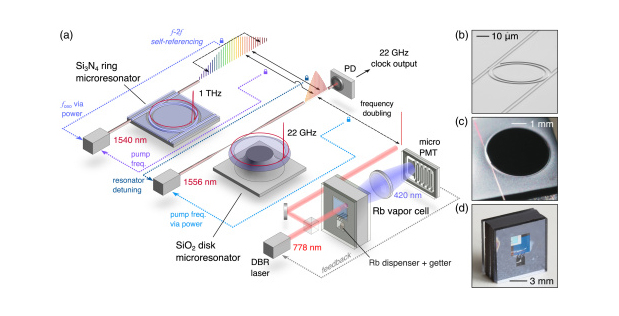
DARPA Making Progress on Miniaturized Atomic Clocks for Future PNT Applications | US Defense Advanced Research Projects Agency (DARPA)
|
|
|
|
|
|
|
|
|
|
Precision Time Protocol (PTP)
YouTube search... ...Google search
- Precision Time Protocol PTP-1588 | IEEE ...High precision clock synchronization that computes latency and offset
- How Precision Time Protocol is being deployed at Meta | Oleg Obleukhov & Ahmad Byagowi - CONNECTIVITY, NETWORKING & TRAFFIC, OPEN SOURCE, PRODUCTION ENGINEERING, UNCATEGORIZED, WEB
- PTP IEEE 1588v2 | Juniper Networks ...Time Management Administration Guide
The Precision Time Protocol (PTP) is a protocol used to synchronize clocks throughout a computer network. On a local area network, it achieves clock accuracy in the sub-microsecond range, making it suitable for measurement and control systems.[1] PTP is currently employed to synchronize financial transactions, mobile phone tower transmissions, sub-sea acoustic arrays, and networks that require precise timing but lack access to satellite navigation signals.Wikipedia
Overall, its structure is similar to NTP in that there are different levels within it and GPS satellites can serve as its time source. However, the major difference between Network Time Protocol (NTP) and PTP is that PTP is accurate to microseconds, meaning that it is more exact than NTP
|
|
YouTube search... ...Google search
- Case Studies
- Autonomous Drones
- Deepmind teaches AI to follow navigational directions like humans | Tristan Greene
- History of Navigation | Wikipedia
- Department of Homeland Security (DHS) Science and Technology (S&T) Positioning, Navigation, and Timing (PNT) Program
- Navigation Aids | Department of Transportation, Federal Aviation Administration
- VN-300 | Vectornav ...miniature, high-performance Dual Antenna Global Navigation Satellite Systems (GNSS)-Aided Inertial Navigation System (INS) that combines micro-electromechanical systems (MEMS) inertial sensors, two high-sensitivity GNSS receivers, and advanced Kalman filtering algorithms to provide optimal estimates of position, velocity, and orientation.
Navigation is a field of study that focuses on the process of monitoring and controlling the movement of a craft or vehicle from one place to another.[1] The field of navigation includes four general categories: land navigation, marine navigation, aeronautic navigation, and space navigation. Navigation | Wikipedia
|
|
|
|
Global Positioning System (GPS)
YouTube search... ...Google search
- Astronomy
- GPS has been copied by Russia's GLONASS, Europe’s Galileo, China's BeiDou, India’s IRNSS, and Japan’s QZSS
- Artificial intelligence in GPS navigation systems | Jeffrey L. Duffany
- RoadTagger: GPS system upgrade utilizes AI to make sure you're in the right lane | David Nield - New Atlas ...Artificial intelligence to update digital maps and improve GPS navigation | Amit Malewar - InceptiveMind
- GPS.gov ...Timing
- Inside GNSS ...Global Navigation Satellite Systems
- Navstar | Space.com ...is a network of U.S. satellites that provide GPS services
- SpaceX launches third-generation GPS navigation satellite | CBS News ...GPS-3 satellite — the fourth in a series of more powerful third-generation navigation stations built by Lockheed Martin — was expected to be deployed about a 90 minutes after liftoff. Assuming tests and checkout go well, it will join a globe-spanning constellation of 31 GPS satellites.
- Air Force asks three U.S. contractors to develop miniature ASIC technology for next-gen GPS receivers | John Keller - Military & Aerospace Electronics ...small low-power-consumption GPS enabling technologies to include a next-generation ASIC for secure GPS land navigation.
- China Launches Beidou, Its Own Version of GPS | Andrew Jones - IEEE Spectrum ...China places the final Beidou navigation system satellite into orbit
- Big News For ISRO! Indian Navigation System (IRNSS) Gets Approval By IMP For Global Operations | Smriti Chaudhary - The EurAsuan Times
GPS receivers that use the L5 band can pinpoint to within 30 centimeters or 11.8 inches. The GPS concept is based on time and the known position of GPS specialized satellites. The satellites carry very stable atomic clocks that are synchronized with one another and with the ground clocks. Any drift from time maintained on the ground is corrected daily. In the same manner, the satellite locations are known with great precision. GPS receivers have clocks as well, but they are less stable and less precise. Each GPS satellite continuously transmits a radio signal containing the current time and data about its position. Since the speed of radio waves is constant and independent of the satellite speed, the time delay between when the satellite transmits a signal and the receiver receives it is proportional to the distance from the satellite to the receiver. A GPS receiver monitors multiple satellites and solves equations to determine the precise position of the receiver and its deviation from true time. At a minimum, four satellites must be in view of the receiver for it to compute four unknown quantities (three position coordinates and clock deviation from satellite time). Global Positioning System | Wikipedia
|
|
|
|
|
|
|
|
Deep-Space Positioning System (DPS)
YouTube search... ...Google search
- NASA is Making An AI-Based GPS For Space | Kristin Houser
- Frontier Development Lab (FDL) ...Artificial Intelligence Research for Space Science, Exploration & All Humankind
|
Jamming and Spoofing
YouTube search... ...Google search
- The Resilient Navigation and Timing Foundation
- Department of Homeland Security (DHS) Science and Technology (S&T) Resilient Positioning, Navigation, and Timing (PNT) Conformance Framework
- The Space Force: A Conversation With United States Secretary Of The Air Force Barbara Barrett | Steve Forbes - Forbes ... We are vulnerable. For example, the U.S. and the global economy are totally dependent on satellites, most especially the GPS, which is operated by the Space Force.
|