Difference between revisions of "Screening; Passenger, Luggage, & Cargo"
m |
m |
||
| Line 406: | Line 406: | ||
* [http://www.nist.gov/programs-projects/speech-analytics Speech Analytics | National Institute of Standards and Technology (NIST)] | * [http://www.nist.gov/programs-projects/speech-analytics Speech Analytics | National Institute of Standards and Technology (NIST)] | ||
* [http://www.biometricupdate.com/202006/the-future-of-voice The Future of Voice | Michal Hrab - Biometric Update.com] | * [http://www.biometricupdate.com/202006/the-future-of-voice The Future of Voice | Michal Hrab - Biometric Update.com] | ||
| − | * [http://www.reuters.com/article/us-usa-trade-china-exclusive/u-s-widens-blacklist-to-include-chinas-top-ai-startups-ahead-of-trade-talks-idUSKBN1WM25M U.S. expands blacklist to include [[Government Services#China|China]]'s top AI startups ahead of trade talks | David Shepardson and Josh Horwitz - Reuters] ...targets 20 Chinese public security bureaus and eight companies including video surveillance firm Hikvision, as well as leaders in facial recognition technology SenseTime Group Ltd and Megvii Technology Ltd. | + | * [http://www.reuters.com/article/us-usa-trade-china-exclusive/u-s-widens-blacklist-to-include-chinas-top-ai-startups-ahead-of-trade-talks-idUSKBN1WM25M U.S. expands blacklist to include [[Government Services#China|China]]'s top AI startups ahead of trade talks | David Shepardson and Josh Horwitz - Reuters] ...targets 20 [[Government Services#China|Chinese]] public security bureaus and eight companies including video surveillance firm Hikvision, as well as leaders in facial recognition technology SenseTime Group Ltd and Megvii Technology Ltd. |
The implementation of AI in voice recognition can train the biometric systems using millions of voice samples of different users. AI and biometrics like voice recognition can evaluate a person’s biometric voice signature by analyzing their voice patterns such as speed, accent, tone, and pitch. Such biometrics can be quick and authenticate individuals precisely. Such AI-powered voice recognition can be used in workplaces for authentication and attendance purposes. [http://www.allerin.com/blog/biometrics-is-smart-but-ai-is-smarter-heres-why [Biometrics is smart, but AI is smarter. Here's why | Naveen Joshi - Allerin] | The implementation of AI in voice recognition can train the biometric systems using millions of voice samples of different users. AI and biometrics like voice recognition can evaluate a person’s biometric voice signature by analyzing their voice patterns such as speed, accent, tone, and pitch. Such biometrics can be quick and authenticate individuals precisely. Such AI-powered voice recognition can be used in workplaces for authentication and attendance purposes. [http://www.allerin.com/blog/biometrics-is-smart-but-ai-is-smarter-heres-why [Biometrics is smart, but AI is smarter. Here's why | Naveen Joshi - Allerin] | ||
Revision as of 10:18, 4 December 2020
Youtube search... ...Google search
- Case Studies
- Privacy in Data Science
- Sight Items
- COVID-19
- Gaming: Airport CEO
- The Next Time You Fly, AI Could Help Ease the Journey | John McCormick and Kevin Hand ...pack a self-driving suitcase, clear security through an archway and board a pilotless plane: It’s a far-out vision of the future, but tech companies are working on making it a reality
Passenger ScreeningTransportation Security Administration (TSA) is evaluating the utility of advanced screening systems that use nontraditional measurement processes such as differential phase contrast X-ray, X-ray diffraction, walkthrough Advanced Imaging Technology (AIT) systems, and application of machine learning approaches to improving detection capabilities and system operational efficiency. For example, TSA is working to develop new algorithms that use machine learning approaches to discriminate between threats and benign objects, making the screening process more effective and efficient. Machine learning also offers a way to screen for all prohibited items (explosives, firearms, sharp objects, etc.) automatically. It is anticipated that machine learning algorithms not only will improve security effectiveness but also will support automation in future security systems, thereby enhancing operation efficiency and improving passenger experience through increased throughput and decreased false alarm rates. More broadly, machine learning algorithms can be applied to assess security performance and provide system-level improvements beyond performance enhancements realized at individual screening operations. Advanced Integrated Passenger and Baggage Screening Technologies | Department of Homeland Security (DHS) Transportation Security Administration (TSA)
Kaggle: Passenger Screening ChallengeResults have showed the effectiveness of deep learning applied to passenger screening. Department of Homeland Security (DHS) gives notice of the availability of the “ Department of Homeland Security (DHS)’s Person Screening Algorithm Challenge Prize Competition and rules.” The DHS Science and Technology Directorate (S&T) Homeland Security Advanced Research Projects Agency (HSARPA) Explosives Division (EXD) and the Transportation Security Administration (TSA) (Competition Sponsor) are seeking new automated detection algorithms from individuals and entities that improve the speed, accuracy, and detection of small threat objects and other prohibited items during the airport passenger screening process. Algorithms developed from this Competition, or through further research and development under a limited intellectual property use agreement, have the potential to improve the speed, the detection of prohibited items, and the accuracy of Advanced Imaging Technology (AIT) scanners. A comprehensive set of new automated detection algorithms have the potential to be integrated into the latest screening equipment. Models idle_speculation used to win
Using Synthetic Training DataOld: Development of the equipment and its associated detection algorithms is time consuming and expensive because system screening performance is difficult to accurately model. Prototype systems must be built and tested to measure and understand the interaction of sensors with explosives in various containment configurations. Development requires physical test articles to be fabricated or acquired. Suitable test articles may even be impossible to create if the explosives involved are unsafe to synthesize. Many test articles are created and scanned to build datasets for algorithm development, training, and testing. This solution is particularly labor intensive in order to generate large, representative datasets. New: The use of machine learning and deep learning approaches to develop algorithms to process the images generated by the screening hardware either to clear the passenger/property or to identify specific anomalies have shown significant promise in improving overall system performance. Tools can create virtual models of human travelers, their baggage and its contents. These tools/models:
Biometric ScreeningYoutube search... ...Google search
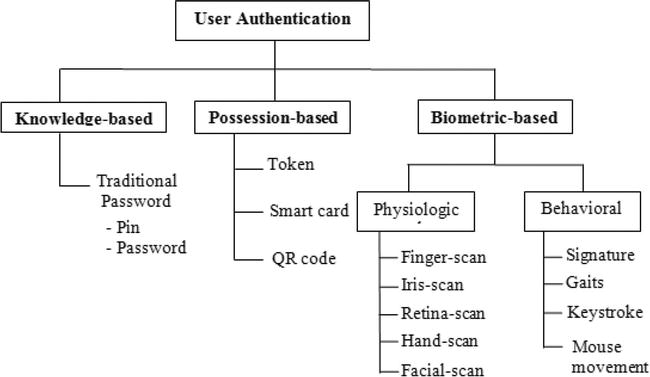
There are two categories of biometric identification and recognition solutions: Physical and behavioral. Physical biometric solutions use distinctive and measurable characteristics of particular parts of the human body, such as a person’s face, iris, DNA, vein, fingerprints, etc., and transform this information into a code understandable by the AI system. Behavioral biometric solutions operate in a similar way, except they use unique behavioral characteristics, such as a person’s typing rhythm, way of interaction with devices, gait, voice, etc. This encoded biometric information is stored in a database and digitally sampled during authentication and verification. AI in Biometrics and Security – Current Business Applications | Radhika Madhavan - emero Biometrics is the science of analyzing physical or behavioural characteristics specific to each individual to be able to authenticate their identity. If we were to define biometry or biometrics in the most straightforward sense, we would say the "measurement of the human body." ... The electronic passport (e-passport) is a familiar biometric travel document. The second generation of such documents, also known as biometric passports, includes two fingerprints stored in addition to a passport photo. But think about it for one minute... The photo speeds up border crossing through the use of scanners, which use the principle of recognition by comparison of the face or fingerprints. Check-ins and bag-drop solutions also increase speed and efficiency while maintaining high levels of security. Needless to say, that for airports and airlines, providing passengers with a unique and enjoyable travel experience is a business priority. Biometrics provides here irrefutable evidence of the link between the passport and its holder. Biometric authentication is done by comparing the face/fingerprint(s) seen/read at the border with the face/fingerprints in the passport micro-controller. If both biometric data match, authentication is confirmed. Identification, if necessary, is done with the biographic data in the chip and printed. Besides, many countries have set up biometric infrastructures to control migration flows to and from their territories. Fingerprint scanners and cameras at border posts capture information that helps identify travellers entering the country in a more precise and reliable way. In some states, the same applies to consulates to visa applications and renewals. Data acquisition requires reliable equipment to ensure optimum capture of photos and fingerprints, essential for precision during comparison and verification. Biometrics: authentication & identification (definition, trends, use cases, laws and latest news) - 2020 review Thales
Contactless Biometrics Youtube search... ...Google search used to authenticate users without having to place their hands anywhere near a scanner – simply authenticating digital identity through Fingerprint, Palmprint, Iris, Retinal, Face, Speech, Speaker & Language.
Department of Homeland Security (DHS) provides biometric identification services to protect the nation through its Office of Biometric Identity Management (OBIM), which supplies the technology for matching, storing, and sharing biometric data. OBIM is the lead designated provider of biometric identity services for DHS, and maintains the largest biometric repository in the U.S. government. This system, called the Automated Biometric Identification System (IDENT), is operated and maintained by OBIM. IDENT currently holds more than 200 million unique identities and processes more than 300,000 biometric transactions per day.
Biometric Technology Rally Department of Homeland Security (DHS) DHS Science and Technology Directorate (S&T) and Customs and Border Protection (CBP)’s Apex Air Entry/Exit Re-engineering (AEER) project created a partnership between S&T and CBP to test and evaluate operational processes using biometric and non-biometric technologies. The MdTF continues to support multiple projects for the DHS S&T Biometrics and Identity Technology Center including those that inform CBP, Transportation Security Administration (TSA) and external agencies to evaluate and implement solutions in their operational environments. The 2019 Biometric Technology Rally was designed to challenge industry to develop high-throughput biometric systems, meeting the requirements of fast and accurate user recognition within identity verification operations, such as security checkpoints. The 2019 Rally invited providers of biometric (face, iris, or fingerprint) acquisition systems, as well as providers of biometric matching systems that achieve defined performance targets for high-throughput use cases. MdTF | Maryland Test Facility
FingerprintYoutube search... ...Google search
Fingerprint scanners collect an image of a person’s fingerprint and record its features such as whorls, loops, and arches. Additionally, fingerprint scanners also analyze outlines of edges, furrows, and minutiae of a fingerprint. The scanned fingerprint image is then verified against a previously stored set of fingerprints. [Biometrics is smart, but AI is smarter. Here's why | Naveen Joshi - Allerin Fingerprint identification is one of the most well-known and publicized biometrics. Because of their uniqueness and consistency over time, fingerprints have been used for identification for over a century, more recently becoming automated (i.e. a biometric) due to advancements in computing capabilities. Fingerprint identification is popular because of the inherent ease in acquisition, the numerous sources (10 fingers) available for collection, and their established use and collections by law enforcement and immigration. What is Fingerprint Identification? | Stephen Mayhew - Biometric Update.com The practice of using fingerprints as a method of identifying individuals has been in use since the late nineteenth century when Sir Francis Galton defined some of the points or characteristics from which fingerprints can be identified. These “Galton Points” are the foundation for the science of fingerprint identification, which has expanded and transitioned over the past century. Fingerprint identification began its transition to automation in the late 1960s along with the emergence of computing technologies. With the advent of computers, a subset of the Galton Points, referred to as minutiae, has been utilized to develop automated fingerprint technology. A fingerprint usually appears as a series of dark lines that represent the high, peaking portion of the friction ridge skin, while the valley between these ridges appears as white space and are the low, shallow portion of the friction ridge skin. Fingerprint identification is based primarily on the minutiae, or the location and direction of the ridge endings and bifurcations (splits) along a ridge path. A variety of sensor types —
— are used for collecting the digital image of a fingerprint surface. Optical sensors take an image of the fingerprint, and are the most common sensor today. The two main categories of fingerprint matching techniques are:
Pattern matching simply compares two images to see how similar they are. Pattern matching is usually used in fingerprint systems to detect duplicates. The most widely used recognition technique, minutiae-based matching, relies on the minutiae points, specifically the location and direction of each point.
PalmprintYoutube search... ...Google search
Eye: Iris/RetinalYoutube search... ...Google search
Two methods:
FaceSee Facial Recognition page Speech, Speaker & LanguageYoutube search... ...Google search
The implementation of AI in voice recognition can train the biometric systems using millions of voice samples of different users. AI and biometrics like voice recognition can evaluate a person’s biometric voice signature by analyzing their voice patterns such as speed, accent, tone, and pitch. Such biometrics can be quick and authenticate individuals precisely. Such AI-powered voice recognition can be used in workplaces for authentication and attendance purposes. [Biometrics is smart, but AI is smarter. Here's why | Naveen Joshi - Allerin Biometric authentication, unlike passwords or token-based authentication, uses unique biological characteristics to verify an individual’s identity. It’s harder to spoof and generally more convenient for users since they don’t have to remember passwords or carry a physical token that can easily be lost or stolen. The authenticator is part of the individual. Aware Voice recognition (also called speaker recognition or voice authentication) applies analyzes of a person’s voice to verify their identity. Airways and soft-tissue cavities, as well as the shape and movement of the mouth and jaw, influence voice patterns to create a unique “voiceprint.” Speaker recognition is a type of voice recognition technology. However, it is not the same as speech recognition, which is the technology used in speech-to-text applications and virtual assistants like Siri or Alexa. Speech recognition can make sense of verbal language, but it can’t verify the identity of the speaker based on his or her unique vocal attributes; voice biometrics can. Speaker recognition methods - There are two main approaches to voice authentication:
Enrollment and verification - A voice biometric sample must be captured and enrolled using a microphone to create a reference template to compare against samples for future authentication attempts. Unique vocal qualities are then analyzed;, such as :
Luggage ScreeningYoutube search... ...Google search
In the last two decades, baggage scanning has globally become one of the prime aviation security concerns. Manual screening of the baggage items is tedious, error-prone, and compromise privacy. Hence, many researchers have developed X-ray imagery-based autonomous systems to address these shortcomings. This paper presents a cascaded structure tensor framework that can automatically extract and recognize suspicious items in heavily occluded and cluttered baggage. The proposed framework is unique, as it intelligently extracts each object by iteratively picking contour-based transitional information from different orientations and uses only a single feed-forward convolutional neural network for the recognition. The proposed framework has been rigorously evaluated using a total of 1,067,381 X-ray scans from publicly available GDXray and SIXray datasets where it outperformed the state-of-the-art solutions by achieving the mean average precision score of 0.9343 on GDXray and 0.9595 on SIXray for recognizing the highly cluttered and overlapping suspicious items. Furthermore, the proposed framework computationally achieves 4.76\% superior run-time performance as compared to the existing solutions based on publicly available object detectors. Cascaded Structure Tensor Framework for Robust Identification of Heavily Occluded Baggage Items from X-ray Scans | T. Hassan, S. Akcay, M. Bennamoun, S. Khan, and N. Werghi X-ray Computed Tomography (CT) based 3D imaging is widely used in airports for aviation security screening whilst prior work on prohibited item detection focuses primarily on 2D X-ray imagery. In this paper, we aim to evaluate the possibility of extending the automatic prohibited item detection from 2D X-ray imagery to volumetric 3D CT baggage security screening imagery. To these ends, we take advantage of 3D Convolutional Neural Neworks (CNN) and popular object detection frameworks such as RetinaNet and Faster R-CNN in our work. As the first attempt to use 3D CNN for volumetric 3D CT baggage security screening, we first evaluate different CNN architectures on the classification of isolated prohibited item volumes and compare against traditional methods which use hand-crafted features. Subsequently, we evaluate object detection performance of different architectures on volumetric 3D CT baggage images. The results of our experiments on Bottle and Handgun datasets demonstrate that 3D CNN models can achieve comparable performance (98% true positive rate and 1.5% false positive rate) to traditional methods but require significantly less time for inference (0.014s per volume). Furthermore, the extended 3D object detection models achieve promising performance in detecting prohibited items within volumetric 3D CT baggage imagery with 76% mAP for bottles and 88% mAP for handguns, which shows both the challenge and promise of such threat detection within 3D CT X-ray security imagery. On the Evaluation of Prohibited Item Classification and Detection in Volumetric 3D Computed Tomography Baggage Security Screening Imagery | Q. Wang, N. Bhowmik, and T. Breckon
The benefits of adopting 3D technology for checkpoint security screening | Smiths Detection ...Guide: CT: What Is It And What Does It Deliver? | Smiths Detection
Trace DetectionYoutube search... ...Google search
Ion-Mobility Spectrometry (IMS) has been applied, for example, to the localization of fatty acyl and double bond positions (Castro-Perez et al., 2011), and works well in combination with hydrophilic interaction liquid chromatography and reversed phase chromatography for increased resolution, specificity, and signal-to-noise ratio (Baker et al., 2014). | Science Direct Mass spectrometry (MS) a new, Pacific Northwest National Laboratory (PNNL)-developed method provides direct, real-time detection of trace amounts of explosives such as RDX, PETN and C-4. The method selectively ionizes a sample before passing the sample through a mass spectrometer to detect explosive vapors. The method could be used at airports to improve aviation security.
Standoff DetectionYoutube search... ...Google search
Demand for new surveillance capabilities for usage in airport screenings and battlefield security check-points has led to the development of terahertz imagers and sensors. There are several advantages of imaging at terahertz frequencies compared to microwave or infrared: the wavelengths in this regime are short enough to provide high resolution with modest apertures, yet long enough to penetrate clothing. Moreover, unlike in infrared, the terahertz frequencies are not affected by dust, fog, and rain.
Video ForensicsYoutube search... ...Google search
An action movie opens to a scene on the metro platform where a bag has been left unattended, raising suspicion in the metro’s security control room. Video cameras zero in and, through movie magic, security personnel track the footage backward to identify who left the bag. Now, they can track the suspect’s movements to catch the culprit and save the day. A video algorithm that detects bags left behind and cutting-edge video forensic tools securing train stations and protecting the traveling public. The Forensic Video Exploitation and Analysis (FOVEA) tool developed by MIT Lincoln Laboratory, enables security personnel to tag a person to a left-behind item and then reconstruct the path of that individual across multiple camera views. With FOVEA, hours of video can be scanned much faster than it would normally take, making the process more efficient and more effective. These tools are being tested now by WMATA and Amtrak. Snapshot: DHS S&T’s Unique Video Forensic Tools Implemented by Mass Transit Authorities | Department of Homeland Security (DHS) Science and Technology (S&T)
"Snow White", which enables looking into the past in detail
Cargo ScreeningYoutube search... ...Google search
Neutrons are the preferred probing radiation when material specificity is required, which is most often the case. Great strides have been made in neutron based inspection techniques. Fast and thermal neutrons, whether in steady state or in microsecond, or even nanosecond pulses are being employed to interrogate, at high speeds, for explosives, drugs, chemical agents, and nuclear and many other smuggled materials. A Review of Neutron Based Non-Intrusive Inspection Techniques | Tsahi Gozani New scanners not only can tell the shape of objects inside bags, but also, what they are made of. Now, from a glance of a screen, airport staff can tell "bag of flour from a bag of explosive". In March 2013, the International Civil Aviation Organization (ICAO), an agency of the United Nations, revised an international air cargo security standard to require that that the same security screening measures apply to cargo traveling on passenger as on all-cargo aircraft (previously, the applicable screening measures differed). Under the new standard, all international air cargo transported on commercial aircraft — whether passenger or cargo — must either be (1) screened to a level intended to identify and/or detect the presence of concealed explosive devices or (2) under appropriate security controls throughout the cargo supply chain to prevent the introduction of concealed explosive devices. These new requirements must be implemented in all ICAO member states (including the United States) no later than June 30, 2021. TSA Explores Ways to Streamline International Air Cargo Screening | Cozen O'Connor - Lexology
GeneralPHOENIX –The Transportation Security Administration (TSA) announced today that Alfie, a four-year-old yellow lab and explosive detection K9 who works at Phoenix Sky Harbor International Airport (PHX), was voted the winner of TSA’s “cutest K9” contest. The votes are in! TSA’s “cutest K9” is PHX’s Alfie
Passenger Aviation Security Layers | William Johnstone - Elsevier
|