Difference between revisions of "One-class Support Vector Machine (SVM)"
(Created page with "[http://www.youtube.com/results?search_query=support+vector+machines+tensorflow YouTube search...] * Support Vector Regression (SVR) * [http://www.asimovinstitute.org/aut...") |
m |
||
| (10 intermediate revisions by the same user not shown) | |||
| Line 1: | Line 1: | ||
| − | + | {{#seo: | |
| + | |title=PRIMO.ai | ||
| + | |titlemode=append | ||
| + | |keywords=ChatGPT, artificial, intelligence, machine, learning, GPT-4, GPT-5, NLP, NLG, NLC, NLU, models, data, singularity, moonshot, Sentience, AGI, Emergence, Moonshot, Explainable, TensorFlow, Google, Nvidia, Microsoft, Azure, Amazon, AWS, Hugging Face, OpenAI, Tensorflow, OpenAI, Google, Nvidia, Microsoft, Azure, Amazon, AWS, Meta, LLM, metaverse, assistants, agents, digital twin, IoT, Transhumanism, Immersive Reality, Generative AI, Conversational AI, Perplexity, Bing, You, Bard, Ernie, prompt Engineering LangChain, Video/Image, Vision, End-to-End Speech, Synthesize Speech, Speech Recognition, Stanford, MIT |description=Helpful resources for your journey with artificial intelligence; videos, articles, techniques, courses, profiles, and tools | ||
| + | <!-- Google tag (gtag.js) --> | ||
| + | <script async src="https://www.googletagmanager.com/gtag/js?id=G-4GCWLBVJ7T"></script> | ||
| + | <script> | ||
| + | window.dataLayer = window.dataLayer || []; | ||
| + | function gtag(){dataLayer.push(arguments);} | ||
| + | gtag('js', new Date()); | ||
| + | |||
| + | gtag('config', 'G-4GCWLBVJ7T'); | ||
| + | </script> | ||
| + | }} | ||
| + | [http://www.youtube.com/results?search_query=one+class+support+vector+machines+SVM YouTube search...] | ||
| + | [http://www.google.com/search?q=one+class+support+vector+machines+SVM+machine+learning+ML ...Google search] | ||
| + | |||
| + | * [[AI Solver]] ... [[Algorithms]] ... [[Algorithm Administration|Administration]] ... [[Model Search]] ... [[Discriminative vs. Generative]] ... [[Train, Validate, and Test]] | ||
| + | * [[Embedding]] ... [[Fine-tuning]] ... [[Retrieval-Augmented Generation (RAG)|RAG]] ... [[Agents#AI-Powered Search|Search]] ... [[Clustering]] ... [[Recommendation]] ... [[Anomaly Detection]] ... [[Classification]] ... [[Dimensional Reduction]]. [[...find outliers]] | ||
| + | * [[Support Vector Machine (SVM)]] | ||
* [[Support Vector Regression (SVR)]] | * [[Support Vector Regression (SVR)]] | ||
| − | * [http:// | + | * [http://outlier-analytics.org/odd13kdd/papers/slides_amer,goldstein,abdennadher.pdf Enhancing One-class Support Vector Machines for Unsupervised Anomaly Detection | Mennatallah Amer, Markus Goldstein, Slim Abdennadher] |
| − | * [http://www. | + | * [http://www.slideshare.net/satnam74/hawkeye-a-realtime-anomaly-detection-system-51685608 hawkEye: A Real-time Anomaly Detection System | Satnam Singh] |
| − | + | * [http://docs.microsoft.com/en-us/azure/machine-learning/studio-module-reference/one-class-support-vector-machine One-Class Support Vector Machine | Microsoft] | |
| − | + | Useful in scenarios where you have a lot of "normal" data and not many cases of the anomalies you are trying to detect. For example, if you need to detect fraudulent transactions, you might not have many examples of fraud that you could use to train a typical classification model, but you might have many examples of good transactions. You use the One-Class Support Vector Model module to create the model, and then train the model using the Train Anomaly Detection Model. | |
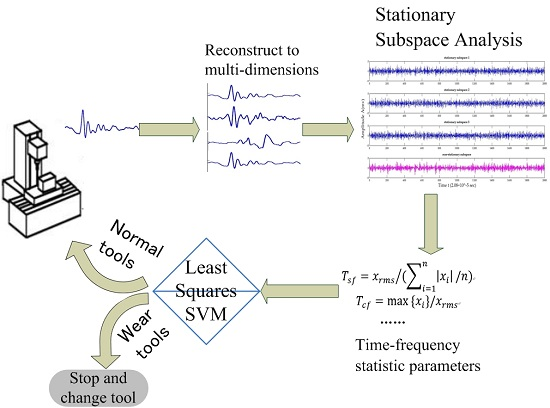
| − | http://www. | + | http://www.mdpi.com/applsci/applsci-07-00346/article_deploy/html/images/applsci-07-00346-ag.png |
| − | <youtube> | + | <youtube>Z35tGNHmlD0</youtube> |
| − | <youtube> | + | <youtube>mG4ZpEhRKHA</youtube> |
| − | |||
| − | |||
| − | |||
Latest revision as of 22:51, 5 March 2024
YouTube search... ...Google search
- AI Solver ... Algorithms ... Administration ... Model Search ... Discriminative vs. Generative ... Train, Validate, and Test
- Embedding ... Fine-tuning ... RAG ... Search ... Clustering ... Recommendation ... Anomaly Detection ... Classification ... Dimensional Reduction. ...find outliers
- Support Vector Machine (SVM)
- Support Vector Regression (SVR)
- Enhancing One-class Support Vector Machines for Unsupervised Anomaly Detection | Mennatallah Amer, Markus Goldstein, Slim Abdennadher
- hawkEye: A Real-time Anomaly Detection System | Satnam Singh
- One-Class Support Vector Machine | Microsoft
Useful in scenarios where you have a lot of "normal" data and not many cases of the anomalies you are trying to detect. For example, if you need to detect fraudulent transactions, you might not have many examples of fraud that you could use to train a typical classification model, but you might have many examples of good transactions. You use the One-Class Support Vector Model module to create the model, and then train the model using the Train Anomaly Detection Model.