Difference between revisions of "Agriculture"
m (→8R Tractor | John Deere) |
m |
||
| (20 intermediate revisions by the same user not shown) | |||
| Line 19: | Line 19: | ||
* [[Environmental Science]] | * [[Environmental Science]] | ||
* [[Cybersecurity]] ... [[Open-Source Intelligence - OSINT |OSINT]] ... [[Cybersecurity Frameworks, Architectures & Roadmaps | Frameworks]] ... [[Cybersecurity References|References]] ... [[Offense - Adversarial Threats/Attacks| Offense]] ... [[National Institute of Standards and Technology (NIST)|NIST]] ... [[U.S. Department of Homeland Security (DHS)| DHS]] ... [[Screening; Passenger, Luggage, & Cargo|Screening]] ... [[Law Enforcement]] ... [[Government Services|Government]] ... [[Defense]] ... [[Joint Capabilities Integration and Development System (JCIDS)#Cybersecurity & Acquisition Lifecycle Integration| Lifecycle Integration]] ... [[Cybersecurity Companies/Products|Products]] ... [[Cybersecurity: Evaluating & Selling|Evaluating]] | * [[Cybersecurity]] ... [[Open-Source Intelligence - OSINT |OSINT]] ... [[Cybersecurity Frameworks, Architectures & Roadmaps | Frameworks]] ... [[Cybersecurity References|References]] ... [[Offense - Adversarial Threats/Attacks| Offense]] ... [[National Institute of Standards and Technology (NIST)|NIST]] ... [[U.S. Department of Homeland Security (DHS)| DHS]] ... [[Screening; Passenger, Luggage, & Cargo|Screening]] ... [[Law Enforcement]] ... [[Government Services|Government]] ... [[Defense]] ... [[Joint Capabilities Integration and Development System (JCIDS)#Cybersecurity & Acquisition Lifecycle Integration| Lifecycle Integration]] ... [[Cybersecurity Companies/Products|Products]] ... [[Cybersecurity: Evaluating & Selling|Evaluating]] | ||
| − | * [[Robotics]] ... [[Transportation (Autonomous Vehicles)|Vehicles]] ... [[Autonomous Drones|Drones]] ... [[3D Model]] ... [[ | + | * [[Robotics]] ... [[Transportation (Autonomous Vehicles)|Vehicles]] ... [[Autonomous Drones|Drones]] ... [[3D Model]] ... [[Point Cloud]] |
| + | * [[Simulation]] ... [[Simulated Environment Learning]] ... [[World Models]] ... [[Minecraft]]: [[Minecraft#Voyager|Voyager]] | ||
* [[Satellite#Satellite Imagery|Satellite Imagery]] | * [[Satellite#Satellite Imagery|Satellite Imagery]] | ||
* [[Time]] ... [[Time#Positioning, Navigation and Timing (PNT)|PNT]] ... [[Time#Global Positioning System (GPS)|GPS]] ... [[Causation vs. Correlation#Retrocausality| Retrocausality]] ... [[Quantum#Delayed Choice Quantum Eraser|Delayed Choice Quantum Eraser]] ... [[Quantum]] | * [[Time]] ... [[Time#Positioning, Navigation and Timing (PNT)|PNT]] ... [[Time#Global Positioning System (GPS)|GPS]] ... [[Causation vs. Correlation#Retrocausality| Retrocausality]] ... [[Quantum#Delayed Choice Quantum Eraser|Delayed Choice Quantum Eraser]] ... [[Quantum]] | ||
| Line 26: | Line 27: | ||
* [[Image Classification]] | * [[Image Classification]] | ||
* [[Embodied AI]] | * [[Embodied AI]] | ||
| − | |||
* [https://deepindex.org/#Agriculture Deepindex.org list] | * [https://deepindex.org/#Agriculture Deepindex.org list] | ||
* [https://www.sciencedaily.com/releases/2020/02/200220130500.htm New artificial intelligence algorithm better predicts corn yield | University of Illinois College of Agricultural, Consumer and Environmental Sciences] | * [https://www.sciencedaily.com/releases/2020/02/200220130500.htm New artificial intelligence algorithm better predicts corn yield | University of Illinois College of Agricultural, Consumer and Environmental Sciences] | ||
| Line 42: | Line 42: | ||
* [https://www.techinasia.com/alibaba-ai-et-brain-agriculture Alibaba gets into farming – without getting its hands dirty | Rita Liao - TechInAsia] | * [https://www.techinasia.com/alibaba-ai-et-brain-agriculture Alibaba gets into farming – without getting its hands dirty | Rita Liao - TechInAsia] | ||
* [https://medium.com/pytorch/ai-for-ag-production-machine-learning-for-agriculture-e8cfdb9849a1 AI for AG: Production machine learning for agriculture | Chris Padwick - Medium] | * [https://medium.com/pytorch/ai-for-ag-production-machine-learning-for-agriculture-e8cfdb9849a1 AI for AG: Production machine learning for agriculture | Chris Padwick - Medium] | ||
| + | * [https://landing.ai/industries/agriculture/ Landing AI - Computer Vision] ... LandingLens enables new computer vision solutions to be introduced easily and rapidly, helping to increase throughput, cut costs, and improve quality. | ||
| + | * [https://www.unitedsoybean.org/hopper/soy-innovation-challenge-selects-four-finalists-that-increase-value-for-soybean-meal/ Soy Innovation Challenge Selects Four Finalists That Increase Value for Soybean Meal | The Soy Hopper] ... POLARISqb utilizes quantum computing and artificial intelligence to revolutionize drug design. They are developing a feed additive, specifically a peptide, that makes soymeal feed digestible and nutritious for livestock without relying on costly extraction methods. | ||
| + | * [https://www.techradar.com/computing/artificial-intelligence/i-finally-found-a-practical-use-for-ai-and-i-may-never-garden-the-same-way-again I finally found a practical use for AI, and I may never garden the same way again | Lance Ulanoff - TechRadar] | ||
| Line 47: | Line 50: | ||
[https://www.kdnuggets.com/2019/05/machine-learning-agriculture-applications-techniques.html Machine Learning in Agriculture: Applications and Techniques | Sciforce] | [https://www.kdnuggets.com/2019/05/machine-learning-agriculture-applications-techniques.html Machine Learning in Agriculture: Applications and Techniques | Sciforce] | ||
| − | + | = Species Management = | |
| − | + | Species management involves monitoring and controlling the population of a particular species to maintain ecological balance and prevent overpopulation or endangerment. This can be achieved through species breeding programs to promote genetic diversity and species recognition techniques to accurately identify and track individuals. | |
| − | + | * Species Breeding: enabling more precise and efficient methods to enhance genetic diversity and improve desirable traits in plants and animals. Through advanced algorithms and data analysis, AI can predict the most favorable breeding combinations based on genetic information, environmental factors, and specific breeding goals. In agriculture, AI-driven species breeding has resulted in the development of drought-resistant crops, disease-resistant varieties, and higher-yielding plants. In the field of livestock management, AI is utilized to identify superior genetic lines for breeding, leading to healthier and more productive animals. Moreover, AI-powered genetic tools have accelerated the breeding process, significantly reducing the time required to develop new breeds or crop varieties. | |
| − | + | * Species Recognition: AI can analyze vast datasets of images, sounds, and biological data to distinguish between different species with a high level of precision. This capability finds applications in wildlife conservation, where AI-driven species recognition helps monitor endangered species and track their population dynamics in their natural habitats. Furthermore, AI-powered mobile apps have been developed to enable citizen scientists and nature enthusiasts to identify plants and animals they encounter in the wild, contributing to biodiversity monitoring efforts. In agriculture, species recognition allows farmers to detect and manage pests and diseases more effectively, safeguarding crops and minimizing the use of harmful pesticides. | |
| − | + | ||
| − | + | = Field Conditions Management = | |
| − | + | encompasses various strategies to optimize agricultural practices. Soil management involves soil testing, nutrient supplementation, and erosion control to ensure healthy and fertile soil. Water management focuses on efficient irrigation methods and water conservation practices to sustainably meet the needs of crops while minimizing wastage. | |
| − | + | * Soil management: AI has emerged as a powerful tool in soil management, revolutionizing agricultural practices and environmental sustainability. Through the integration of various data sources, including satellite imagery, soil sensors, and weather forecasts, AI can offer real-time insights into soil health and fertility. By analyzing these data, AI algorithms can recommend precise and tailored fertilization schedules, optimizing nutrient application and reducing waste. Moreover, AI-driven soil management enables the identification of areas prone to erosion or nutrient depletion, allowing farmers to implement targeted erosion control and conservation practices. The technology also aids in precision irrigation, ensuring that water is distributed efficiently based on soil moisture levels and crop water requirements. Additionally, AI assists in soil carbon sequestration initiatives, helping to combat climate change by maximizing the soil's capacity to store carbon. | |
| − | + | * Water Management: AI predicts water demand and availability, optimizing distribution and storage. Smart irrigation systems use real-time data to conserve water by delivering precise amounts to crops. AI also monitors water quality, rapidly detecting contaminants to protect public health and the environment. Furthermore, AI aids in leak detection, reducing water loss. | |
| − | + | ||
| − | + | = Crop Management = | |
| − | + | using advanced technologies and data analysis to enhance agricultural productivity. Yield prediction employs predictive modeling to estimate crop yields, enabling farmers to plan for optimal harvests. Crop quality assessment involves using sensors and machine learning to ensure crops meet specific standards for marketability and consumer satisfaction. Disease detection employs image recognition and data analysis to promptly identify and combat crop diseases. Weed detection uses computer vision and AI to differentiate between crops and weeds, allowing for targeted and eco-friendly weed control. | |
| − | + | * Yield Prediction: By analyzing a vast array of data, including historical yield data, weather patterns, soil health, and crop growth stages, AI algorithms can generate precise yield forecasts for different crops and regions. This enables farmers to optimize their planting and harvesting schedules, plan for storage and transportation logistics, and make better-informed decisions on resource allocation. Yield prediction also plays a crucial role in risk management for agricultural businesses and insurance companies, allowing them to assess potential losses and develop appropriate coverage plans. The integration of AI-driven yield prediction enhances overall agricultural efficiency, reduces waste, and contributes to global food security by supporting more sustainable and productive farming practices. | |
| − | + | * Crop Quality: AI has emerged as a vital tool in assessing and ensuring crop quality throughout the agricultural value chain. By harnessing advanced machine learning algorithms and computer vision techniques, AI can rapidly analyze vast quantities of data from imaging devices and sensors to evaluate various quality attributes of crops. This includes color, size, shape, texture, and other relevant characteristics. AI-powered systems can sort and grade crops according to quality standards, facilitating the production of consistent and high-quality produce for consumers. Additionally, AI is utilized to detect and classify defects, diseases, and pest damage, enabling early intervention and reducing crop losses. Beyond sorting and grading, AI-driven quality analysis also supports post-harvest storage and processing decisions, optimizing the allocation of resources and minimizing waste. | |
| + | * Disease Detection: AI can support disease detection, revolutionizing healthcare and facilitating early diagnosis and treatment of various medical conditions. By leveraging advanced machine learning algorithms, AI can analyze vast amounts of patient data, including medical records, imaging scans, genetic information, and biomarker data. This enables AI systems to identify patterns and correlations that may not be apparent to human physicians, leading to more accurate and timely disease diagnoses. In fields such as radiology and pathology, AI-powered systems can assist in detecting abnormalities and potential signs of diseases, aiding healthcare professionals in making informed decisions. Furthermore, AI-driven wearable devices and remote monitoring systems can continuously analyze physiological data, allowing for real-time disease monitoring and timely intervention. The use of AI in disease detection holds great promise in improving patient outcomes, reducing healthcare costs, and advancing medical research and personalized treatment approaches. | ||
| + | * Weed Detection: By combining computer vision and machine learning, AI can accurately distinguish between crops and weeds in real-time. This enables farmers to implement precise and targeted weed control measures, reducing the reliance on herbicides and minimizing environmental impacts. AI-driven weed detection systems can be integrated into agricultural machinery, such as drones and autonomous robots, to survey large fields efficiently and identify weed-infested areas. As a result, farmers can adopt site-specific weed management strategies, optimizing resources and maximizing crop yields. Moreover, AI-powered weed detection can support organic farming practices by facilitating manual weed removal and reducing the need for synthetic herbicides. | ||
| + | = Livestock Management = | ||
| + | Involves overseeing the well-being and productivity of farm animals. Livestock production focuses on optimizing breeding, feeding, and housing practices to maximize the output of meat, milk, or other animal products. Animal welfare involves implementing measures to ensure the ethical treatment and health of the animals, including proper living conditions, veterinary care, and humane handling. | ||
| + | * Livestock Production: Through the integration of AI-driven data analytics and sensor technologies, livestock farmers can monitor and manage their animals more effectively. AI-powered systems can analyze data on animal behavior, health, and feed intake to identify early signs of illness or stress, enabling timely interventions and reducing the risk of disease outbreaks. Moreover, AI helps optimize breeding programs by analyzing genetic data to select superior breeding pairs, leading to improved traits and higher-quality offspring. In dairy and poultry farming, AI assists in optimizing feed formulation, ensuring that animals receive balanced and nutritious diets, resulting in increased milk production and egg yields. | ||
| + | * Animal Welfare: In agriculture and livestock management, AI-driven monitoring systems can continuously assess animals' well-being by analyzing their behavior, movement, and health data. This real-time analysis enables early detection of any signs of distress or illness, allowing for immediate intervention and veterinary care. Furthermore, AI supports animal enrichment programs by identifying and implementing personalized enrichment activities that cater to individual animals' preferences and needs. In wildlife conservation, AI-driven camera traps and drones help monitor and protect endangered species, reducing human interference and promoting a more sustainable coexistence with wildlife. Additionally, AI-powered voice and image recognition technologies aid in identifying and rescuing animals in distress, such as lost pets or injured wildlife. The integration of AI in animal welfare not only enhances animal care but also fosters greater understanding and compassion towards animals, driving positive change and better stewardship of the natural world. | ||
| + | = AI Implementation = | ||
{|<!-- T --> | {|<!-- T --> | ||
| valign="top" | | | valign="top" | | ||
| Line 146: | Line 156: | ||
<b>AI and the future of agriculture | <b>AI and the future of agriculture | ||
</b><br>Simon Jordan, Robotics & Control Lead, explains how agriculture will benefit from advances in machine vision and AI. New technologies are making huge steps forward, enabling machines to be adaptable and treat plants at an individual level by recognising shapes and texture. From counting apples and estimating yields to identifying weeds in crops, machines are getting smarter. | </b><br>Simon Jordan, Robotics & Control Lead, explains how agriculture will benefit from advances in machine vision and AI. New technologies are making huge steps forward, enabling machines to be adaptable and treat plants at an individual level by recognising shapes and texture. From counting apples and estimating yields to identifying weeds in crops, machines are getting smarter. | ||
| − | |||
| − | |||
| − | |||
| − | |||
| − | |||
| − | |||
| − | |||
| − | |||
| − | |||
| − | |||
| − | |||
| − | |||
| − | |||
| − | |||
| − | |||
| − | |||
| − | |||
| − | |||
|} | |} | ||
|}<!-- B --> | |}<!-- B --> | ||
| Line 270: | Line 262: | ||
|} | |} | ||
|}<!-- B --> | |}<!-- B --> | ||
| + | |||
| + | == <span id="Tractor"></span>Tractor == | ||
| + | * [[Robotics]] ... [[Transportation (Autonomous Vehicles)|Vehicles]] ... [[Autonomous Drones|Drones]] ... [[3D Model]] ... [[3D Simulation Environments]] ... [[Simulated Environment Learning]] ... [[Point Cloud]] | ||
| + | <hr><center><b><i> | ||
| − | = | + | What if a farmer didn't just manage a field, but every seed and plant instead? </i></b> - [https://www.deere.com/en/technology-products/precision-ag-technology/ Precision Ag Technology - John Deere] |
| − | + | ||
| + | </center><hr> | ||
| + | |||
| + | {|<!-- T --> | ||
| + | | valign="top" | | ||
| + | {| class="wikitable" style="width: 550px;" | ||
| + | || | ||
| + | <youtube>gszOT6NQbF8</youtube> | ||
| + | <b>Artificial Intelligence: Smart Machines for Weed Control and Beyond | ||
| + | </b><br>Emerging technologies such as artificial intelligence, computer vision and robotics are just beginning to be integrated into production agriculture. These technologies promise to enable the next wave of precision agriculture by moving from zone management to plant management. Learn about the opportunities and challenges of managing every plant, and how Blue River Technology is utilizing these technologies to deploy See & Spray machines that apply herbicide only to weeds. Presented at the 2017 InfoAg conference in St. Louis, Missouri by Ben Chostner, VP Business Development for Blue River Technology. | ||
| + | |} | ||
| + | |<!-- M --> | ||
| + | | valign="top" | | ||
| + | {| class="wikitable" style="width: 550px;" | ||
| + | || | ||
| + | <youtube>yQB8nfM_RkM</youtube> | ||
| + | <b>Webinar Precision Agriculture Maximize quality and productivity with cutting-edge AI | ||
| + | </b><br>In this webinar, we explored how your daily field operations can benefit from AI-powered object detection and mapping and by that, greatly reduce the time to analysis & interpret data. From localizing diseases and invasive species to measure the per-parcel crop density you will know how to master the creation of detectors adapted to precision agriculture. | ||
| + | Watch the recording and explore the potentials of Picterra in maximizing your working quality and productivity. | ||
| + | |} | ||
| + | |}<!-- B --> | ||
| + | <youtube>3icgRXoq1_A</youtube> | ||
| − | == 8R Tractor | John Deere == | + | === 8R Tractor | John Deere === |
* [https://www.deere.com/en/tractors/row-crop-tractors/row-crop-8-family/intelligence-productivity/ 8R Series Tractors | John Deere] | * [https://www.deere.com/en/tractors/row-crop-tractors/row-crop-8-family/intelligence-productivity/ 8R Series Tractors | John Deere] | ||
* [https://www.deere.com/en/news/all-news/autonomous-tractor-reveal/ John Deere Reveals Fully Autonomous Tractor at CES 2022] | * [https://www.deere.com/en/news/all-news/autonomous-tractor-reveal/ John Deere Reveals Fully Autonomous Tractor at CES 2022] | ||
| Line 295: | Line 312: | ||
The fully autonomous 8R relies on neural network algorithms to make sense of the information streaming into its cameras. Deere has been collecting and annotating the data needed to train these algorithms for several years, Hindman says.A similar AI approach is being used by companies building self-driving cars. Tesla, for example, gathers data via its cars that is used to hone its Autopilot self-driving system. - * [https://www.wired.com/story/john-deere-self-driving-tractor-stirs-debate-ai-farming John Deere's Self-Driving Tractor Stirs Debate on AI in Farming | Will Knight] ... The automation, and control of the resulting data, raises questions about the role of human farmers. | The fully autonomous 8R relies on neural network algorithms to make sense of the information streaming into its cameras. Deere has been collecting and annotating the data needed to train these algorithms for several years, Hindman says.A similar AI approach is being used by companies building self-driving cars. Tesla, for example, gathers data via its cars that is used to hone its Autopilot self-driving system. - * [https://www.wired.com/story/john-deere-self-driving-tractor-stirs-debate-ai-farming John Deere's Self-Driving Tractor Stirs Debate on AI in Farming | Will Knight] ... The automation, and control of the resulting data, raises questions about the role of human farmers. | ||
| − | == Monarch Tractor == | + | <center><img src="https://www.roboticgizmos.com/wp-content/uploads/2022/01/10/John-Deeres-Autonomous-8R-Tractor.gif" width="600"><br>'https://www.roboticgizmos.com/wp-content/uploads/2022/01/10/John-Deeres-Autonomous-8R-Tractor.gif'</center> |
| + | |||
| + | === Monarch Tractor === | ||
| + | * [https://www.monarchtractor.com/ Monarch Tractor] ... 100% Electric | Driver Optional | Data-Driven | ||
This tractor is an electric, driver-optional, smart machine that can perform various tasks such as plowing, harvesting, spraying, and more. It can also collect and analyze data about the soil, crops, weather, and pests using sensors and cameras. It can reduce greenhouse gas emissions by 77% compared to diesel tractors. | This tractor is an electric, driver-optional, smart machine that can perform various tasks such as plowing, harvesting, spraying, and more. It can also collect and analyze data about the soil, crops, weather, and pests using sensors and cameras. It can reduce greenhouse gas emissions by 77% compared to diesel tractors. | ||
| − | == Naïo Technologies' Dino | + | |
| + | === Naïo Technologies' Dino Robot === | ||
| + | * [https://www.naio-technologies.com/en/dino/ Naïo Technologies] | ||
| + | ** [https://www.naio-technologies.com/en/home/ Delivering agricultural robotic solutions] | ||
| + | |||
This robot is a self-driving weeding machine that can work autonomously in vegetable fields. It uses cameras, lidars, GPS, and AI to recognize crops and weeds, and can apply mechanical or electrical weeding methods⁴. It can also adapt to different crops and terrains, and can be controlled via a web platform. | This robot is a self-driving weeding machine that can work autonomously in vegetable fields. It uses cameras, lidars, GPS, and AI to recognize crops and weeds, and can apply mechanical or electrical weeding methods⁴. It can also adapt to different crops and terrains, and can be controlled via a web platform. | ||
Latest revision as of 09:11, 16 June 2024
Youtube search... ...Google search
- Environmental Science
- Cybersecurity ... OSINT ... Frameworks ... References ... Offense ... NIST ... DHS ... Screening ... Law Enforcement ... Government ... Defense ... Lifecycle Integration ... Products ... Evaluating
- Robotics ... Vehicles ... Drones ... 3D Model ... Point Cloud
- Simulation ... Simulated Environment Learning ... World Models ... Minecraft: Voyager
- Satellite Imagery
- Time ... PNT ... GPS ... Retrocausality ... Delayed Choice Quantum Eraser ... Quantum
- Microbiome and Metagenome Analysis
- Video/Image ... Vision ... Enhancement ... Fake ... Reconstruction ... Colorize ... Occlusions ... Predict image ... Image/Video Transfer Learning
- Image Classification
- Embodied AI
- Deepindex.org list
- New artificial intelligence algorithm better predicts corn yield | University of Illinois College of Agricultural, Consumer and Environmental Sciences
- What AI (Artificial Intelligence) Will Mean For The Cannabis Space | Tom Taulli - Forbes
- Machine learning helps robot harvest lettuce for the first time | Rich Haridy - New Atlas
- How a Japanese cucumber farmer is using deep learning and TensorFlow | Kaz Sato - Google
- Beyond the Hype: AI in Agtech | Allison Kopf
- Feeding the world with AI-driven agriculture innovation | Microsoft
- Artificial Intelligence in Agriculture | Mindtree
- Smarter Farms: Watson Decision Platform for Agriculture | IBM
- Sensors give farmers clear picture of animal health and well-being | Cargill
- At This High-Tech Farm, the Boss Is an AI-Powered Algorithm - Bowery Farming says its proprietary software can top the intuition of a seasoned farmer | Aki Ito
- New autonomous farm wants to produce food without human workers | Erin Winick
- A field‐tested robotic harvesting system for iceberg lettuce | S. Birrell, J. Hughes, J. Cai, and F. Iida
- Alibaba gets into farming – without getting its hands dirty | Rita Liao - TechInAsia
- AI for AG: Production machine learning for agriculture | Chris Padwick - Medium
- Landing AI - Computer Vision ... LandingLens enables new computer vision solutions to be introduced easily and rapidly, helping to increase throughput, cut costs, and improve quality.
- Soy Innovation Challenge Selects Four Finalists That Increase Value for Soybean Meal | The Soy Hopper ... POLARISqb utilizes quantum computing and artificial intelligence to revolutionize drug design. They are developing a feed additive, specifically a peptide, that makes soymeal feed digestible and nutritious for livestock without relying on costly extraction methods.
- I finally found a practical use for AI, and I may never garden the same way again | Lance Ulanoff - TechRadar
Though still in the beginning of its journey, ML-driven farms are already evolving into artificial intelligence systems. At present, machine learning solutions tackle individual problems, but with further integration of automated data recording, data analysis, machine learning, and decision-making into an interconnected system, farming practices would change into with the so-called knowledge-based agriculture that would be able to increase production levels and products quality.
Machine Learning in Agriculture: Applications and Techniques | Sciforce
Contents
Species Management
Species management involves monitoring and controlling the population of a particular species to maintain ecological balance and prevent overpopulation or endangerment. This can be achieved through species breeding programs to promote genetic diversity and species recognition techniques to accurately identify and track individuals.
- Species Breeding: enabling more precise and efficient methods to enhance genetic diversity and improve desirable traits in plants and animals. Through advanced algorithms and data analysis, AI can predict the most favorable breeding combinations based on genetic information, environmental factors, and specific breeding goals. In agriculture, AI-driven species breeding has resulted in the development of drought-resistant crops, disease-resistant varieties, and higher-yielding plants. In the field of livestock management, AI is utilized to identify superior genetic lines for breeding, leading to healthier and more productive animals. Moreover, AI-powered genetic tools have accelerated the breeding process, significantly reducing the time required to develop new breeds or crop varieties.
- Species Recognition: AI can analyze vast datasets of images, sounds, and biological data to distinguish between different species with a high level of precision. This capability finds applications in wildlife conservation, where AI-driven species recognition helps monitor endangered species and track their population dynamics in their natural habitats. Furthermore, AI-powered mobile apps have been developed to enable citizen scientists and nature enthusiasts to identify plants and animals they encounter in the wild, contributing to biodiversity monitoring efforts. In agriculture, species recognition allows farmers to detect and manage pests and diseases more effectively, safeguarding crops and minimizing the use of harmful pesticides.
Field Conditions Management
encompasses various strategies to optimize agricultural practices. Soil management involves soil testing, nutrient supplementation, and erosion control to ensure healthy and fertile soil. Water management focuses on efficient irrigation methods and water conservation practices to sustainably meet the needs of crops while minimizing wastage.
- Soil management: AI has emerged as a powerful tool in soil management, revolutionizing agricultural practices and environmental sustainability. Through the integration of various data sources, including satellite imagery, soil sensors, and weather forecasts, AI can offer real-time insights into soil health and fertility. By analyzing these data, AI algorithms can recommend precise and tailored fertilization schedules, optimizing nutrient application and reducing waste. Moreover, AI-driven soil management enables the identification of areas prone to erosion or nutrient depletion, allowing farmers to implement targeted erosion control and conservation practices. The technology also aids in precision irrigation, ensuring that water is distributed efficiently based on soil moisture levels and crop water requirements. Additionally, AI assists in soil carbon sequestration initiatives, helping to combat climate change by maximizing the soil's capacity to store carbon.
- Water Management: AI predicts water demand and availability, optimizing distribution and storage. Smart irrigation systems use real-time data to conserve water by delivering precise amounts to crops. AI also monitors water quality, rapidly detecting contaminants to protect public health and the environment. Furthermore, AI aids in leak detection, reducing water loss.
Crop Management
using advanced technologies and data analysis to enhance agricultural productivity. Yield prediction employs predictive modeling to estimate crop yields, enabling farmers to plan for optimal harvests. Crop quality assessment involves using sensors and machine learning to ensure crops meet specific standards for marketability and consumer satisfaction. Disease detection employs image recognition and data analysis to promptly identify and combat crop diseases. Weed detection uses computer vision and AI to differentiate between crops and weeds, allowing for targeted and eco-friendly weed control.
- Yield Prediction: By analyzing a vast array of data, including historical yield data, weather patterns, soil health, and crop growth stages, AI algorithms can generate precise yield forecasts for different crops and regions. This enables farmers to optimize their planting and harvesting schedules, plan for storage and transportation logistics, and make better-informed decisions on resource allocation. Yield prediction also plays a crucial role in risk management for agricultural businesses and insurance companies, allowing them to assess potential losses and develop appropriate coverage plans. The integration of AI-driven yield prediction enhances overall agricultural efficiency, reduces waste, and contributes to global food security by supporting more sustainable and productive farming practices.
- Crop Quality: AI has emerged as a vital tool in assessing and ensuring crop quality throughout the agricultural value chain. By harnessing advanced machine learning algorithms and computer vision techniques, AI can rapidly analyze vast quantities of data from imaging devices and sensors to evaluate various quality attributes of crops. This includes color, size, shape, texture, and other relevant characteristics. AI-powered systems can sort and grade crops according to quality standards, facilitating the production of consistent and high-quality produce for consumers. Additionally, AI is utilized to detect and classify defects, diseases, and pest damage, enabling early intervention and reducing crop losses. Beyond sorting and grading, AI-driven quality analysis also supports post-harvest storage and processing decisions, optimizing the allocation of resources and minimizing waste.
- Disease Detection: AI can support disease detection, revolutionizing healthcare and facilitating early diagnosis and treatment of various medical conditions. By leveraging advanced machine learning algorithms, AI can analyze vast amounts of patient data, including medical records, imaging scans, genetic information, and biomarker data. This enables AI systems to identify patterns and correlations that may not be apparent to human physicians, leading to more accurate and timely disease diagnoses. In fields such as radiology and pathology, AI-powered systems can assist in detecting abnormalities and potential signs of diseases, aiding healthcare professionals in making informed decisions. Furthermore, AI-driven wearable devices and remote monitoring systems can continuously analyze physiological data, allowing for real-time disease monitoring and timely intervention. The use of AI in disease detection holds great promise in improving patient outcomes, reducing healthcare costs, and advancing medical research and personalized treatment approaches.
- Weed Detection: By combining computer vision and machine learning, AI can accurately distinguish between crops and weeds in real-time. This enables farmers to implement precise and targeted weed control measures, reducing the reliance on herbicides and minimizing environmental impacts. AI-driven weed detection systems can be integrated into agricultural machinery, such as drones and autonomous robots, to survey large fields efficiently and identify weed-infested areas. As a result, farmers can adopt site-specific weed management strategies, optimizing resources and maximizing crop yields. Moreover, AI-powered weed detection can support organic farming practices by facilitating manual weed removal and reducing the need for synthetic herbicides.
Livestock Management
Involves overseeing the well-being and productivity of farm animals. Livestock production focuses on optimizing breeding, feeding, and housing practices to maximize the output of meat, milk, or other animal products. Animal welfare involves implementing measures to ensure the ethical treatment and health of the animals, including proper living conditions, veterinary care, and humane handling.
- Livestock Production: Through the integration of AI-driven data analytics and sensor technologies, livestock farmers can monitor and manage their animals more effectively. AI-powered systems can analyze data on animal behavior, health, and feed intake to identify early signs of illness or stress, enabling timely interventions and reducing the risk of disease outbreaks. Moreover, AI helps optimize breeding programs by analyzing genetic data to select superior breeding pairs, leading to improved traits and higher-quality offspring. In dairy and poultry farming, AI assists in optimizing feed formulation, ensuring that animals receive balanced and nutritious diets, resulting in increased milk production and egg yields.
- Animal Welfare: In agriculture and livestock management, AI-driven monitoring systems can continuously assess animals' well-being by analyzing their behavior, movement, and health data. This real-time analysis enables early detection of any signs of distress or illness, allowing for immediate intervention and veterinary care. Furthermore, AI supports animal enrichment programs by identifying and implementing personalized enrichment activities that cater to individual animals' preferences and needs. In wildlife conservation, AI-driven camera traps and drones help monitor and protect endangered species, reducing human interference and promoting a more sustainable coexistence with wildlife. Additionally, AI-powered voice and image recognition technologies aid in identifying and rescuing animals in distress, such as lost pets or injured wildlife. The integration of AI in animal welfare not only enhances animal care but also fosters greater understanding and compassion towards animals, driving positive change and better stewardship of the natural world.
AI Implementation
|
|
|
|
|
|
|
|
|
|
|
|
|
|
|
|
|
|
|
|
|
|
Tractor
- Robotics ... Vehicles ... Drones ... 3D Model ... 3D Simulation Environments ... Simulated Environment Learning ... Point Cloud
What if a farmer didn't just manage a field, but every seed and plant instead? - Precision Ag Technology - John Deere
|
|
8R Tractor | John Deere
- 8R Series Tractors | John Deere
- John Deere Reveals Fully Autonomous Tractor at CES 2022
- John Deere’s self-driving tractor lets farmers leave the cab | The Verge
- Autonomous Electric Tractor Brings AI to the Field | Mathworks
John Deere's fully autonomous tractor: was revealed at CES 2022 and combines Deere's 8R tractor, TruSet-enabled chisel plow, GPS guidance system, and new advanced technologies It can operate without a driver in the cab or in the field, and can detect and avoid obstacles using six pairs of stereo cameras and a deep neural network. It can also be monitored and controlled remotely using John Deere Operations Center Mobile.
Self-driving tractors could help save farmers money and automate work that is threatened by an ongoing agricultural labor shortage. - Wired
The fully autonomous 8R relies on neural network algorithms to make sense of the information streaming into its cameras. Deere has been collecting and annotating the data needed to train these algorithms for several years, Hindman says.A similar AI approach is being used by companies building self-driving cars. Tesla, for example, gathers data via its cars that is used to hone its Autopilot self-driving system. - * John Deere's Self-Driving Tractor Stirs Debate on AI in Farming | Will Knight ... The automation, and control of the resulting data, raises questions about the role of human farmers.
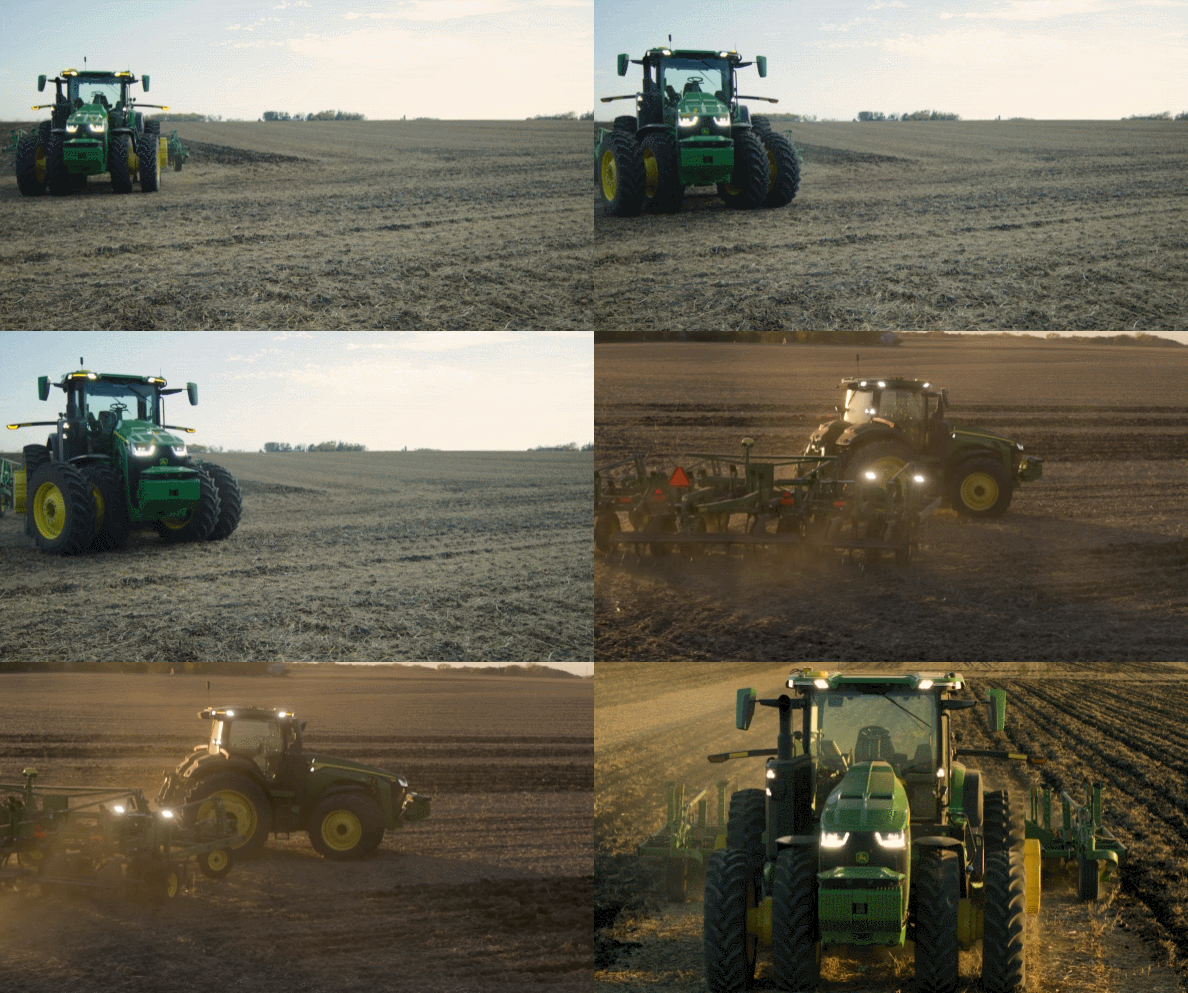
'https://www.roboticgizmos.com/wp-content/uploads/2022/01/10/John-Deeres-Autonomous-8R-Tractor.gif'
Monarch Tractor
- Monarch Tractor ... 100% Electric | Driver Optional | Data-Driven
This tractor is an electric, driver-optional, smart machine that can perform various tasks such as plowing, harvesting, spraying, and more. It can also collect and analyze data about the soil, crops, weather, and pests using sensors and cameras. It can reduce greenhouse gas emissions by 77% compared to diesel tractors.
Naïo Technologies' Dino Robot
This robot is a self-driving weeding machine that can work autonomously in vegetable fields. It uses cameras, lidars, GPS, and AI to recognize crops and weeds, and can apply mechanical or electrical weeding methods⁴. It can also adapt to different crops and terrains, and can be controlled via a web platform.
Blockchain, AI and Agriculture
|
|
|
|
|
|
