Difference between revisions of "Cybersecurity Frameworks, Architectures & Roadmaps"
m |
m |
||
| Line 21: | Line 21: | ||
Not necessarily restricted to artificial intelligence-based solutions. | Not necessarily restricted to artificial intelligence-based solutions. | ||
| + | {|<!-- T --> | ||
| + | | valign="top" | | ||
| + | {| class="wikitable" style="width: 550px;" | ||
| + | || | ||
<youtube>5LyY_gHzc64</youtube> | <youtube>5LyY_gHzc64</youtube> | ||
| + | <b>HH1 | ||
| + | </b><br>BB1 | ||
| + | |} | ||
| + | |<!-- M --> | ||
| + | | valign="top" | | ||
| + | {| class="wikitable" style="width: 550px;" | ||
| + | || | ||
<youtube>_5AFRQo4JwU</youtube> | <youtube>_5AFRQo4JwU</youtube> | ||
| + | <b>HH2 | ||
| + | </b><br>BB2 | ||
| + | |} | ||
| + | |}<!-- B --> | ||
| + | {|<!-- T --> | ||
| + | | valign="top" | | ||
| + | {| class="wikitable" style="width: 550px;" | ||
| + | || | ||
<youtube>I49iK8AzU2I</youtube> | <youtube>I49iK8AzU2I</youtube> | ||
| + | <b>HH3 | ||
| + | </b><br>BB3 | ||
| + | |} | ||
| + | |<!-- M --> | ||
| + | | valign="top" | | ||
| + | {| class="wikitable" style="width: 550px;" | ||
| + | || | ||
<youtube>gBgeULfhmFo</youtube> | <youtube>gBgeULfhmFo</youtube> | ||
| + | <b>HH4 | ||
| + | </b><br>BB4 | ||
| + | |} | ||
| + | |}<!-- B --> | ||
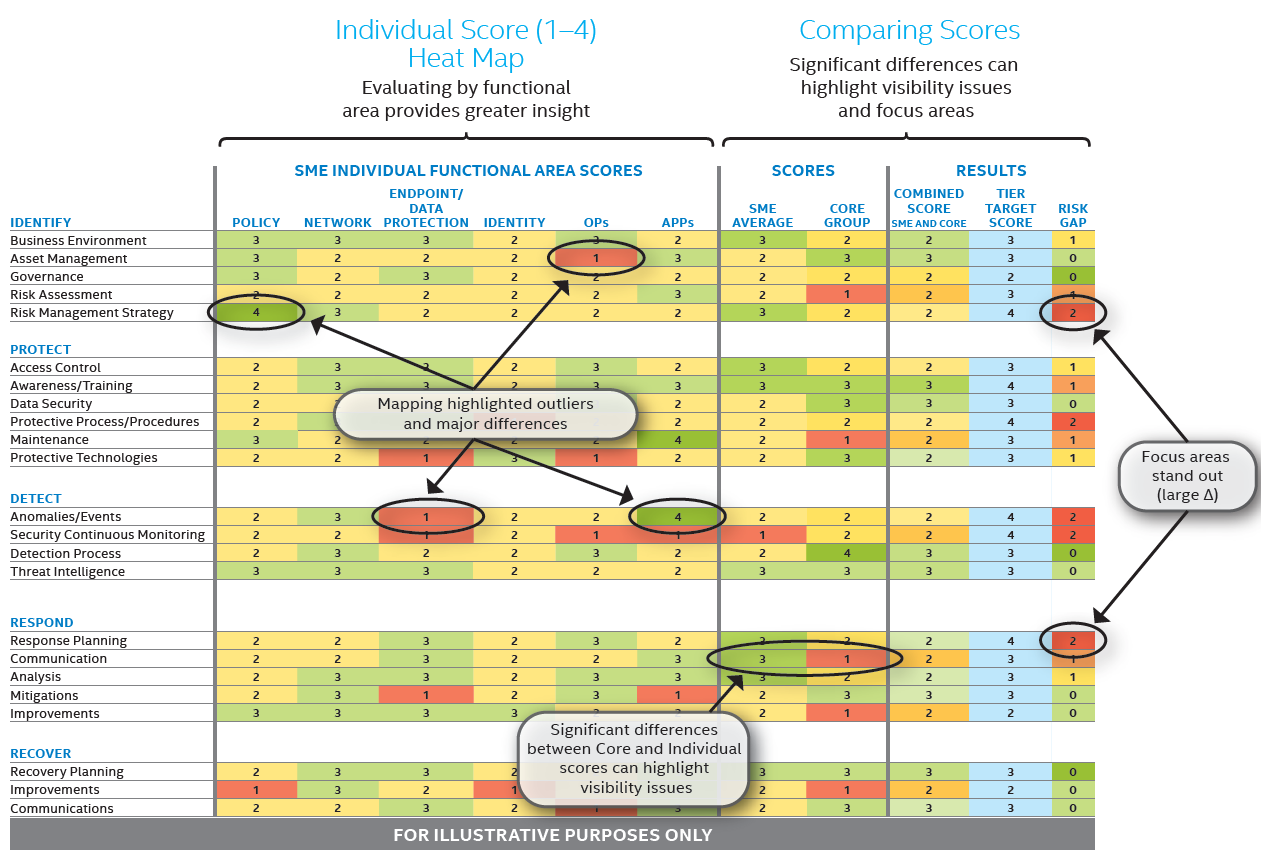
http://www.nist.gov/sites/default/files/styles/1400_x_1400_limit/public/images/2018/02/06/intel_heatmap.png | http://www.nist.gov/sites/default/files/styles/1400_x_1400_limit/public/images/2018/02/06/intel_heatmap.png | ||
Revision as of 17:48, 7 September 2020
- Case Studies
- Cybersecurity References
- Offense - Adversarial Threats/Attacks
- Capabilities
- NIST Cybersecurity Framework - consists of standards, guidelines, and best practices to manage cybersecurity-related risk.
- NIST FedRAMP security for the cloud
- United States Computer Emergency Readiness Team (US-CERT)
- Cybersecurity Reference Architecture | Microsoft
- ISO/IEC 15408-1 ISO/IEC Information Technology Task Force (ITTF)
- FIPS 140-2 Security Requirements for Cryptographic Modules
- How STIX, TAXII and CybOX Can Help With Standardizing Threat Information
- OASIS Cyber Threat Intelligence (CTI) TC OpenC2
- Using the Cybersecurity Framework
Not necessarily restricted to artificial intelligence-based solutions.
|
|
|
|