Difference between revisions of "Cybersecurity Frameworks, Architectures & Roadmaps"
m (→Trusted Internet Connections (TIC) 3) |
m |
||
| Line 110: | Line 110: | ||
|}<!-- B --> | |}<!-- B --> | ||
| + | = Zero Trust = | ||
| + | {|<!-- T --> | ||
| + | | valign="top" | | ||
| + | {| class="wikitable" style="width: 550px;" | ||
| + | || | ||
| + | <youtube>1D5mg9an19o</youtube> | ||
| + | <b>What is Zero Trust Security? | ||
| + | </b><br>Zero Trust security is no longer just a concept. It has become an essential security strategy that helps organizations protect their valuable data in a “perimeter-everywhere” world. Get the Ultimate Zero Trust Guide: http://bit.ly/2ObCwrS Zero Trust Networks is about having the ability to “Divide and Rule” your network in order to reduce the risk of lateral movement so, in the event of a breach, the threat is easily contained and isolated. Learn more and visit, http://bit.ly/2QFx1U9 for your guide to Absolute Zero Trust security | ||
| + | |} | ||
| + | |<!-- M --> | ||
| + | | valign="top" | | ||
| + | {| class="wikitable" style="width: 550px;" | ||
| + | || | ||
| + | <youtube>MSbkC2upop8</youtube> | ||
| + | <b>Implementing a zero trust security model at [[Microsoft]] | BRK2240 | ||
| + | </b><br>The traditional perimeter-based network defense is obsolete. Perimeter-based networks operate on the assumption that all systems within a network can be trusted. However, today’s increasingly mobile workforce, the migration towards public cloud services, and the adoption of Bring Your Own Device (BYOD) model make perimeter security controls irrelevant. Networks that fail to evolve from traditional defenses are vulnerable to breaches: an attacker can compromise a single endpoint within the trusted boundary and then quickly expand foothold across the entire network. In addition digital transformation will require the security approach change from placing trust in devices attached to corporate networks to an approach where trust is verified with identity and device health validation regardless of connectivity location. In this session, learn how we’re implementing a zero trust model at Microsoft for 150,000 users and 600,000 end points across 120 countries. Learn for [[Microsoft]] 365 -- http://aka.ms/GetstartedM365 | ||
| + | |} | ||
| + | |}<!-- B --> | ||
| + | {|<!-- T --> | ||
| + | | valign="top" | | ||
| + | {| class="wikitable" style="width: 550px;" | ||
| + | || | ||
| + | <youtube>z4j1z8gJdNo</youtube> | ||
| + | <b>Zero Trust Architecture: It's All About Identity | ||
| + | </b><br>The premise of Zero Trust is "don't trust, verify." This approach applies to users, devices, and connectivity sessions and is extremely well suited to supporting remote workforces securely. Zero Trust architecture has been around for many years and embodies this change, yet many organizations have not shifted from the old security models of the past. This has resulted in data loss, credential leak, millions in financial losses and countless hours of lost productivity. In this webinar recording, OCG Principal Architects Frank Urena and Mark Riley discuss: - Defining Zero Trust, Selecting the components of Zero Trust that make the most sense for your organization, Applying Zero Trust in a [[Microsoft]] hybrid cloud environment, Where do you begin your journey? | ||
| + | |} | ||
| + | |<!-- M --> | ||
| + | | valign="top" | | ||
| + | {| class="wikitable" style="width: 550px;" | ||
| + | || | ||
| + | <youtube>tFrbt9s4Fns</youtube> | ||
| + | <b>The Fallacy of the "Zero-Trust Network" | ||
| + | </b><br>Paul Simmonds, CISO / CEO, Global Identity Foundation In an industry that loves it marketing buzzwords, “zero trust” is the latest in a long line of buzzwords that have a liberal coating of marketing BS. This session will separate fact from fantasy, marketing hype from practical reality, and explain why although a zero-trust network may be an oxymoron, and zero-trust architectural mindset should be where we all need to end up.Learning Objectives:1: Understand what zero trust actually means.2: Understand the benefits of a correctly implemented zero-trust architecture.3: Understand the business benefits from such an architecture. Pre-Requisites:Networks and security architecture. | ||
| + | |} | ||
| + | |}<!-- B --> | ||
| + | |||
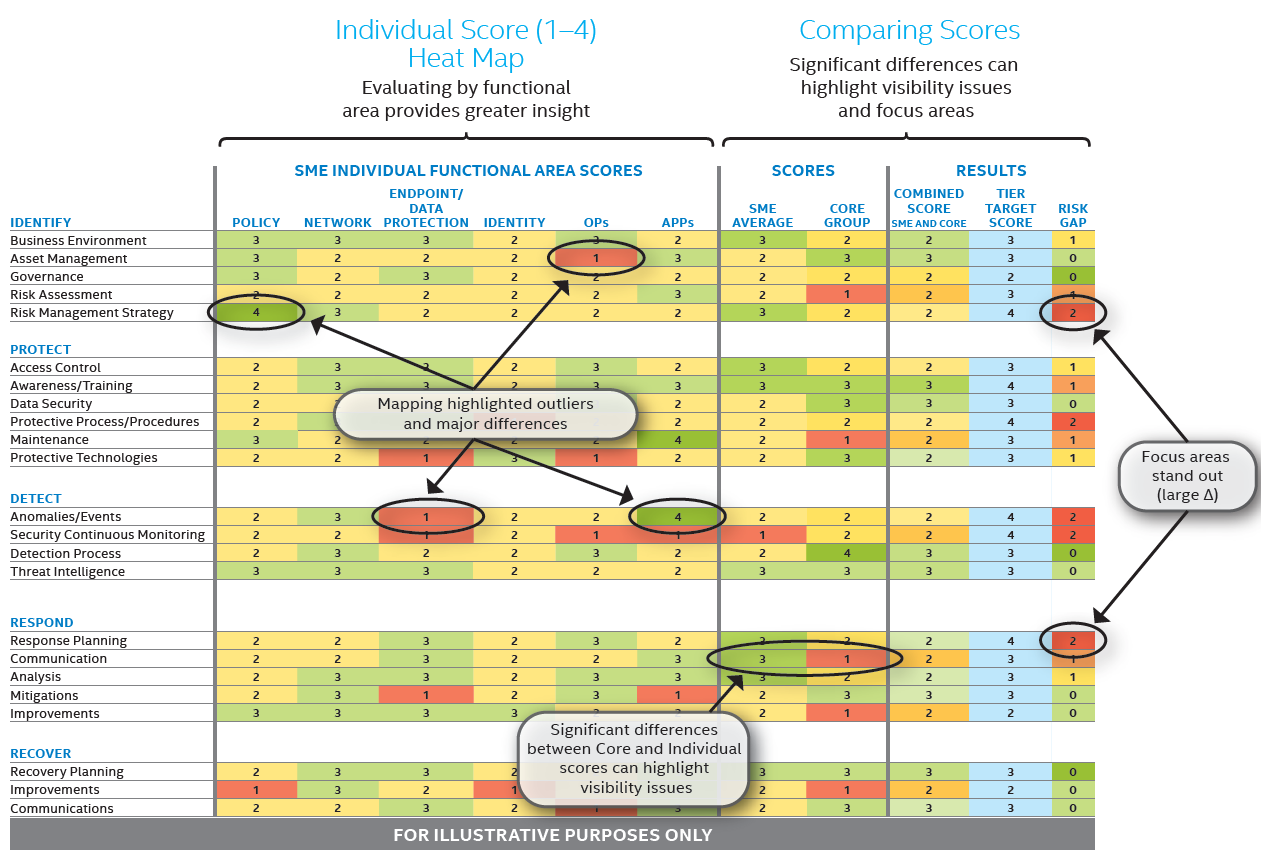
http://www.nist.gov/sites/default/files/styles/1400_x_1400_limit/public/images/2018/02/06/intel_heatmap.png | http://www.nist.gov/sites/default/files/styles/1400_x_1400_limit/public/images/2018/02/06/intel_heatmap.png | ||
Revision as of 19:45, 7 September 2020
- Case Studies
- Cybersecurity References
- Offense - Adversarial Threats/Attacks
- Capabilities
- NIST Cybersecurity Framework - consists of standards, guidelines, and best practices to manage cybersecurity-related risk.
- NIST FedRAMP security for the cloud
- United States Computer Emergency Readiness Team (US-CERT)
- Cybersecurity Reference Architecture | Microsoft
- ISO/IEC 15408-1 ISO/IEC Information Technology Task Force (ITTF)
- FIPS 140-2 Security Requirements for Cryptographic Modules
- How STIX, TAXII and CybOX Can Help With Standardizing Threat Information
- OASIS Cyber Threat Intelligence (CTI) TC OpenC2
- Using the Cybersecurity Framework
Not necessarily restricted to artificial intelligence-based solutions.
|
|
|
|
|
|
|
|
Trusted Internet Connections (TIC) 3
- Trusted Internet Connections | Cybersecurity & Infrastructure Security Agency, Department of Homeland Security (DHS)
|
|
Zero Trust
|
|
|
|