Difference between revisions of "Word2Vec"
m |
m |
||
| Line 20: | Line 20: | ||
* [http://pathmind.com/wiki/word2vec A Beginner's Guide to Word2Vec and Neural Word Embeddings | Chris Nicholson - A.I. Wiki pathmind] | * [http://pathmind.com/wiki/word2vec A Beginner's Guide to Word2Vec and Neural Word Embeddings | Chris Nicholson - A.I. Wiki pathmind] | ||
* [http://towardsdatascience.com/introduction-to-word-embedding-and-word2vec-652d0c2060fa Introduction to Word Embedding and Word2Vec | Dhruvil Karani - Towards Data Science - Medium] | * [http://towardsdatascience.com/introduction-to-word-embedding-and-word2vec-652d0c2060fa Introduction to Word Embedding and Word2Vec | Dhruvil Karani - Towards Data Science - Medium] | ||
| − | * [http://arxiv.org/pdf/1310.4546.pdf Distributed Representations of Words and Phrases and their Compositionality | Tomas Mikolov - [[Google]] | + | * [http://arxiv.org/pdf/1310.4546.pdf Distributed Representations of Words and Phrases and their Compositionality | Tomas Mikolov -] [[Google]] |
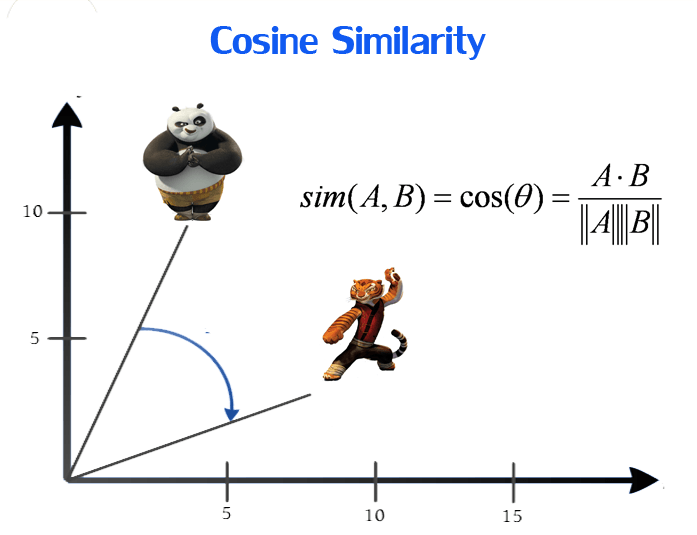
a shallow, two-layer neural networks which is trained to reconstruct linguistic contexts of words. It takes as its input a large corpus of words and produces a vector space, typically of several hundred dimensions, with each unique word in the corpus being assigned a corresponding vector in the space. | a shallow, two-layer neural networks which is trained to reconstruct linguistic contexts of words. It takes as its input a large corpus of words and produces a vector space, typically of several hundred dimensions, with each unique word in the corpus being assigned a corresponding vector in the space. | ||
Revision as of 15:18, 22 August 2020
Youtube search... ...Google search
- Natural Language Processing (NLP)
- Doc2Vec
- Node2Vec
- Skip-Gram
- Global Vectors for Word Representation (GloVe)
- Bag-of-Words (BoW)
- Continuous Bag-of-Words (CBoW)
- Similarity
- TensorFlow
- A Beginner's Guide to Word2Vec and Neural Word Embeddings | Chris Nicholson - A.I. Wiki pathmind
- Introduction to Word Embedding and Word2Vec | Dhruvil Karani - Towards Data Science - Medium
- Distributed Representations of Words and Phrases and their Compositionality | Tomas Mikolov - Google
a shallow, two-layer neural networks which is trained to reconstruct linguistic contexts of words. It takes as its input a large corpus of words and produces a vector space, typically of several hundred dimensions, with each unique word in the corpus being assigned a corresponding vector in the space.