Difference between revisions of "Bayes"
| Line 6: | Line 6: | ||
__________________________________________________________ | __________________________________________________________ | ||
| − | |||
| − | |||
https://cdn-images-1.medium.com/max/800/1*ADp6qgk1IVI4oILwQS-1ZA.png | https://cdn-images-1.medium.com/max/800/1*ADp6qgk1IVI4oILwQS-1ZA.png | ||
This algorithm is based on the “Bayes’ Theorem” in probability. Due to that Naive Bayes can be applied only if the features are independent of each other since it is a requirement in Bayes’ Theorem. If we try to predict a flower type by its petal length and width, we can use Naive Bayes approach since both those features are independent. [http://towardsdatascience.com/10-machine-learning-algorithms-you-need-to-know-77fb0055fe0 10 Machine Learning Algorithms You need to Know | Sidath Asir @ Medium] | This algorithm is based on the “Bayes’ Theorem” in probability. Due to that Naive Bayes can be applied only if the features are independent of each other since it is a requirement in Bayes’ Theorem. If we try to predict a flower type by its petal length and width, we can use Naive Bayes approach since both those features are independent. [http://towardsdatascience.com/10-machine-learning-algorithms-you-need-to-know-77fb0055fe0 10 Machine Learning Algorithms You need to Know | Sidath Asir @ Medium] | ||
| + | |||
| + | <youtube>5NMxiOGL39M</youtube> | ||
| + | <youtube>3OJEae7Qb_o</youtube> | ||
| + | |||
| + | A Naive Bayes classifier assumes that the presence of a particular feature in a class is unrelated to the presence of any other feature. For example, a fruit may be considered to be an apple if it is red, round, and about 3 inches in diameter. Even if these features depend on each other or upon the existence of the other features, all of these properties independently contribute to the probability that this fruit is an apple and that is why it is known as ‘Naive’. | ||
<youtube>M59h7CFUwPU</youtube> | <youtube>M59h7CFUwPU</youtube> | ||
Revision as of 08:12, 8 September 2018
__________________________________________________________
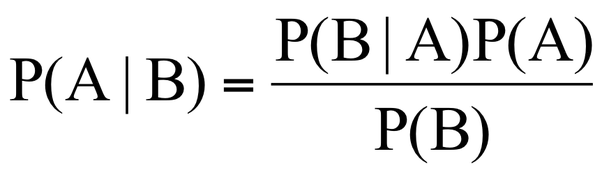
This algorithm is based on the “Bayes’ Theorem” in probability. Due to that Naive Bayes can be applied only if the features are independent of each other since it is a requirement in Bayes’ Theorem. If we try to predict a flower type by its petal length and width, we can use Naive Bayes approach since both those features are independent. 10 Machine Learning Algorithms You need to Know | Sidath Asir @ Medium
A Naive Bayes classifier assumes that the presence of a particular feature in a class is unrelated to the presence of any other feature. For example, a fruit may be considered to be an apple if it is red, round, and about 3 inches in diameter. Even if these features depend on each other or upon the existence of the other features, all of these properties independently contribute to the probability that this fruit is an apple and that is why it is known as ‘Naive’.
Two-Class Bayes Point Machine
This algorithm efficiently approximates the theoretically optimal Bayesian average of linear classifiers (in terms of generalization performance) by choosing one "average" classifier, the Bayes Point. Because the Bayes Point Machine is a Bayesian classification model, it is not prone to overfitting to the training data. - Microsoft
