Difference between revisions of "Art"
| Line 18: | Line 18: | ||
* [http://vimeo.com/neuralsynesthesia Neural Synesthesia] - exploring the possibilities of immersive, digital media | * [http://vimeo.com/neuralsynesthesia Neural Synesthesia] - exploring the possibilities of immersive, digital media | ||
| − | New technologies, and in particular artificial intelligence, are drastically changing the nature of creative processes. Computers are playing very significant roles in creative activities such as music, architecture, fine arts, and science. Indeed, the computer is already a canvas, a brush, a musical instrument, and so on. However, we believe that we must aim at more ambitious relations between computers and creativity. Rather than just seeing the computer as a tool to help human creators, we could see it as a creative entity in its own right. This view has triggered a new subfield of Artificial Intelligence called Computational Creativity. [http://www.bbvaopenmind.com/en/articles/artificial-intelligence-and-the-arts-toward-computational-creativity/ Artificial Intelligence and the Arts: Toward Computational Creativity | Ramón López de Mántaras - Article from the book The Next Step: Exponential Life - OpenMind BBVA | + | New technologies, and in particular artificial intelligence, are drastically changing the nature of creative processes. Computers are playing very significant roles in creative activities such as music, architecture, fine arts, and science. Indeed, the computer is already a canvas, a brush, a musical instrument, and so on. However, we believe that we must aim at more ambitious relations between computers and creativity. Rather than just seeing the computer as a tool to help human creators, we could see it as a creative entity in its own right. This view has triggered a new subfield of Artificial Intelligence called Computational Creativity. [http://www.bbvaopenmind.com/en/articles/artificial-intelligence-and-the-arts-toward-computational-creativity/ Artificial Intelligence and the Arts: Toward Computational Creativity | Ramón López de Mántaras - Article from the book The Next Step: Exponential Life - OpenMind BBVA] |
<youtube>85l961MmY8Y</youtube> | <youtube>85l961MmY8Y</youtube> | ||
Revision as of 15:13, 23 July 2020
Youtube search... ...Google search
- Case Studies
- Magenta
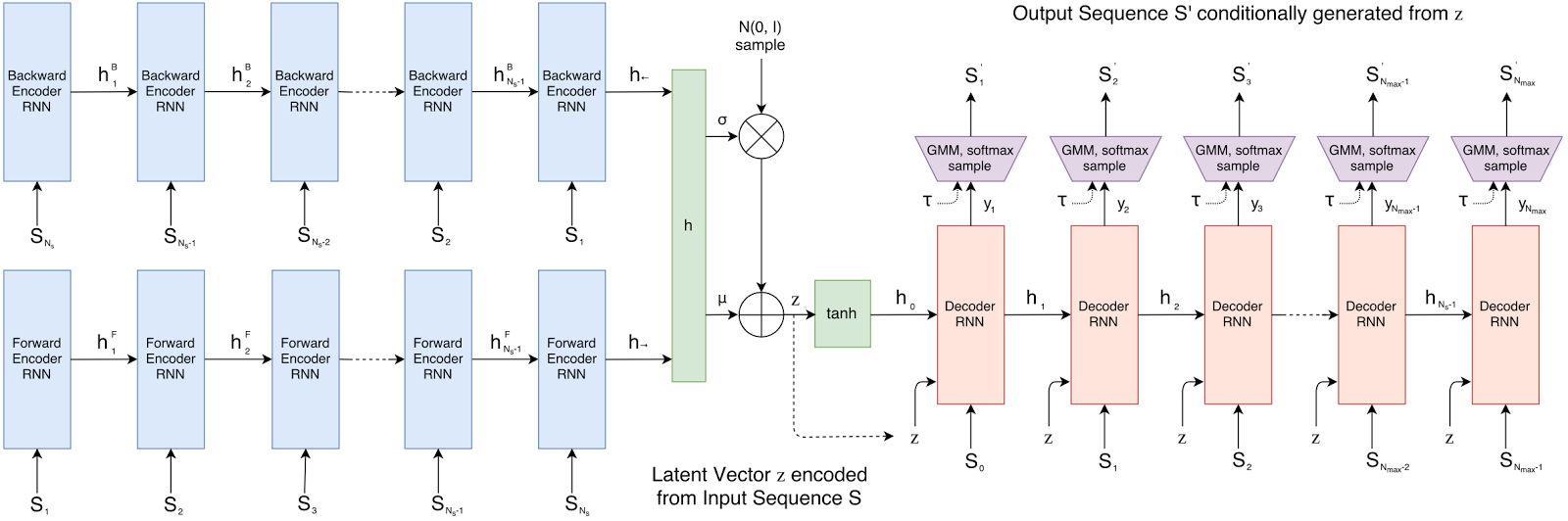
- Teaching Machines to Draw | David Ha - Google
- Neural Synesthesia - exploring the possibilities of immersive, digital media
New technologies, and in particular artificial intelligence, are drastically changing the nature of creative processes. Computers are playing very significant roles in creative activities such as music, architecture, fine arts, and science. Indeed, the computer is already a canvas, a brush, a musical instrument, and so on. However, we believe that we must aim at more ambitious relations between computers and creativity. Rather than just seeing the computer as a tool to help human creators, we could see it as a creative entity in its own right. This view has triggered a new subfield of Artificial Intelligence called Computational Creativity. Artificial Intelligence and the Arts: Toward Computational Creativity | Ramón López de Mántaras - Article from the book The Next Step: Exponential Life - OpenMind BBVA