Difference between revisions of "Paleontology"
m (→Dino Augmented Reality) |
m |
||
| (9 intermediate revisions by the same user not shown) | |||
| Line 2: | Line 2: | ||
|title=PRIMO.ai | |title=PRIMO.ai | ||
|titlemode=append | |titlemode=append | ||
| − | |keywords=artificial, intelligence, machine, learning, models, algorithms, data, singularity, moonshot, TensorFlow, Google, Nvidia, Microsoft, Azure, Amazon, AWS, Facebook | + | |keywords=artificial, intelligence, machine, learning, models, algorithms, data, singularity, moonshot, TensorFlow, Google, Nvidia, Microsoft, Azure, Amazon, AWS, Meta, Facebook |
|description=Helpful resources for your journey with artificial intelligence; videos, articles, techniques, courses, profiles, and tools | |description=Helpful resources for your journey with artificial intelligence; videos, articles, techniques, courses, profiles, and tools | ||
}} | }} | ||
| − | [ | + | [https://www.youtube.com/results?search_query=Paleontology+~ai Youtube search...] |
| − | [ | + | [https://www.google.com/search?q=Paleontology+~ai ...Google search] |
| + | * [[Creatives]] ... [[History of Artificial Intelligence (AI)]] ... [[Neural Network#Neural Network History|Neural Network History]] ... [[Rewriting Past, Shape our Future]] ... [[Archaeology]] ... [[Paleontology]] | ||
* [[Case Studies]] | * [[Case Studies]] | ||
| − | |||
** [[Healthcare]] | ** [[Healthcare]] | ||
** [[Bioinformatics]] | ** [[Bioinformatics]] | ||
| − | * [ | + | * [[Life~Meaning]] ... [[Consciousness]] ... [[Loop#Feedback Loop - Creating Consciousness|Creating Consciousness]] ... [[Quantum#Quantum Biology|Quantum Biology]] ... [[Orch-OR]] ... [[TAME]] ... [[Protein Folding & Discovery|Proteins]] |
| − | * [ | + | * [https://en.wikipedia.org/wiki/Paleontology Paleontology | Wikipedia] |
| + | * [https://www.science20.com/news_staff/using_artificial_intelligence_on_the_genome_uncovers_new_missing_link_in_evolution-236168 Using Artificial Intelligence On The Genome Uncovers New Missing Link In Evolution | Science 2.0] | ||
| + | * [https://www.smithsonianmag.com/smart-news/this-21-year-old-used-ai-to-decipher-text-from-a-scroll-that-hasnt-been-read-in-2000-years-180983084/ This 21-Year-Old Used A.I. to Decipher Text From a Scroll That Hasn’t Been Read in 2,000 Years | Julia Binswanger - Smithsonian Magazine] ... The papyrus scroll is one of hundreds that were carbonized in the eruption of Mount Vesuvius in 79 C.E. | ||
| + | * [https://www.cnn.com/2024/07/31/science/dna-analysis-neanderthals-disappearance/index.html How did Neanderthals disappear? New DNA analysis sheds light on the mystery | Katie Hunt - CNN] | ||
| + | |||
| + | |||
| + | AI has significantly advanced the field of paleontology, especially in the analysis of ancient DNA (aDNA). AI continues to revolutionize the field of paleontology by enabling more accurate and efficient analysis of ancient DNA, providing deeper insights into the evolutionary history of life on Earth. Here are some ways AI is used, along with frameworks and models: | ||
| + | |||
| + | <b>Applications of AI in Paleontology DNA Analysis</b> | ||
| + | |||
| + | *DNA Sequencing and Assembly: | ||
| + | ** Machine Learning Algorithms: AI algorithms help in assembling fragmented DNA sequences. Tools like neural networks can predict sequence overlaps and aid in assembling the genome. | ||
| + | ** Frameworks: Tools like SPAdes (St. Petersburg genome assembler) utilize AI techniques for assembling genomes from short-read sequences. | ||
| + | |||
| + | *Pattern Recognition and Classification: | ||
| + | ** Deep Learning Models: [[(Deep) Convolutional Neural Network (DCNN/CNN) | Convolutional Neural Networks (CNNs)]] are employed to identify patterns and classify sequences. This is particularly useful in distinguishing between contamination and genuine aDNA sequences. | ||
| + | ** Frameworks: [[TensorFlow]] and [[PyTorch]] are commonly used frameworks for developing and training deep learning models. | ||
| + | |||
| + | *Phylogenetic Analysis: | ||
| + | ** AI Algorithms: AI helps in constructing phylogenetic trees by analyzing genetic similarities and differences among species. Reinforcement learning and other optimization algorithms can enhance the accuracy of these trees. | ||
| + | ** Frameworks: BEAST (Bayesian Evolutionary Analysis by Sampling Trees) integrates AI for evolutionary analysis. | ||
| + | |||
| + | *Anomaly Detection: | ||
| + | ** Machine Learning Models: Unsupervised learning models, such as clustering algorithms, help identify unusual patterns in DNA sequences that might indicate evolutionary events or mutations. | ||
| + | ** Frameworks: Scikit-learn provides a range of machine learning algorithms suitable for such analyses. | ||
| + | |||
| + | *Simulation and Modeling: | ||
| + | ** Generative Models: [[Variational Autoencoder (VAE)]] and [[Generative Adversarial Network (GAN)]]s are used to simulate ancient genetic sequences and study evolutionary processes. | ||
| + | ** Frameworks: [[Keras]], built on top of [[TensorFlow]], is often used for developing [[Generative AI | generative models]]. | ||
| + | |||
| + | <img src="https://media.cnn.com/api/v1/images/stellar/prod/2024-06-26t170031z-1068165507-rc24j8a27drz-rtrmadp-3-science-neanderthals.jpg" height="200"> | ||
| + | |||
| + | <b> Examples of AI Frameworks and Models</b> | ||
| + | |||
| + | *[[TensorFlow]] and [[Keras]]: | ||
| + | ** Used for building and training neural networks. | ||
| + | ** Applications: Sequence classification, phylogenetic analysis. | ||
| + | |||
| + | *[[PyTorch]]: | ||
| + | ** Popular for its dynamic computational graph and ease of use. | ||
| + | ** Applications: DNA sequence analysis, pattern recognition. | ||
| + | |||
| + | *Scikit-learn: | ||
| + | ** Offers a wide range of machine learning algorithms. | ||
| + | ** Applications: Clustering, classification, anomaly detection. | ||
| + | |||
| + | *SPAdes: | ||
| + | ** A genome assembler that uses AI techniques to assemble genomes from short-read sequences. | ||
| + | ** Applications: DNA sequencing and assembly. | ||
| + | |||
| + | *BEAST: | ||
| + | ** An advanced tool for Bayesian analysis of molecular sequences. | ||
| + | ** Applications: Phylogenetic analysis, evolutionary studies. | ||
| + | |||
| + | <b> Specific Case Studies</b> | ||
| + | |||
| + | *Neanderthal and Denisovan DNA Analysis: AI was used to differentiate between modern human contamination and genuine ancient DNA sequences, improving the accuracy of sequencing results. Researchers from Estonia and Spain used deep learning to build a model for human evolution. They already knew Neanderthals and Denisovan bred with humans, but their programs uncovered something new: a third species that joined the hominoid party. [https://www.treehugger.com/natural-sciences/artificial-intelligence-found-new-species-hominids-bred-humans.html Artificial intelligence found a new species of hominids that bred with humans | Ilana Strauss] | ||
| + | |||
| + | *Woolly Mammoth Genome Reconstruction: Machine learning algorithms helped assemble the fragmented DNA of woolly mammoths, enabling a better understanding of their evolution and eventual extinction. | ||
| + | |||
| + | |||
| − | |||
{|<!-- T --> | {|<!-- T --> | ||
| Line 51: | Line 110: | ||
<youtube>NVQJ00CFiU4</youtube> | <youtube>NVQJ00CFiU4</youtube> | ||
<b>The Most Important Discoveries in Paleontology - Part 2 | <b>The Most Important Discoveries in Paleontology - Part 2 | ||
| − | </b><br>Henry the PaleoGuy In this next, anticipated instalment of The Most Important Discoveries In Paleontology, I will be covering some of the most notable finds of the 20th century, from the mighty Tyrannosaurus to the small and unassuming Taung child. Be sure to watch the first part, which covered the discoveries of the 19th century for some additional context and content. I hope you enjoy. | + | </b><br>Henry the PaleoGuy In this next, anticipated instalment of The Most Important Discoveries In Paleontology, I will be covering some of the most notable finds of the 20th century, from the mighty Tyrannosaurus to the small and unassuming Taung child. Be sure to watch the first part, which covered the discoveries of the 19th century for some additional [[context]] and content. I hope you enjoy. |
|} | |} | ||
|}<!-- B --> | |}<!-- B --> | ||
| Line 66: | Line 125: | ||
<youtube>sB_IGstiWlc</youtube> | <youtube>sB_IGstiWlc</youtube> | ||
<b>AI learns to play [[Google]] Chrome Dinosaur Game || Can you beat it?? | <b>AI learns to play [[Google]] Chrome Dinosaur Game || Can you beat it?? | ||
| − | </b><br>Using NEAT I created an AI to play the [[Google]] Chrome Dionsaur Game, and its awesome Big thanks to Brilliant.org for supporting this channel check them out at | + | </b><br>Using NEAT I created an AI to play the [[Google]] Chrome Dionsaur Game, and its awesome Big thanks to Brilliant.org for supporting this channel check them out at https://www.brilliant.org/CodeBullet Become a patreon to support my future content as well as sneak peaks of whats to come. https://www.patreon.com/CodeBullet Check out my Discord server |
| − | + | https://discord.gg/UZDMYx5 | |
|} | |} | ||
|<!-- M --> | |<!-- M --> | ||
| Line 75: | Line 134: | ||
<youtube>v9YwegSFyKI</youtube> | <youtube>v9YwegSFyKI</youtube> | ||
<b>How to create ai for videogames: googles dino-ai | <b>How to create ai for videogames: googles dino-ai | ||
| − | </b><br>John G. Fisher Learn how to create a video game AI using a convolutional neural network to play Google's Dinosaur run and other video games. As a side note. I move over the details of the CNN architecture very quickly. If you guys have any questions about the specifics please ask below and we can discuss! SUBSCRIBE ON YOUTUBE: | + | </b><br>John G. Fisher Learn how to create a video game AI using a convolutional neural network to play Google's Dinosaur run and other video games. As a side note. I move over the details of the CNN architecture very quickly. If you guys have any questions about the specifics please ask below and we can discuss! SUBSCRIBE ON YOUTUBE: https://goo.gl/qkgzWg |
| − | HOW TO ASK ME QUESTIONS: DM ME ON INSTAGRAM: | + | HOW TO ASK ME QUESTIONS: DM ME ON INSTAGRAM: https://www.instagram.com/jgordonfisher |
|} | |} | ||
|}<!-- B --> | |}<!-- B --> | ||
Latest revision as of 16:32, 5 January 2026
Youtube search... ...Google search
- Creatives ... History of Artificial Intelligence (AI) ... Neural Network History ... Rewriting Past, Shape our Future ... Archaeology ... Paleontology
- Case Studies
- Life~Meaning ... Consciousness ... Creating Consciousness ... Quantum Biology ... Orch-OR ... TAME ... Proteins
- Paleontology | Wikipedia
- Using Artificial Intelligence On The Genome Uncovers New Missing Link In Evolution | Science 2.0
- This 21-Year-Old Used A.I. to Decipher Text From a Scroll That Hasn’t Been Read in 2,000 Years | Julia Binswanger - Smithsonian Magazine ... The papyrus scroll is one of hundreds that were carbonized in the eruption of Mount Vesuvius in 79 C.E.
- How did Neanderthals disappear? New DNA analysis sheds light on the mystery | Katie Hunt - CNN
AI has significantly advanced the field of paleontology, especially in the analysis of ancient DNA (aDNA). AI continues to revolutionize the field of paleontology by enabling more accurate and efficient analysis of ancient DNA, providing deeper insights into the evolutionary history of life on Earth. Here are some ways AI is used, along with frameworks and models:
Applications of AI in Paleontology DNA Analysis
- DNA Sequencing and Assembly:
- Machine Learning Algorithms: AI algorithms help in assembling fragmented DNA sequences. Tools like neural networks can predict sequence overlaps and aid in assembling the genome.
- Frameworks: Tools like SPAdes (St. Petersburg genome assembler) utilize AI techniques for assembling genomes from short-read sequences.
- Pattern Recognition and Classification:
- Deep Learning Models: Convolutional Neural Networks (CNNs) are employed to identify patterns and classify sequences. This is particularly useful in distinguishing between contamination and genuine aDNA sequences.
- Frameworks: TensorFlow and PyTorch are commonly used frameworks for developing and training deep learning models.
- Phylogenetic Analysis:
- AI Algorithms: AI helps in constructing phylogenetic trees by analyzing genetic similarities and differences among species. Reinforcement learning and other optimization algorithms can enhance the accuracy of these trees.
- Frameworks: BEAST (Bayesian Evolutionary Analysis by Sampling Trees) integrates AI for evolutionary analysis.
- Anomaly Detection:
- Machine Learning Models: Unsupervised learning models, such as clustering algorithms, help identify unusual patterns in DNA sequences that might indicate evolutionary events or mutations.
- Frameworks: Scikit-learn provides a range of machine learning algorithms suitable for such analyses.
- Simulation and Modeling:
- Generative Models: Variational Autoencoder (VAE) and Generative Adversarial Network (GAN)s are used to simulate ancient genetic sequences and study evolutionary processes.
- Frameworks: Keras, built on top of TensorFlow, is often used for developing generative models.
Examples of AI Frameworks and Models
- TensorFlow and Keras:
- Used for building and training neural networks.
- Applications: Sequence classification, phylogenetic analysis.
- PyTorch:
- Popular for its dynamic computational graph and ease of use.
- Applications: DNA sequence analysis, pattern recognition.
- Scikit-learn:
- Offers a wide range of machine learning algorithms.
- Applications: Clustering, classification, anomaly detection.
- SPAdes:
- A genome assembler that uses AI techniques to assemble genomes from short-read sequences.
- Applications: DNA sequencing and assembly.
- BEAST:
- An advanced tool for Bayesian analysis of molecular sequences.
- Applications: Phylogenetic analysis, evolutionary studies.
Specific Case Studies
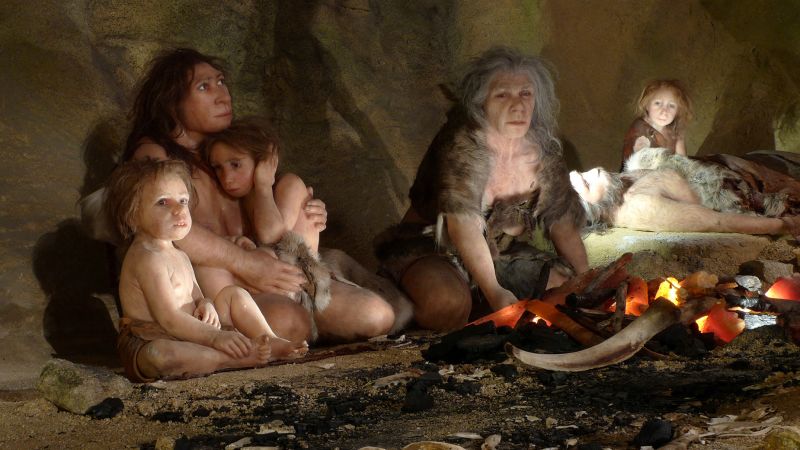
- Neanderthal and Denisovan DNA Analysis: AI was used to differentiate between modern human contamination and genuine ancient DNA sequences, improving the accuracy of sequencing results. Researchers from Estonia and Spain used deep learning to build a model for human evolution. They already knew Neanderthals and Denisovan bred with humans, but their programs uncovered something new: a third species that joined the hominoid party. Artificial intelligence found a new species of hominids that bred with humans | Ilana Strauss
- Woolly Mammoth Genome Reconstruction: Machine learning algorithms helped assemble the fragmented DNA of woolly mammoths, enabling a better understanding of their evolution and eventual extinction.
|
|
Recent Discoveries
|
|
Dino Fun
Google Chrome Dinosaur Game
|
|
Dino Augmented Reality
|
|
